




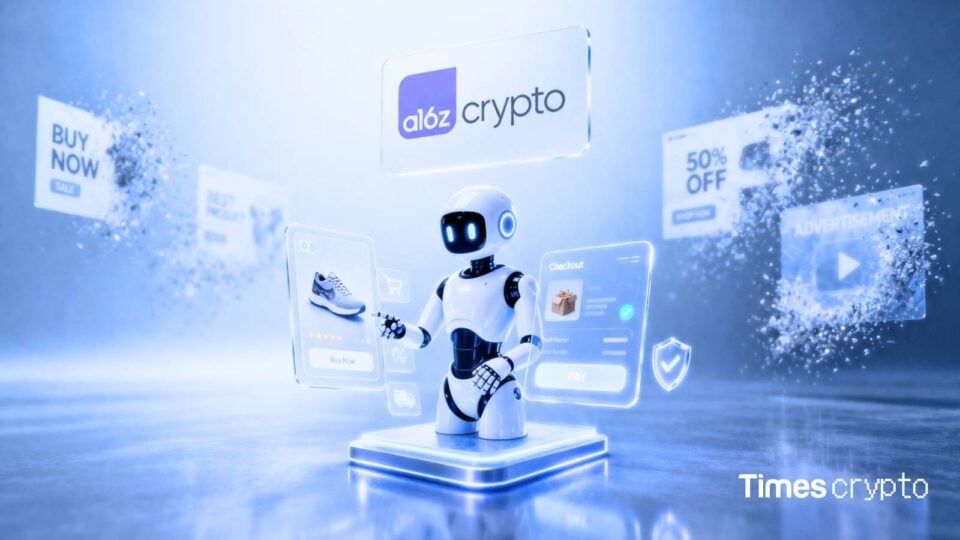
Venture firm a16z crypto says artificial intelligence could disrupt the online advertising model that has underpinned the internet for decades, as AI agents begin handling shopping and payments for users, reducing the role ads play in driving online traffic.
In a blog post published on Sunday, Sam Ragsdale of a16z crypto said the rise of autonomous AI agents could change how goods and services are discovered and bought online, arguing that unlike human users, such systems do not respond to advertising in the same way, which could reduce the value of the ad-supported web.
Old Internet Model Under Pressure
Ragsdale said the internet solved its early business model problem through advertising after micropayments failed to take off in the 1990s. That system allowed publishers and platforms to make money by capturing user attention, helping build the open web into a global commercial network.
However, that model is now being challenged by AI tools that can answer questions, compare options, and complete tasks without sending users through the same ad-filled path that shaped online browsing for years.
Ragsdale said that shift could become more visible as AI agents improve their ability to act on users’ behalf, from locating services and comparing prices to making purchases directly.
Open Networks vs. Closed Platforms
Ragsdale also drew a distinction between shopping features offered inside major chatbot platforms and what he described as open agentic commerce.
He said chatbot-based purchasing tools may improve convenience but still operate within controlled ecosystems where merchants must be approved before they can participate. By contrast, open protocols would allow AI agents to transact more freely across the internet without depending on a single platform’s rules or preferred partners.
The broader idea, he said, is to create a system in which agents can pay for digital services, software, data, or other goods directly, much as websites once relied on open internet standards to scale beyond closed online platforms.
Payments and Discovery
Ragsdale pointed to emerging payment efforts such as “x402” and “mpp” as examples of infrastructure that could support that model, particularly by lowering the cost of small digital transactions.
He said the remaining challenge is discovery, as agents may be able to pay but still need reliable ways to find merchants and services available to them.
For a16z crypto, that is where the next phase of online commerce may take shape. If AI agents begin to search, decide, and transact on their own, Ragsdale believes the internet could move away from an economy built around advertising and toward one driven more by direct machine-to-machine payments.


