




Key Takeaways
- The Musk lawsuit: xAI just sued Apple and OpenAI in Texas federal court, accusing them of illegal collusion to dominate artificial intelligence (AI) markets.
- Lawsuit claims Apple faked App Store rankings to favor ChatGPT over rivals like Musk’s Grok.
- xAI seeks billions in damages and a court order to halt alleged anti-competitive practices.
- OpenAI called the lawsuit “harassment,” while Apple has not yet publicly responded.
Table of Contents
The AI War Take a Courtroom: Musk’s Enemies are Giants
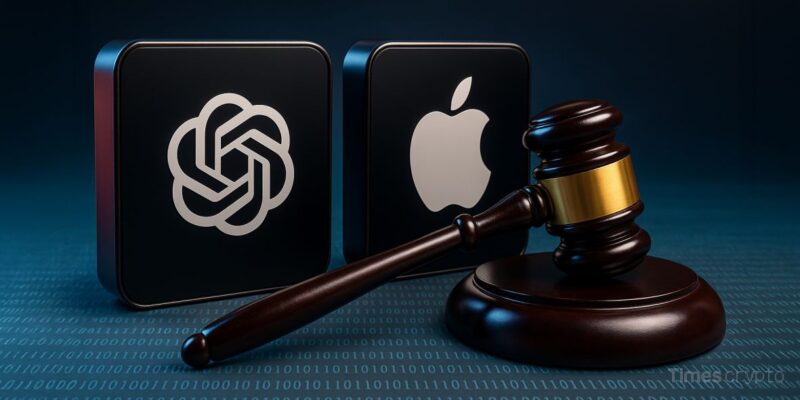
Elon Musk is not simply another contender in the artificial intelligence (AI) race; now, he is taking his rivals to court. In an antitrust lawsuit, Musk’s xAI is suing Apple and OpenAI, claiming they conspired to lock down the market for AI by making exclusive deals and controlling the App Store.
The basis of his claim is that Apple’s app deeply embeds ChatGPT into iOS and purports to bury other competitive apps, such as xAI’s Grok, so they cannot be located and used.

The lawsuit asserts that by delivering billions of iPhone user prompts only to ChatGPT, the company has an unbeatable training opportunity. And, while xAI’s Grok seeks its share of the market (it is rated 4.9 stars in the app store), its position is bred below OpenAI’s product or buried in the Rankings.
The lawsuit puts it this way: “This is a story of two monopolists coming together, respectively with Apple fearful of the AI disrupting the iPhone golden empire and OpenAI being a profit-driven, turncoat leaving the origins of its nonprofit.“
Musk Lawsuit Context: A Saga of Grudges and Market Dynamics
This won’t be Musk’s first legal battle with OpenAI. He’s already suing them in California for abandoning their nonprofit mission, with a judge recently rejecting important defenses OpenAI raised in that case. This new Musk lawsuit further develops those allegations, characterizing the partnership between Apple and OpenAI as a monopolistic ‘walled garden‘ strategy.
But legal experts are doubtful. Antitrust cases involve proving that a specific market exists (which is hazy in the case of early-stage AI) and that consumer harm is present. Given that there are many alternatives like Google’s Gemini, Perplexity, DeepSeek, and others, there seems to be a stretch in OpenAI’s characterization of a ‘monopoly’. Apple will likely defend itself by asserting that its integration of ChatGPT is a pro-competitive development, and not some sort of conspiracy.
Why This Matters Beyond the Courtroom
This Musk lawsuit may set a precedent regarding how antitrust law may apply to AI ecosystems. If Musk wins his case, it might require Apple to open iOS to more AI models that can be used to assist users. If Musk loses, that could reinforce the power of integrated technology giants.
Currently, this presents a significant strategic headache for Apple due to ongoing Department of Justice (DOJ) antitrust inspections, and for OpenAI as it rejects Musk’s multi-front legal battles.
Final Thought: Musk’s lawsuit could be either a visionary strike for open competition or a theatrical distraction from xAI’s late entry to the AI race. When you can’t beat them, sue them.
FAQs
What does Musk want from this lawsuit?
Billions in damages and a court order forcing Apple to stop favoring ChatGPT in the iOS App Store.
How does Apple benefit from the OpenAI partnership?
It bolsters Siri’s capabilities and keeps users engaged within the iPhone ecosystem.
Could this suit actually succeed?
Legal experts call it a long shot due to high antitrust proof burdens and existing competition.
For more Musk lawsuit stories, read: Xai Sues Elon Musk’s xAI: Gaming Network Claims Trademark Infringement


