





OpenAI’s ad pilot inside ChatGPT has passed $100 million in annualized revenue just six weeks after launching in the United States, showing strong early demand for the company’s first push into advertising.
The move adds a new income stream for OpenAI as it looks to help fund the high cost of developing artificial intelligence, alongside its subscription and enterprise businesses.
Early demand builds
OpenAI said in January that it would begin testing ads with some adult users on ChatGPT’s free tier and lower-priced Go plan in the United States, while keeping higher-paid plans free of advertising.
The company said the ads are kept separate from ChatGPT’s answers and do not influence what the chatbot says. It also said user conversations are not shared with advertisers.
Plenty of Room to Expand
About 85% of users are currently eligible to see ads, but fewer than 20% are shown them on any given day, leaving room to grow ad sales within the existing user base, an OpenAI spokesperson told Reuters.
The company said it has signed up more than 600 advertisers so far, with nearly 80% of small and medium-sized businesses showing interest in ChatGPT ads.
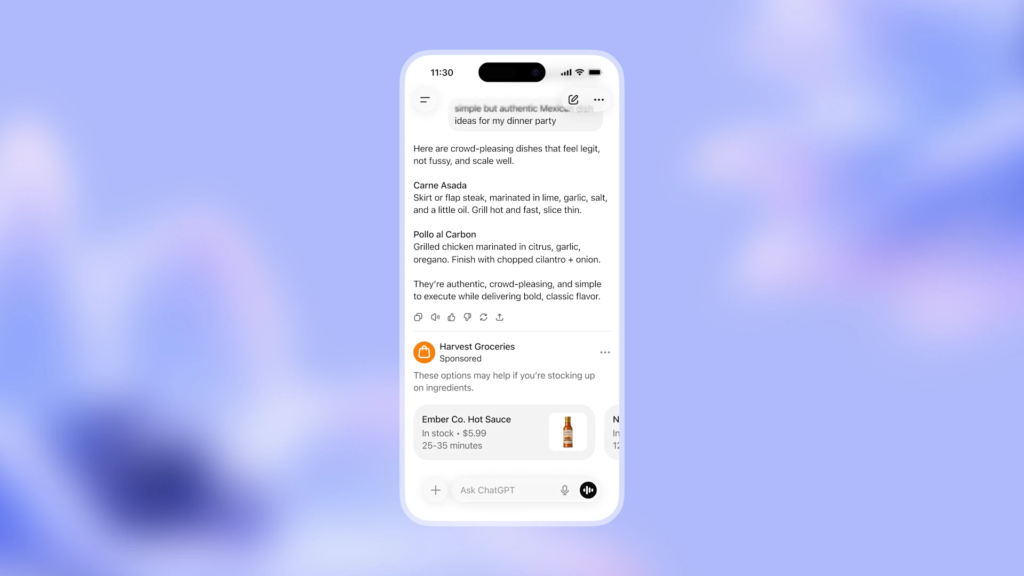
OpenAI also said it has seen no hit to consumer trust metrics, while ad dismissal rates have remained low and ad relevance has improved as the company gathers feedback.
To widen access, OpenAI plans to launch self-serve ad tools in April, making it easier for more brands to buy ads directly.
Global Rollout Ahead
The company named former Meta ads executive David Dugan this week to lead its global advertising solutions team and said it plans to expand the ad test in the coming weeks to more countries, including Canada, Australia, and New Zealand.
For now, OpenAI is betting that limited ad exposure and a clear separation from chatbot responses will help it grow the business without hurting user trust.
A Challenge to The Old Web Model
The news comes as venture firm a16z crypto argues that artificial intelligence could reshape the online ad economy that has supported the internet for years. In a blog post published on March 22, Sam Ragsdale said AI agents may weaken the role of ads by helping users search, compare products, and make purchases directly, without following the usual ad-driven path across the web.
He said the internet’s business model long depended on capturing user attention after micropayments failed to take hold in the 1990s. But as AI tools become better at acting for users, that model could come under pressure. Ragsdale also said open systems for agent-based commerce could offer a broader alternative to shopping tools built inside closed chatbot platforms.


