




Tether recently introduced the QVAC SDK, which is an open-source software development kit that serves as the fundamental basis for creating decentralized Artificial Intelligence (AI), positioning QVAC as the ‘atomic unit‘, and as part of what Tether describes as the ‘Stable Intelligence Era,’ a time when billions of people, machines, and AI agents share the same planet.
How the QVAC SDK Works
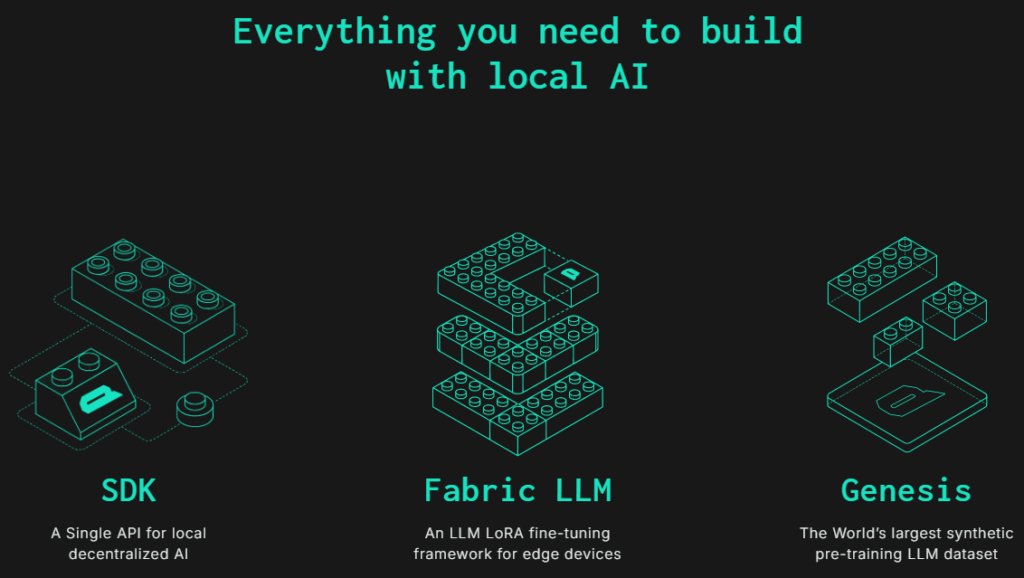
The QVAC SDK enables developers to build, run, and optimize AI directly on consumer devices, so there is no need for the transmission of private and sensitive data to remote servers. Applications created in conjunction with the QVAC SDK function offline, immediately, and privately, even if the internet service goes down. The QVAC SDK provides a single abstraction layer that integrates with all of the local inference engines, such as llama.cpp (text generation), whisper.cpp (speech-to-text), and Bergamot (on-device translation). Developers can integrate these features through one consistent Application Programming Interface (API), with no need to maintain separate toolchains for each.
The Holepunch stack is used to provide decentralized peer-to-peer (P2P) applications functionality for the QVAC SDK. This will allow for the decentralized distribution of models, delegated inference, and, soon to come, P2P training and tuning swarms.
Why It Matters for Blockchain AI
Tether is better known as the USDT issuer, which has become the largest stablecoin in the world; however, Tether has also developed a decentralized stack of technology that has been in progress for years. QVAC mimics Holepunch, Tether’s peer-to-peer communication platform that allows users to communicate with each other in a decentralized manner without the involvement of third parties, such as social media.
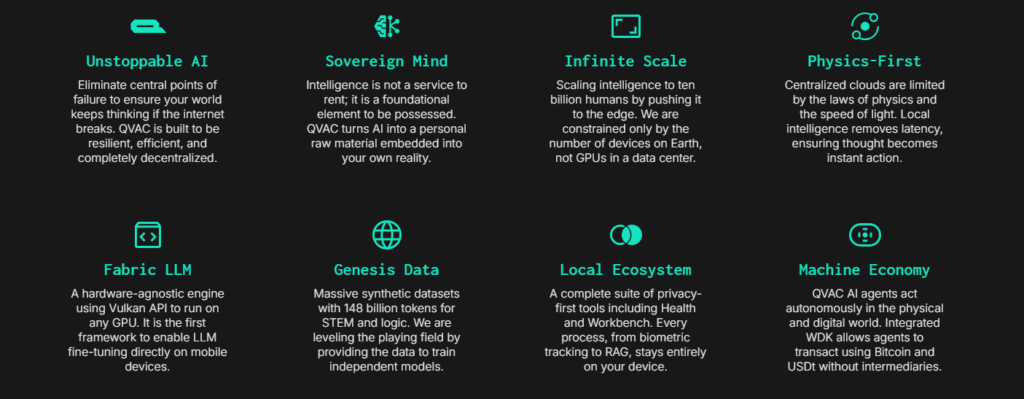
In effect, Tether is banking on the future of AI not being housed in data centres, owned by a few companies, but rather on the devices that we have with us at all times. Blockchain fits seamlessly into this model; for example, decentralized finance (DeFi) requires a decentralized intelligence system, and by using privacy-preserving, serverless, and highly resilient technology, they can do so.


