




Key Takeaways
- Binance Blockchain Week sees Michael Saylor break down MicroStrategy’s approach to buying Bitcoin.
- The biggest crypto exchange has also named He Yi as its new Co-CEO alongside Richard Teng.
- Crypto Leaders Take the Stage: Garlinghouse, Liu, and Teng Share Insights on Market Trends
Binance Blockchain Week wraps up its first day with breakthrough sessions, delivering key insights and essential discussions on the future of crypto and blockchain. The event witnessed the industry’s most influential figures discuss the future of Bitcoin, regulations, upcoming industry trends, and the power of decentralised finance.
The event commenced with Binance CEO Richard Teng giving a keynote speech, giving a vote of thanks to the growing crypto industry in the UAE. Teng emphasised that the UAE’s agility, creativity, and strategic vision for the digital asset sector have always played out as a boon for the nation. He reasoned that the crypto-supportive mindset is the main reasons why Binance continues to anchor big global events in the area.
Teng also shared pictures with UAE Minister H.E. Omar Al Olama, praising the nation’s long-term attitude to developing technology. He called the minister’s speech “powerful” and stated that the UAE has become a worldwide hub because of its “forward-thinking, fundamentals-first approach since 2015.”
Michael Saylor Explains Strategy’s Bitcoin Investment Plans
One of the standout moments of Binance Blockchain Week was Michael Saylor’s address, where he broke down MicroStrategy’s approach to buying Bitcoin. He revealed that the company now holds an impressive 650,000 BTC. However, the key to the firm’s investments is investing capital invested via fundraising.
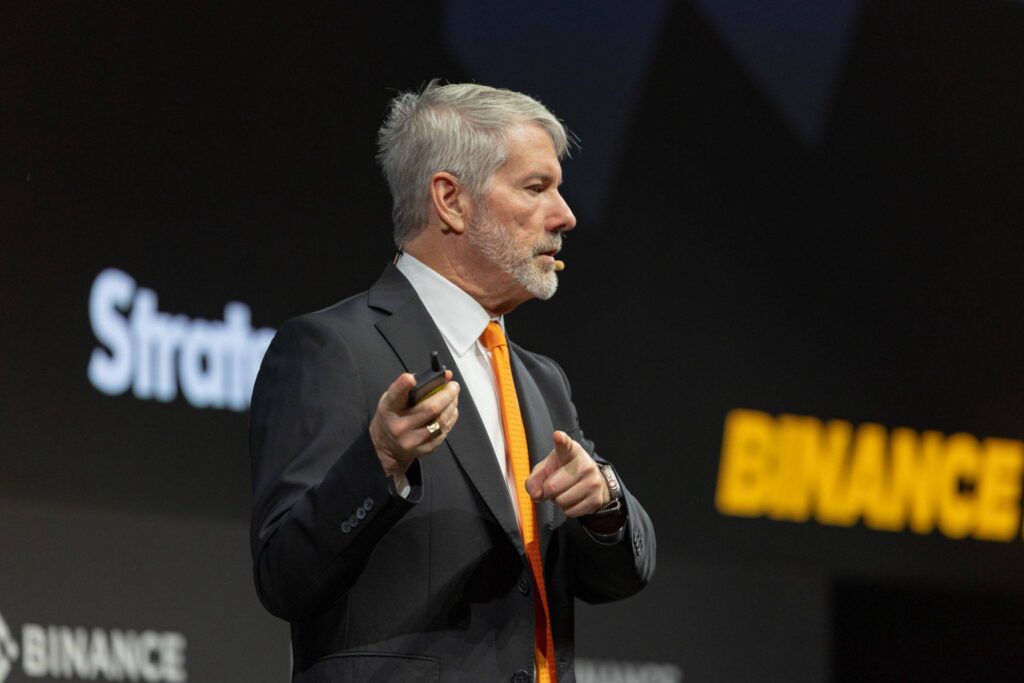
Michael Saylor explained that as more money flows into the crypto market, investors who want exposure to the underlying asset increasingly turn to ETFs. He also noted that MicroStrategy now keeps around 60% of its reserves in Bitcoin, and the company needs BTC to appreciate by just 1.3% annually to stay ahead.
Additionally, Saylor argued that Bitcoin represents “digital intelligence,” offering far greater transparency than traditional systems. He highlighted that someone who bought $100 of BTC in August would be down about 27%, but long-term fundamentals remain unchanged, giving bullish outlook.
According to Saylor, Bitcoin is superior because it functions more like equity rather than debt, unlike a bank deposit. He said the creation of digital credit is now instant, automated, and highly efficient, a major shift that is transforming both the digital economy and the traditional banking system. His message to the audience was simple: think deeply about where digital technology is taking the world.
Bitcoin Volatility Meets Growing Institutional Interest: Stablecoins and ETFs Gain Momentum
The most anticipated panel discussion in the Binance Blockchain week comprised of Ripple’s Brad Garlinghouse, Solana’s Lily Liu and Binance CEO Richard Teng. Investors had kept a keen eye on the industry veterans for taking cues on how crypto markets will behave in the future.
The panel opened by addressing Bitcoin’s recent wild swings, which erased $20 billion in leveraged positions and pushed many traders toward stablecoins as funding rates dipped into negative territory. Still, the speakers stressed that it isn’t all doom and gloom. Institutional inflows are rising, the stablecoin economy is expanding, and regulatory clarity in some regions is giving the industry firmer ground to stand on.
They noted that crypto adoption is still in its early stages, but family offices and corporates are slowly beginning to deploy capital. Market ups and downs were described as a normal part of the cycle. The panel also highlighted the growing interest in ETFs, the real-world utility of stablecoins for fast, low-cost payments, and major transactions like MGX’s investment into Binance giving all signs that crypto’s efficiency and use cases are becoming harder to ignore.
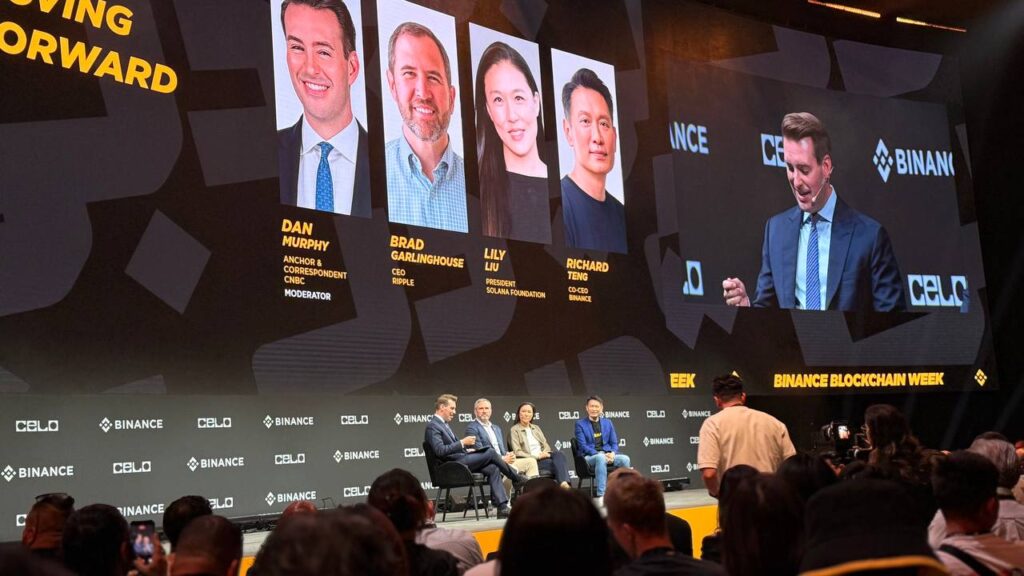
Continuing the panel discussion, speakers mentioned that the relevance of stablecoins continues to grow, saying they now act as a source of trusted collateral, enabling substantial real-world use cases while offering an avenue for greater mobility and flexibility of capital. They also mentioned that in general, crypto and traditional finance collaboration is on the increase, particularly in realms such as asset issuance, transparency, and the reduction of technology costs for institutions. Overall, confidence was expressed by the panel through highlighting the continuous growth of institutional involvement, long-term adoption at an increasing rate, and positioning stablecoins as integral to the future of the financial ecosystem.
Binance Names He Yi as Co-CEO
During the event, Richard Teng took to the stage to announce one of the most important updates regarding Binance’s upper management. The biggest crypto exchange has named He Yi as its new Co-CEO, adding fresh energy and perspective to its top leadership.
As per Teng’s address, He Yi will be working closely with Richard Teng, ensuring that the exchange continues to expand globally while navigating tougher, more complex regulations. The appointment comes at a time when Binance is actively pushing for steady, reliable leadership.
Pierre Gasly Credits Team Work Behind Complex Crypto Tasks
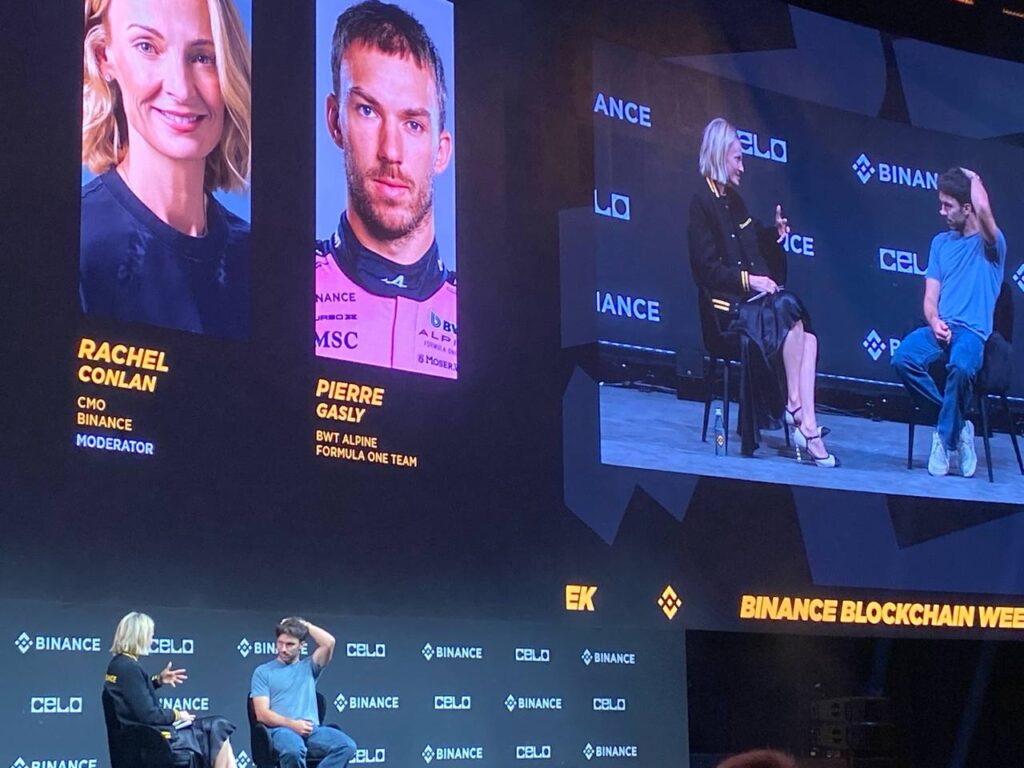
F1 driver Pierre Gasly says the crypto technology used behind Formula 1 continues to evolve rapidly, helping teams become faster and more efficient. He further emphasised that none of the crucial progress is possible without a strong, dedicated team working relentlessly behind the scenes.
According to Gasly, performance on the track is a direct result of engineers, analysts, and tech specialists pushing day and night to optimise every detail. For him, speed isn’t just about the driver but also about the people powering the innovation.


