




To improve the tokenomics of the Superchain (a network including Base and OP Mainnet), the Optimism Collective has announced an OP token buyback proposal to systematically purchase $OP on the open market using 50% of the Superchain’s fees each month. This creates a direct relationship between the token demand in the ecosystem.
How the Proposed OP Token Buyback Works
The OP token buyback proposal is not just an announcement of a fund that Optimism will have to manage. Instead, it will create an entirely new economic structure. Through the use of sequencer fees collected by the various chains built on top of the OP Stack, such as Base and World Chain, the Superchain will use 50% of these sequencer fees (paid in ETH) each month to procure OP tokens from the open market.
The OP tokens purchased from the market will be put back into the collective treasury, where it will be determined through future governance whether the OP tokens will be burned or redistributed. As a result, OP tokens will no longer simply act as a passive governance mechanism but will function as an asset that benefits mechanically with each transaction made on the Superchain, which already comprises over 60% of the L2 fee market.
Why Layer-2 Tokens Are At a Critical Crossroads
When putting its proposal forward, it gives much-needed clarity to the frequently asked question about how the L2 governance tokens operate. Over time, many expert observers and critics have questioned whether these tokens capture the value of the L2 networks they govern.
With the OP token buyback proposal based on 100% organic revenue generated by the OP-powered Superchain platform, Optimism has answered the question with a straightforward answer, and has created a system that maximally aligns the economic incentives of both builders, token holders & users.
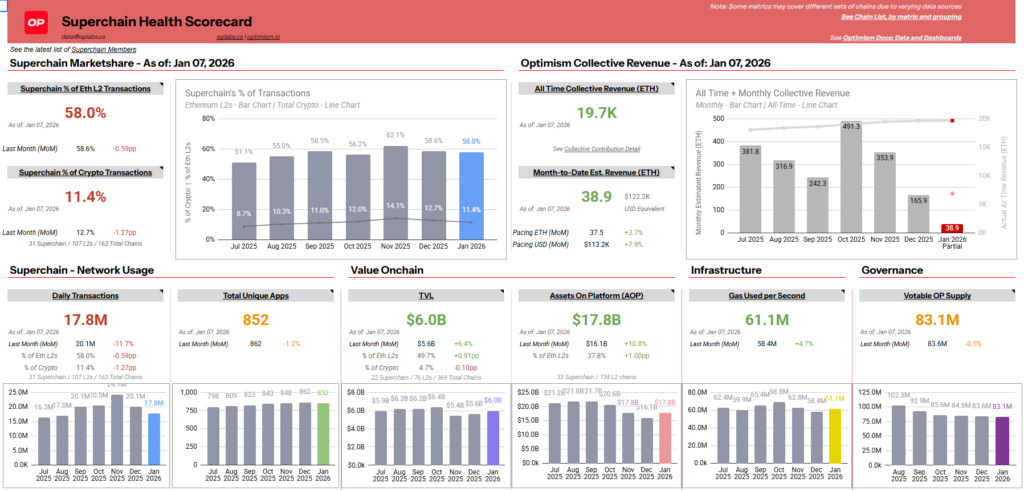
If the Superchain grows, its revenue rises, fueling larger OP token buybacks, which in turn support the token price and treasury. This flywheel will ultimately create a standard for how all future scaling solutions create their economic models.


