





Table of Contents
Bitcoin is trading at roughly half its record price, yet a 2026 adoption report from River, a bitcoin-focused financial services company, points to rising mining power, growing institutional and government holdings, and more everyday payments on the network, indicating that real-world use continues to expand even as the spot market cools.
More Miners, More Countries, More Wallets
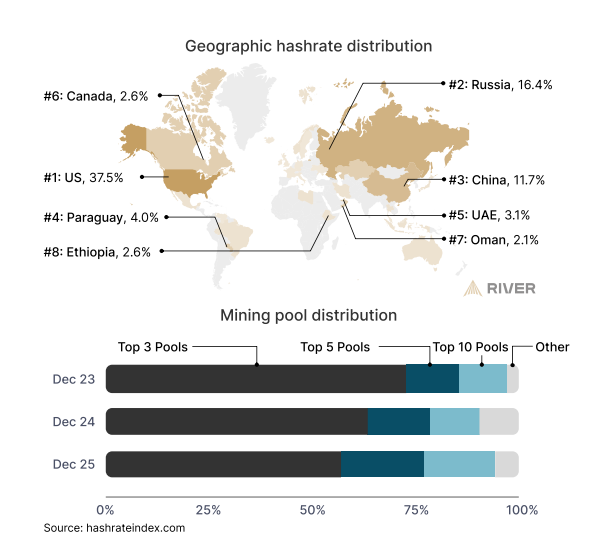
River’s data indicate that Bitcoin’s computing power is more widely spread across countries and mining pools than in earlier cycles, with hashrate that was once concentrated in a few regions now distributed across a broader set of jurisdictions and operators, reducing the risk of network takeover or transaction censorship by any single group.
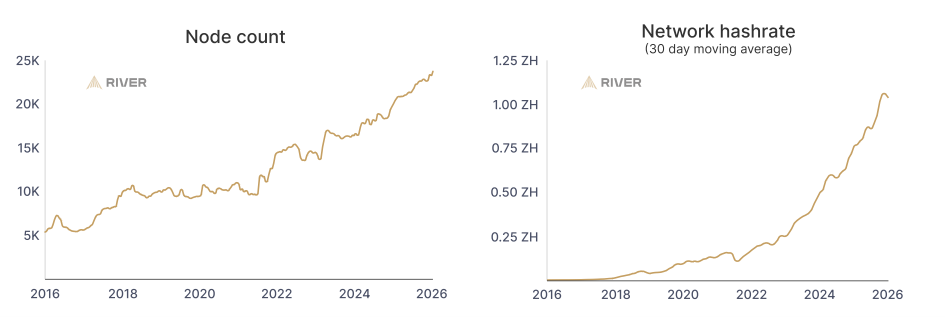
The report estimates that individuals still hold about 66% of mined Bitcoin, with businesses, funds, ETPs, and governments owning a growing share. Additionally, around 1 million coins moved in 2025 from wallets older than two years into newer addresses, suggesting long-term holders took profits while new investors absorbed the supply.
ETFs, Pensions, and States Deepen Exposure
Traditional finance now appears more embedded in Bitcoin than in past downturns, with the report listing hedge funds, asset managers, insurers, pensions, and family offices among holders of spot Bitcoin exchange-traded funds and direct positions.
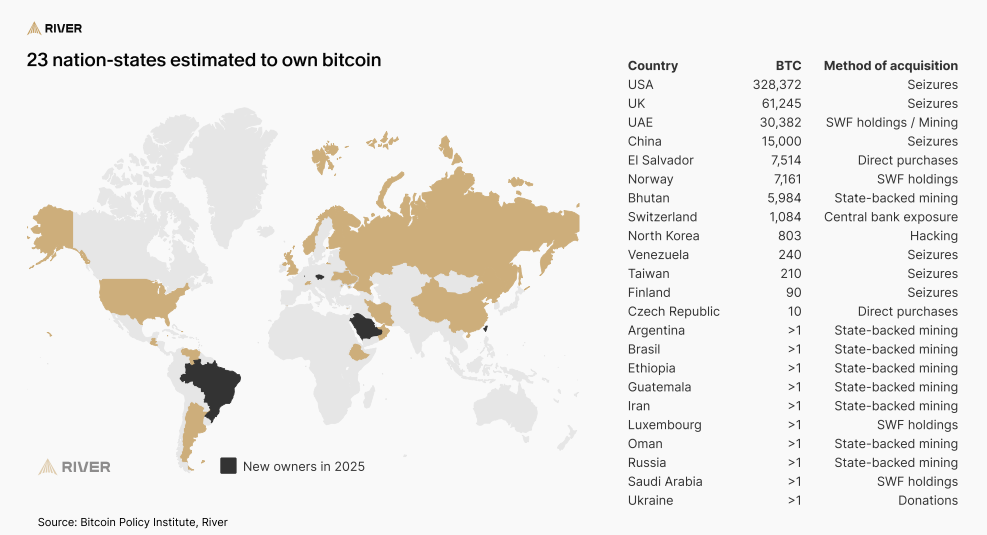
Governments are also more present on the network, with the report showing 23 countries that hold Bitcoin through direct purchases, seized assets, mining, or sovereign entities.
Furthermore, since 2020, more jurisdictions have chosen to expand access to Bitcoin than to restrict it, approving spot Bitcoin ETFs and exchange-traded products while updating banking rules so licensed institutions can offer custody and trading.
Businesses and Payments Infrastructure Expand Quietly
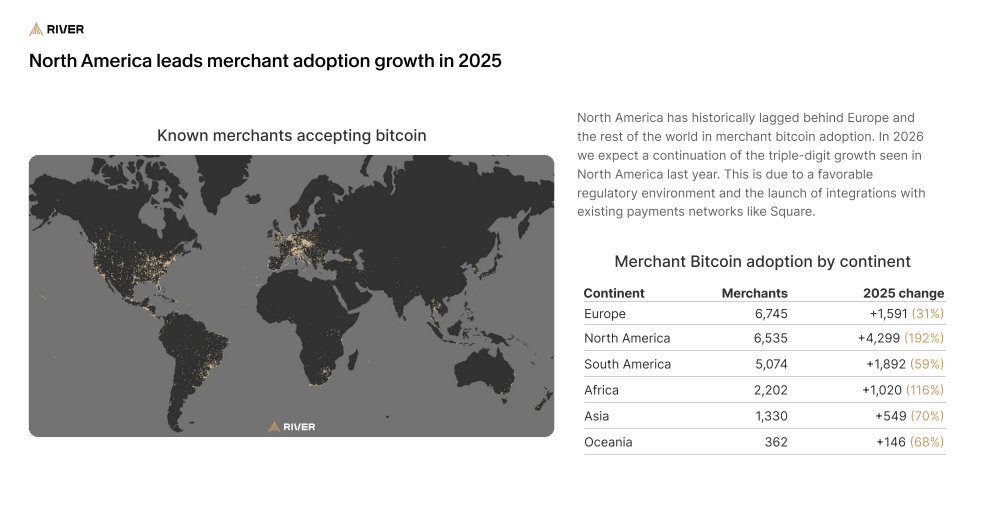
Merchant use is also growing, with the report showing the number of known merchants accepting Bitcoin in North America rising more than 4,000 during 2025, alongside additional growth in South America, Europe, and Africa. For many of these firms, bitcoin serves as an extra payment option or a way to hold part of their treasury in an asset with a fixed supply.
On River’s own platform, the number of business clients more than doubled in 2025, rising 116% to more than 3,000 across sectors such as real estate, professional services, and mining.
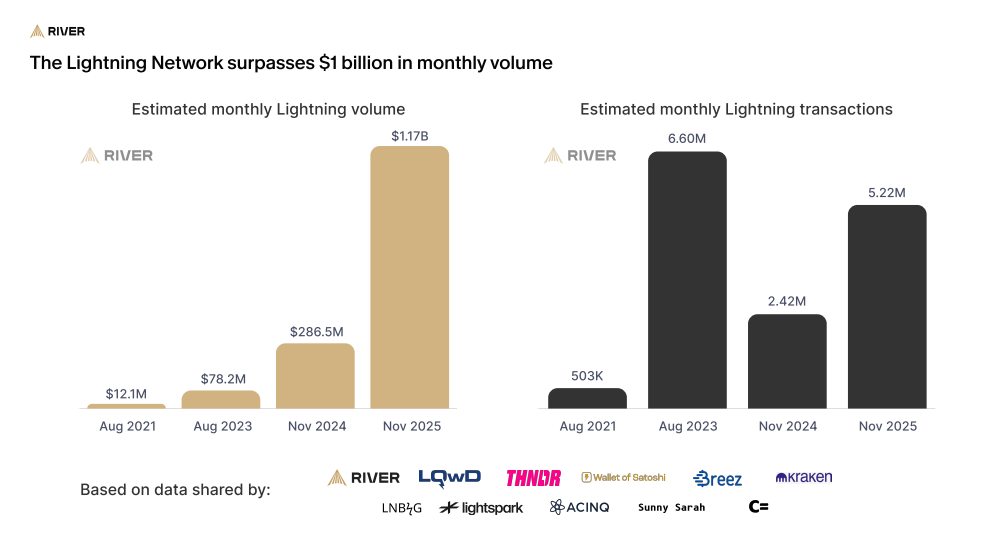
At the same time, use of the Lightning Network, a layer built on top of Bitcoin that is designed for smaller and faster payments, grew sharply. River estimates that Lightning transaction volume increased about 300% in 2025, while the average payment size also rose as exchanges and payment companies enabled Lightning deposits and withdrawals for customers.
Price Falls, Adoption Accelerates
Taken together, the figures describe a market where the spot price has retreated but participation has broadened. Mining is more decentralized, ownership is spread across a wider range of actors, and payment infrastructure is supporting a higher volume of transactions than in previous bear markets.
The current cycle has allowed earlier holders to sell into deeper liquidity and more developed market infrastructure. That selling has weighed on price, yet it has been met by steady demand from institutions, businesses, governments, and new retail investors who are easing into the asset through regulated products and payment applications.
For now, the gap between adoption metrics and price performance remains wide. However, on River’s figures, Bitcoin is gradually building momentum in mining, holdings, and payments despite the visible bear market on price charts.


