





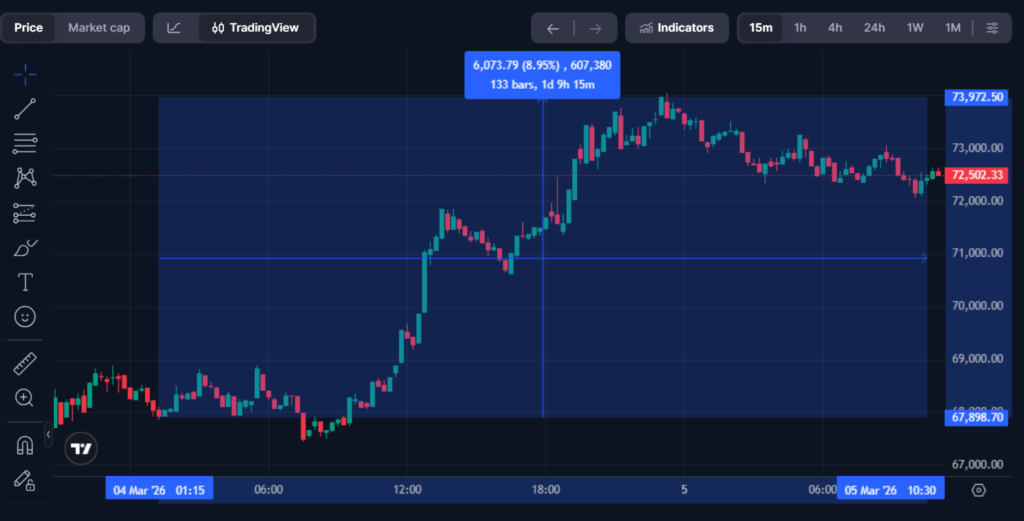
March 5th marked a significant surge in the crypto market, with a Bitcoin jump reaching USD 74,000 in a matter of hours. This price increase of 8.9% in 24 hours resulted from multiple sources: institutional investment, an extraordinary short squeeze, and “favorable” political events. These factors contributed to the surprising BTC price increase in a matter of days, breaking decisively above the USD 63,000 – USD 71,700 range that had held since last February.
What Drove this Explosive Bitcoin Jump
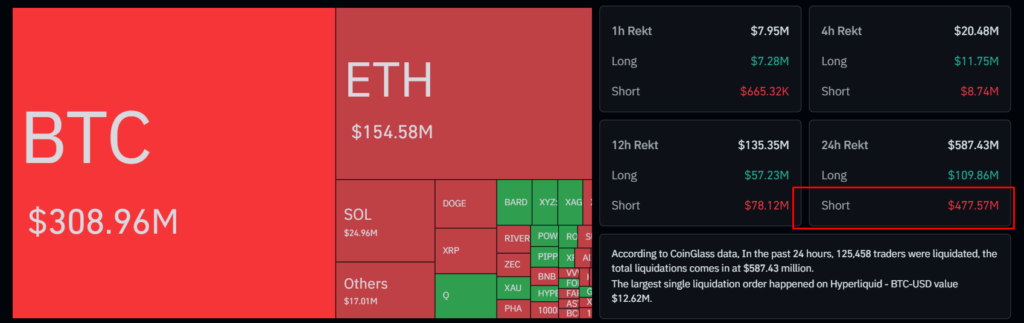
The Bitcoin jump was fueled by multiple engines. Spot Bitcoin exchange-traded funds (ETFs) saw net inflows of $1.5 billion during five days of trading (the best week period in 2026); BlackRock’s IBIT alone brought in USD 322 million in one day. Michael Saylor’s Strategy incorporated 3,015 BTC valued at USD 204 million to increase its total corporate treasury holding to over 1 million BTC. This caused liquidations of USD 477 million in short sales and resulted in 85% of total liquidations occurring from leveraged shorts. Futures (BTC) trading volume increased by more than 50% above the 15-day average, signifying real demand rather than thin liquidity.
Political Climate is Now Favorable to Crypto
President Trump added fuel by publicly pressuring major banks to cease preventing stablecoin legislation, and stating delays “end up being an advantage to China”. In addition, Kraken’s Wyco banking operation was awarded a Federal Reserve (Fed) master account, making it the first crypto company to get direct access to the Fed’s payment system. This drew immediate opposition from banking lobby groups. David Bailey, a former Trump crypto advisor, stated that “liking Bitcoin isn’t enough,” there are concrete policy changes that must take place.
Resistance and Reality Check
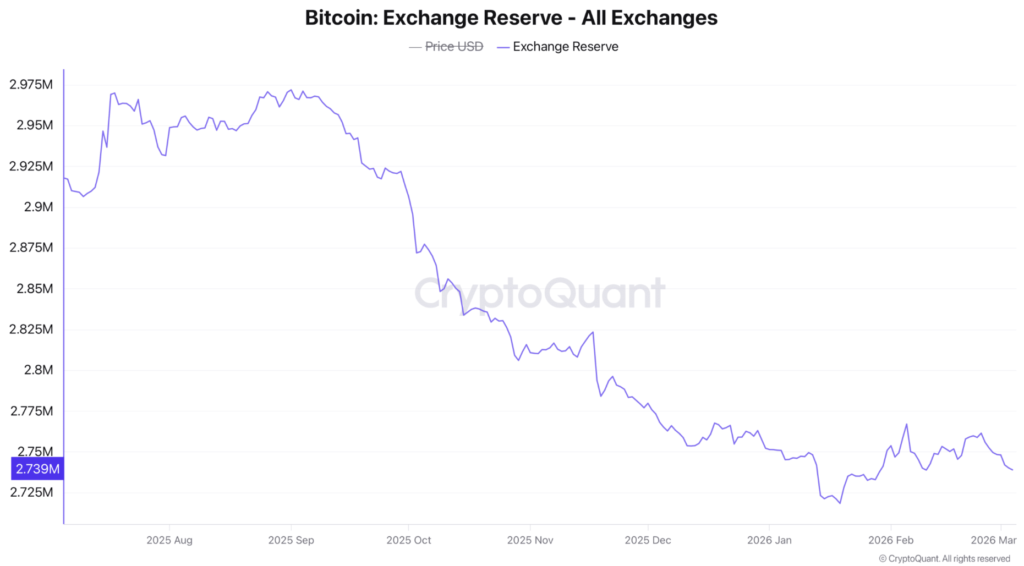
Exchange reserves are at multi-year low levels, and queues of validators have built up significantly for Ethereum to the point where the supply aspect is becoming tighter; however, maintaining the trend price requires confirmation above the resistance.
After the Bitcoin jump, there will be one last challenge: resistance around USD 72,000 – USD 75,000, which is where the majority of Big Hodlers are ‘cost basis’. Analysts point out that there is still 43% of BTC supply in a negative position, which could be putting upward pressure on the price. Additionally, Bitcoin is still linked to NASDAQ future contracts, with a correlation that has increased to 81%, this provides further evidence that BTC has a very high degree of risk in relation to the stock market.


