





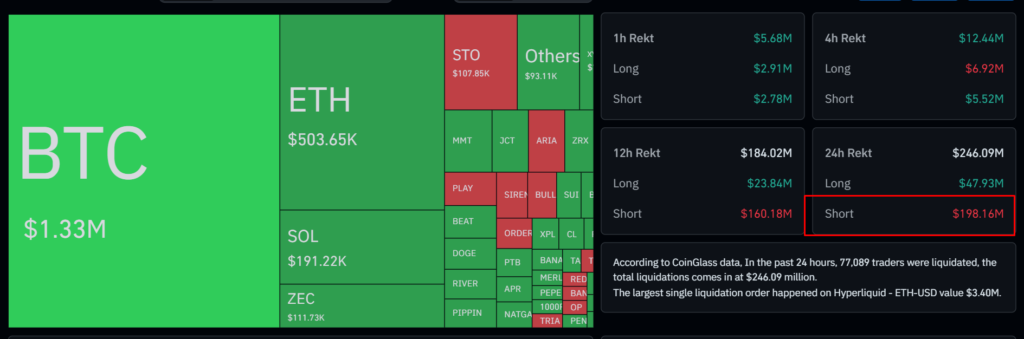
Bitcoin (BTC) soared significantly to USD 69,500 based on conflicting messages provided by President Trump regarding a potential deal (and/or threats) with Iran to reopen the Strait of Hormuz. The surge in trading resulted in USD 198 million of short trades being liquidated as bears were blindsided by the unexpected movement in the market.
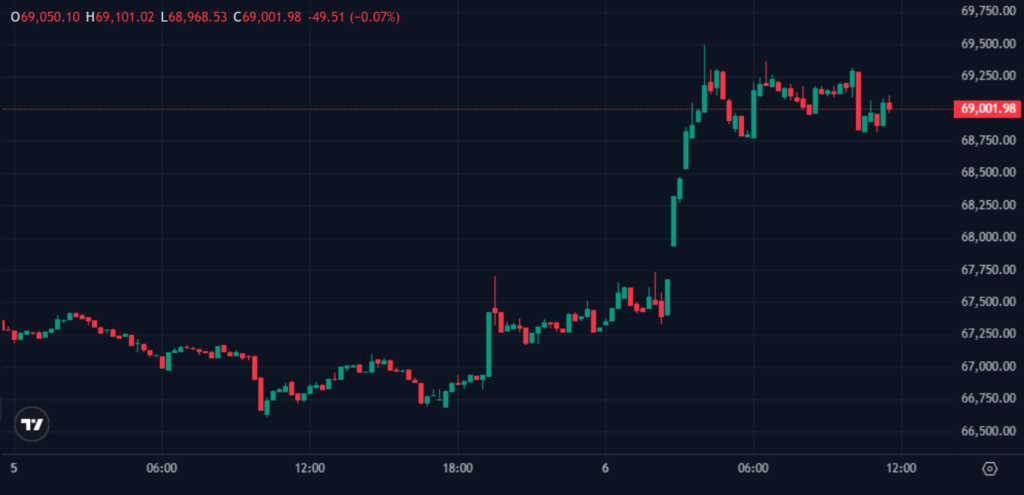
Trump’s Mixed Signals Create Volatility
Trump posted a profanity-laden threat on Truth Social, indicating that if the Strait was not open by Tuesday, he would have the U.S. bomb Iran’s electric generating plants and bridges. He later said that there was a good chance for an agreement to be completed within 24 hours as they’re negotiating with Iran. Axios has reported that the U.S., Iran, and regional parties are working on an agreement for a 45-day ceasefire.
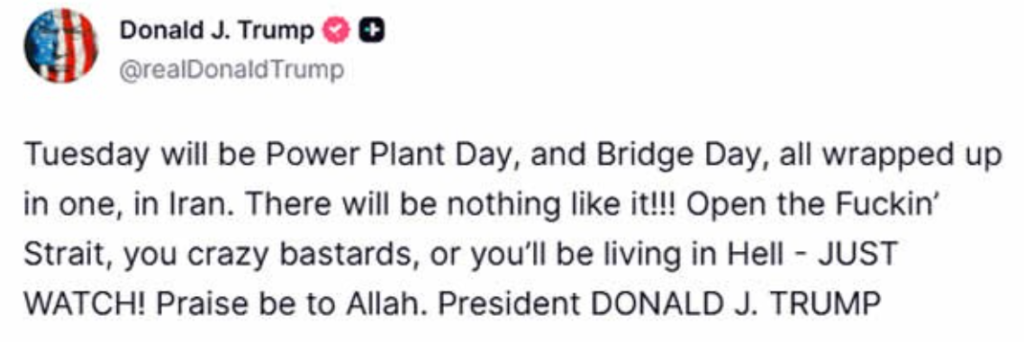
The uncertainty created by the mixed messages in the market injected volatility, but the consensus amongst traders is that the potential completion of a deal will catalyze deescalation, causing prices in the market to rise, including Bitcoin. The ongoing conflict in the Middle East, which has lasted two months now, has kept the Strait of Hormuz almost entirely shut, and oil prices have risen to USD 112 per barrel, increasing American fuel expenses by USD 240 million on a daily basis.
Market Reaction and Technical Outlook
The global crypto market cap rose by USD 70 billion, totaling a value of USD 2.44 trillion, while over 80,000 traders were liquidated across exchanges within a 24 hour period. Short liquidations represented nearly 3/4 of the total liquidations (USD 246 million) and 86% of volume traded within the 4 hour action at exchanges such as Bitget, Bybit, and Gate.
Bitcoin has strong resistance at USD 69,205 with potential upside targets of USD 83,437 if the rally breaks above this level. The immediate support level is USD 68,944. Although the price may keep this volatility, Bitcoin is now leading Fed’s policy, mostly driven by exchange-traded funds (ETFs). This could be seen as a market influence flip as institutions are frontrunning the Fed.


