





The institutional investors have started to slowly and carefully pull back. In the last five weeks, almost $3.8 billion has left U.S.-listed spot Bitcoin exchange-traded funds. This is the longest streak of outflows since February 2025. The data from SoSoValue claims that $316 million left the market just last week. The single-week withdrawals are intriguing, but the fact that they keep happening shows that institutional allocators are being cautious over a longer period of time.
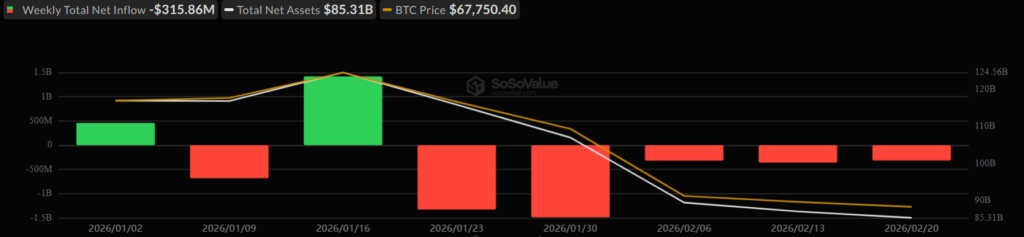
These outflows show that Bitcoin ETFs are working exactly as they should for professional investors: they are a regulated, liquid way to quickly change positions when risk sentiment changes. The long-term trend shows that institutions are actively adjusting their portfolios instead of just responding to short-term price changes.
BlackRock’s IBIT Pushes the Retreat
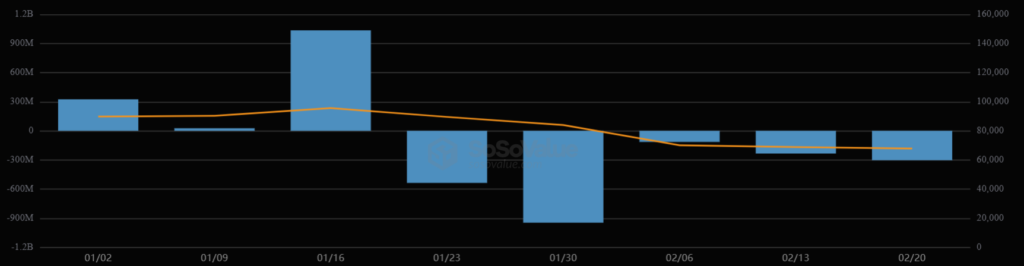
Most of the outflows came from BlackRock’s iShares Bitcoin Trust (IBIT), which accounted for about $2.13 billion of the $3.8 billion pulled from U.S. spot Bitcoin ETFs over five weeks. As the largest and most commonly used way for institutions to access Bitcoin, IBIT’s position at the center of these redemptions shows that these moves are purposeful. Unlike retail activity, which can be unpredictable, the withdrawals point to calculated decisions by professional investors.
The fact that IBIT leads the outflows also demonstrates how financial institutions utilize regulated ETFs to regulate their Bitcoin exposure. Its daily liquidity and regulatory oversight make it easy and fast to adjust positions while also providing a clear signal of broader institutional sentiment.
A Familiar Pattern, But in a Different Setting
The current five-week streak is the same length as the outflow run in February 2025, but it is smaller in scale. At that point, about $5 billion left ETFs, and Bitcoin fell to around $75,000 in early April. The withdrawals today add up to $3.8 billion, and Bitcoin is trading for just under $65,000. The market backdrop is very different now: money is leaving the market from a position of already lower prices instead of from peak highs. This means that the market is holding steady under pressure instead of going into a new panic phase.
The distinction among the two groups is significant because it influence each of short-term visitors and long-term residents. The 2025 ETF outflows served as an indication for upcoming market corrections. Institutional investors have changed their primary operational activities from active investment management to portfolio changes that respond to ongoing market and technical difficulties. The current data shows stability in the ETF market without any signs of forced selling, but the financial institutions are proceeding with caution.
The crash from October 2025 still affects how institutions act.
Institutional caution traces back to the early October 2025 correction, which highlighted Bitcoin’s sensitivity to disruptions on exchanges such as Binance. During that period, prices of the largest cryptocurrency experienced a drop of 25% over just two weeks, triggering concerns about solvency and counterparty risk outside the U.S. regulatory framework. While spot ETFs offer a regulated and accessible way to gain Bitcoin exposure, they cannot fully protect investors from these broader systemic risks.
Following that correction, the financial institutions have continued to follow conservative risk, which is demonstrated by the five-week outflow pattern. Portfolio managers retain capital preservation and consider ETFs as a first line of liquidity, which permits them to quickly reduce exposure or exit positions when market volatility escalates.
Macro Pressure Raise Concerns
Macroeconomic factors are also making people defensive right now, in addition to shocks from the past. The U.S. and Iran are getting more and more tense, and President Donald Trump just announced a new global tariff policy. This has made global markets uncertain. Institutional allocators often choose safer, more liquid assets over volatile ones like Bitcoin because of trade and geopolitical risks. Technical factors have made these pressures worse. For example, when key long-term support levels are broken, funds that follow rule-based models have to systematically and voluntarily de-risk.
These things together have made the risk-off environment last. ETFs have daily liquidity, which makes it easy to get out quickly. This can make the market signal stronger. So, the outflows are both a sign of tactical decision-making and a way to make investors more cautious.
Understanding the Importance of Flow Data
The $316 million that was taken out last week may not seem like much compared to the $3.8 billion total, but the streak of withdrawals is what really matters. The five consecutive weeks of net outflows demonstrate that investors are making strategic decisions that will determine their investment positions yet to come. If the underlying Bitcoin is sold, ETF redemptions can also put indirect pressure on the spot market, but the psychological effects are usually stronger than the mechanical ones. The market continues to operate near $65,000, which demonstrates institutional investors maintain their cautious approach according to the ongoing outflows.
The market participants need to look at flow data in context. It doesn’t directly predict price changes, but it does give a clear picture of how sure institutions are about something. In this case, the long streak shows a clear trend of careful risk management instead of panic selling.
What this means for traders and investors
Ongoing ETF outflows suggest that rallies could run into trouble from institutions that are cutting back on their exposure, which is negative news for short-term traders. If there were a reversal in net inflows, it would be an early sign that positioning was stabilizing and that sentiment might be changing. Long-term investors care about the size and relative context of withdrawals. $3 billion is a significant amount of capital, but it’s considerably lower than what was taken out during the February 2025 streak (~$5 billion). The current pattern indicates a tactical realignment rather than a complete departure from the asset class.
The larger effect shows that Bitcoin now operates as a component of international capital flows. The asset now serves as an essential part of institutional investment portfolios and needs to adjust to different levels of risk. The price of the asset moves according to changes in trade policies, geopolitical events, and developments in market technology.
The Road Ahead
The most important thing to keep an eye on is whether the streak lasts more than five weeks. A sixth or seventh week in a row of outflows would strengthen the current defensive stance from the market participants, but a break in the trend would show that institutional risk appetite has stabilized.


