





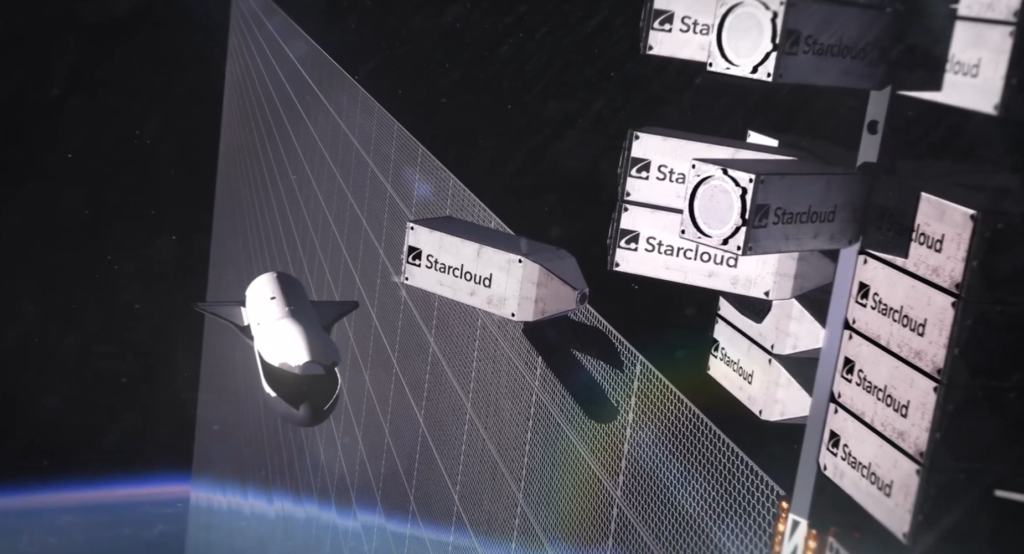
Starcloud, a startup backed by Nvidia, is set to be the first organization to operate Bitcoin mining in space operations using its second spacecraft to launch Bitcoin Mining Application Specific Integrated Circuits (ASICs) hardware into orbit later this year, and become the first company to mine crypto in space. The company, on a previous mission, also proved that it can run an Nvidia H100 Graphics Processing Unit (GPU) in orbit; a Starcloud-2 satellite will carry a GPU cluster, too.
Why Bitcoin Mining in Space?
According to Philip Johnston (CEO of Starcloud), “one of the most compelling use cases” of how space computing will cost less than traditional methods is operating mining ASICs in orbit since they are at least 30 times less expensive compared to their GPU competitors. For example, an Nvidia B200 chip using 1kW (kilowatt) would cost roughly USD 30,000, whereas a 1kW ASIC would only cost roughly USD 1,000. “Bitcoin mining consumes about 20 GW of power continuously. It makes no sense to do this on Earth,” he stated.
The concept of an Orbital Data Center combines two major advantages of being in space:
- First, near-constant solar power in sun-synchronous orbit, eliminating Earth’s nighttime and weather interruptions.
- Second, the vacuum of space acts as a natural heat sink, removing the need for water-based cooling systems.
According to Johnston, he believes that these advantages, in sync, can create energy savings of at least 10 times compared to similar facilities located on Earth. Moreover, ASIC miners can run for around 5 to 7 years with proper maintenance, and even older models are still functioning after 10 years.
From AI to Crypto Mining
Starcloud launched its first satellite using a SpaceX Falcon 9 in November 2025. The satellite had five Nvidia H100 GPUs on board, and the satellite successfully operated as a data center in space, marking the first time ever that data center-grade GPUs have been used in orbit and successfully trained a small language model. The Starcloud-2 satellite will expand on the first mission’s capabilities and will contain multiple GPU clusters for artificial intelligence (AI) workloads as well as ASICs for Bitcoin mining.
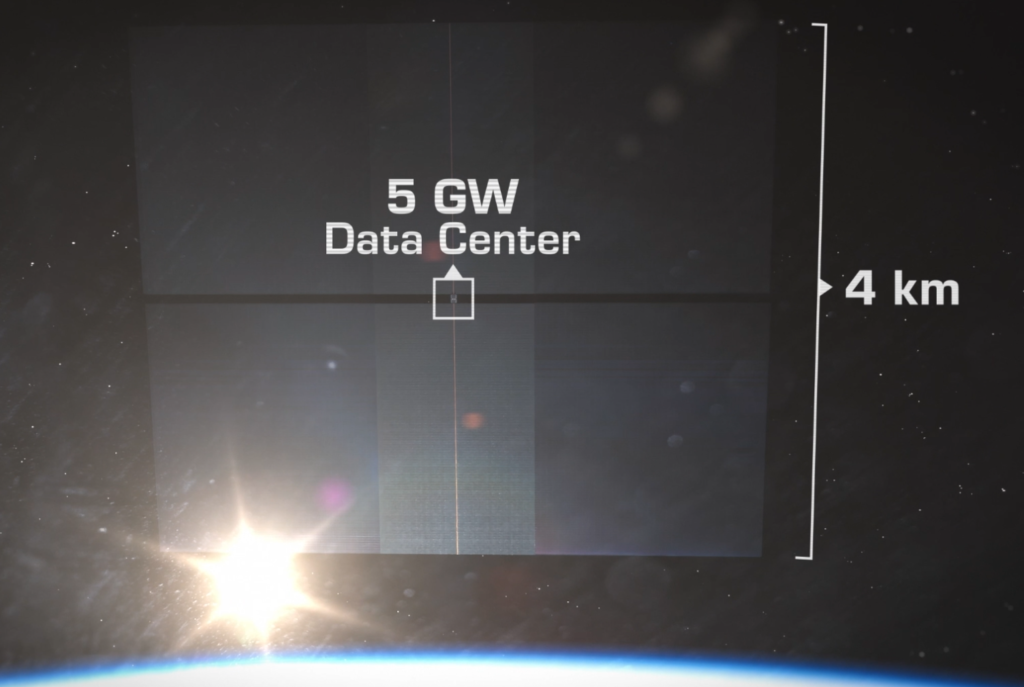
The Federal Communications Commission (FCC) has received Starcloud’s application to launch approximately 88,000 satellites as part of its orbital computing constellation. Johnston’s vision for the future is to have multi-gigawatt (GW) orbital facilities; these would consist of solar arrays covering vast distances (kilometers) and capable of supporting large amounts of energy use.
Economic Realities
To this point, Johnston admits that the economics of the current models are still experimental, acknowledging the reliability of the hardware. One of the five GPUs on the first satellite was unresponsive before the satellite was launched. But he does view Bitcoin mining as a proof point: “We’re solving it for the energy piece. Whether we solve it for GPUs or bitcoin, this is relevant to us.”
On the other hand, they are not the only company in this race. Several projects are working on different approaches:
- Proof-of-Transit Timestamping: A whitepaper launched by tech entrepreneurs Jose E. Puente and Carlos Puente, a concept to make Bitcoin interplanetary, aiming for Bitcoin Lightning transfers to and from Mars in just 3 minutes.
- SpaceX: Among other missions, eyes 1 million satellites, pushing orbital data center in orbit. The company already sent its application to the FCC in January 2026.
- Intercosmic Energy: A project similar to Starcloud, aiming to monetize stranded solar energy in space for Bitcoin mining.
Bitcoin (BTC) Price…
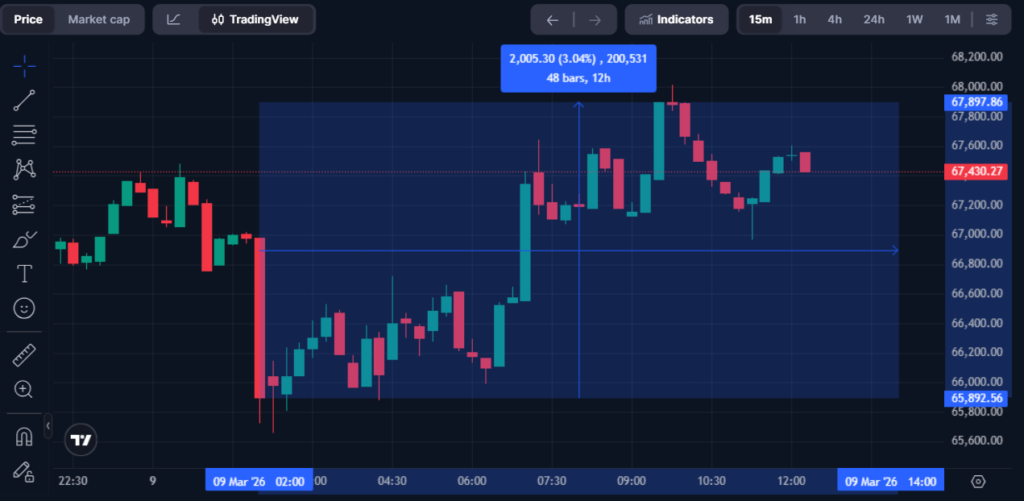
Meanwhile, the Bitcoin (BTC) price surged 3% on Monday. The main cryptocurrency keeps leading the broader sentiment, with investors/traders watching both crypto and traditional markets closely as geopolitical tensions (U.S.-Israel-Iran war) and macro pressures rise.


