The latest crypto sell-off is driven by a shortage of US dollar liquidity rather than any breakdown in the crypto market, according to investor and analyst Raoul Pal.
Pal, founder of research firm Global Macro Investor and media platform Real Vision, said bitcoin’s slide is closely tracking the performance of U.S. software-as-a-service (SaaS) stocks, suggesting a common macro driver behind both moves.
According to a chart he shared, bitcoin prices and an index of SaaS shares have been moving almost in lockstep, with both falling in recent weeks.

In his view, that parallel undermines the ongoing narrative that crypto has decoupled from other risk assets or is suffering from sector-specific damage, such as exchange failures or regulatory pressure.
“SaaS and BTC are the EXACT same chart?” Pal wrote, arguing that both are highly rate-sensitive, long-duration assets whose valuations depend heavily on abundant liquidity and confidence in future growth.
Liquidity Drought From US ‘Plumbing’
Pal links the pressure on bitcoin and high-growth tech shares to what he describes as a temporary drought in US liquidity caused by government funding tensions and shifts in how the Treasury and Federal Reserve manage their balance sheets.
He says the drain of the Fed’s overnight reverse repo facility was essentially completed in 2024. After that, the Treasury General Account was rebuilt in July and August with no monetary offset, which he argues resulted in a further drain on liquidity.
There is no disconnect. It’s just that the confluence of events Reverse Repo drained >TGA rebuild > Shutdown > Gold rally > Shutdown was not forecastable by us, or in any event we missed the impact.
Pal said he usually focuses on a broader global liquidity gauge, which he finds tightly correlated with bitcoin and the Nasdaq 100 over time. However, at the current stage of the cycle, he believes the U.S. component is exerting greater influence because the United States remains the dominant supplier of dollar liquidity to the world.
Gold as a Competitor For Scarce Cash
The former Goldman Sachs executive also argues that a strong rally in gold has diverted what little marginal liquidity there is away from the riskiest assets, such as bitcoin and SaaS stocks.
“There was not enough liquidity to support all these assets, so the riskiest got hit. C’est la vie,” Pal said.

Pal characterized the current phase as an “air pocket” in which crypto markets are starved of fresh capital until Washington resolves another US government shutdown, which he describes as the final liquidity hurdle before what he calls a coming “liquidity flood”.
He expects that once the shutdown is settled, a series of policy shifts will gradually add liquidity: potential changes to the enhanced supplementary leverage ratio (eSLR) that could free up bank balance sheets, some drawdown of the TGA, ongoing fiscal stimulus, and eventual interest-rate cuts.
Dismissing The ‘Hawkish Warsh’ Story
Pal also challenged what he called a “false narrative” that former Federal Reserve governor Kevin Warsh, widely discussed in markets as a possible future Fed chair in a new Republican administration, would pursue aggressively tight policy.
He argued that Warsh’s mandate, if appointed, would more likely resemble the mid-1990s Federal Reserve approach under Alan Greenspan: cutting rates, allowing the economy to expand at a strong pace, and relying on productivity gains from technologies such as artificial intelligence to contain core inflation.
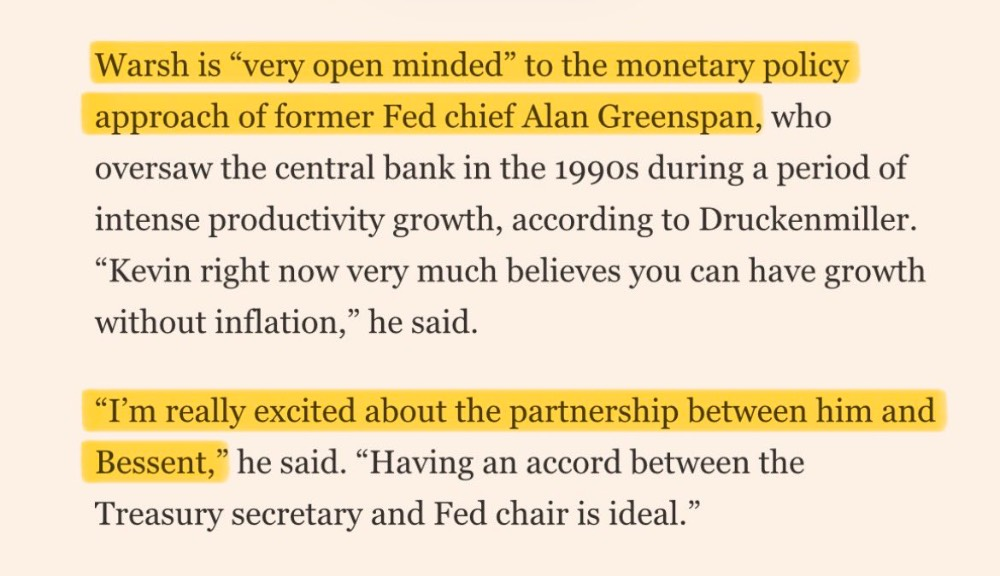
According to Pal, Warsh does not want the Fed’s balance sheet to keep expanding. However, cutting it back is difficult because the system is constrained by the level of bank reserves. Warsh can lower rates and then step aside, leaving the administration to push liquidity through banks and regulatory tools, Pal added.
Message To Nervous Crypto Investors: Be Patient
Pal acknowledged that the sharp moves have rattled retail investors and professional traders alike, especially in smaller cryptocurrencies that typically fall far more than bitcoin during drawdowns. He cited positions in the Sui token as an example of trades that currently “feel terrible” but that he still sees as part of a broader cycle.
He argued that in prior cycles, when bitcoin pulled back around 30%, many altcoins dropped 60–70% but later outperformed on the way up, provided the underlying projects were of sufficient quality.
For now, his advice to investors is to focus less on day-to-day losses and more on the progression of the liquidity cycle he tracks through macro indicators. “Patience,” he said, is crucial, as he still sees digital assets and other long-term growth assets as a trade that needs time to unfold.