





Animoca Brands has acquired SOMO, a digital collectibles and gaming company specialized in developing blockchain-based titles, the company announced on Jan. 14, with financial terms not disclosed.
SOMO develops blockchain-based games that treat digital items, such as NFTs, as tradable assets rather than standard in-game licenses. Its ecosystem centers on SOMO Codex, SOMO Duel, and SOMO Battleground, which are built to make on-chain collectibles playable in matches, watchable via streaming, and tradeable between users.
Animoca Brands said SOMO will be integrated into its existing Web3 network of games and applications, with plans to use its current distribution channels and partner relationships to promote SOMO titles and to link their NFT-style collectibles and communities with other projects in its portfolio.
Strategic Fit with Animoca’s Web3 Portfolio
Animoca Brands has built its business around blockchain-based games, NFT platforms, and token-based loyalty and identity tools, alongside a large venture portfolio in Web3. Its holdings include the metaverse project The Sandbox, the Moca Network, and stakes in hundreds of digital-asset and gaming companies.
The SOMO acquisition adds another NFT-focused project to that portfolio and extends Animoca’s presence in the sector. The company has said it wants to connect more of its projects through shared token standards and infrastructure, and SOMO’s on-chain collectibles are expected to be linked into that framework through cross-promotion and potential interoperability rather than immediate technical integration.
Animoca co-founder and executive chairman Yat Siu has described SOMO’s approach as building an operating layer for collectibles that blends culture, gaming, and digital ownership, a concept the group sees as complementary to its broader push around NFT-based assets and Web3 games.
Deal Aligns with Early 2026 NFT Market Rebound
The SOMO acquisition comes as the NFT market shows early signs of stabilizing after a sharp pullback in 2024–2025, when annual trading volume slipped about 19% in 2024 to roughly $13.7 billion and is estimated to have fallen further to around $5.6 billion in 2025, well below the previous cycle’s highs.
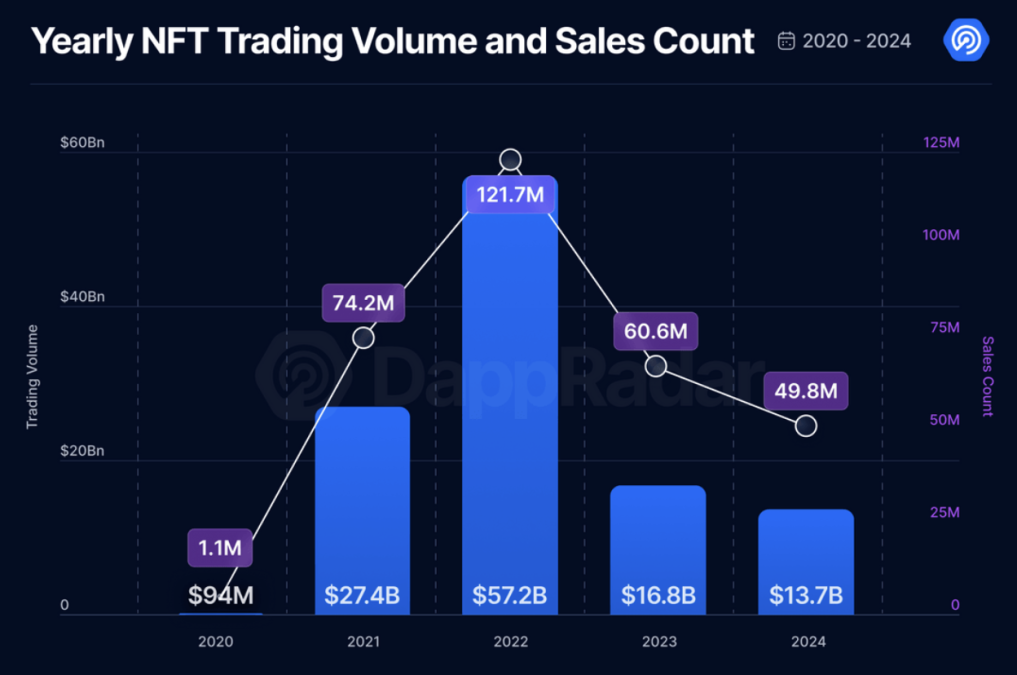
Recent data show activity picking up again into late 2025 and early 2026, with quarterly volumes recovering to about $1.6 billion in the third quarter of 2025, monthly turnover reaching roughly $546 million in October on more than 10 million sales, and weekly sales of around $85 million in the first week of January 2026, led by a handful of active collections while most assets still trade at subdued prices.


