




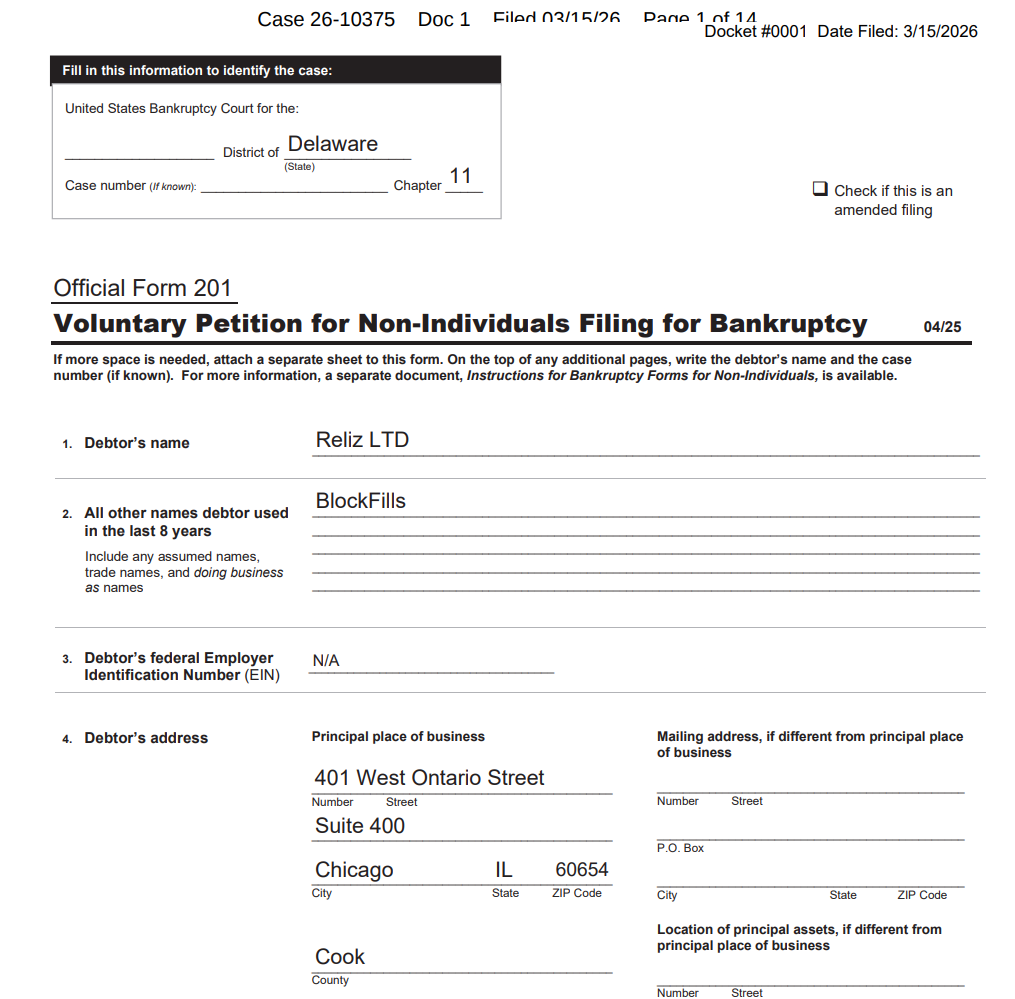
BlockFills Bankruptcy: The crypto trading and technology company that specializes in institutional clients has filed for Chapter 11 bankruptcy protection. The filing was made on March 15 with the U.S. Bankruptcy Court for the District of Delaware following BlockFills’ temporary suspension of client deposits and withdrawals.
Why BlockFills Filed for Bankruptcy
The BlockFills bankruptcy filing was decided after extensive general discussions with its investors, clients, creditors, and other stakeholders. Following those discussions, BlockFills identified Chapter 11 as the most responsible option available for preserving value and maximizing recoveries for its stakeholders. As part of this process, BlockFill intends to stabilize the business, seek additional liquidity and recovery, and consider other strategic opportunities under court supervision.
BlockFills’ management has stated that protecting the clients is a top priority, and as part of this process, BlockFills plans to continue to work constructively with its clients, creditors, investors, and other stakeholders during the restructuring process.
Wider Market Consequences
The BlockFills bankruptcy is another blow to the crypto institutional infrastructure sector, which has seen increasing levels of distress among major liquidity providers and prime brokers. The bankruptcy shows that there are still two huge problems facing institutional liquidity:
- Structural constraints on institutional liquidity
- Compressed trading volumes and difficulty in finding capital in a more risk-averse funding environment
In addition to its significant implications within the institutional crypto space, the BlockFills bankruptcy adds another bankruptcy victim to what has become an extensive list of crypto companies seeking shelter from the challenges of the post-2022 market downturn. However, the filing of BlockFills in 2026 indicates that we have not only continued to see the negative aftermath of the crypto market crash, but also that this post-bubble consolidation phase is extending deeper into the ecosystem’s plumbing.


