





The Drift Protocol, a decentralized perpetual trading exchange built on the Solana blockchain platform, experienced a severe breach that caused the protocol to lose up to USD 285 million in estimated losses. The Drift exploit forced the suspension of deposits and withdrawals as the protocol scrambled to coordinate with security firms, bridges, and exchanges.
How Did the Drift Exploit Happen?
Most decentralized finance (DeFi) hack activities target smart contract vulnerabilities. However, in this instance, the hack’s base of attack was compromised administrative keys. By analysing onchain data, it appears that the attacker’s first move was transferring approximately 41 million JLP tokens (around USD 155 million worth) from the Drift Vault to an external wallet, then systematically performed transactions to drain SOL, stablecoins, wrapped tokens, and memecoins. The attacker had performed a number of preparatory transactions (funding test wallets, trial transfers, etc) prior to the exploit occurring.
In a crucial move, the attacker converted all of the stolen funds into USDC and used Circle’s Cross-Chain Transfer Protocol (CCTP) to bridge assets from Solana to Ethereum. Onchain investigator ZachXBT indicated that a significant amount of USDC moved through CCTP for several hours during the course of the Drift exploit with no evidence of any pause or freeze in the recording of the transactions. This is important because Circle had previously frozen 16 “business- linked” wallets in the previous week, raising sharp questions about inconsistent oversight.
Market Impact and Follow-Up
To this point, after the attack, the Drift exploit caused a severe downturn in the protocol’s total value locked (TVL), dropping it 92.5%, from USD 311 million to USD 23.5 million in a matter of hours. The price per DRIFT token also decreased around 42% to approximately USD 0.039, while panic selling resulted in a dramatic increase in trading volume to over 354%. Unlike Bybit’s situation in 2025, the industry has not collectively coordinated any bailout.
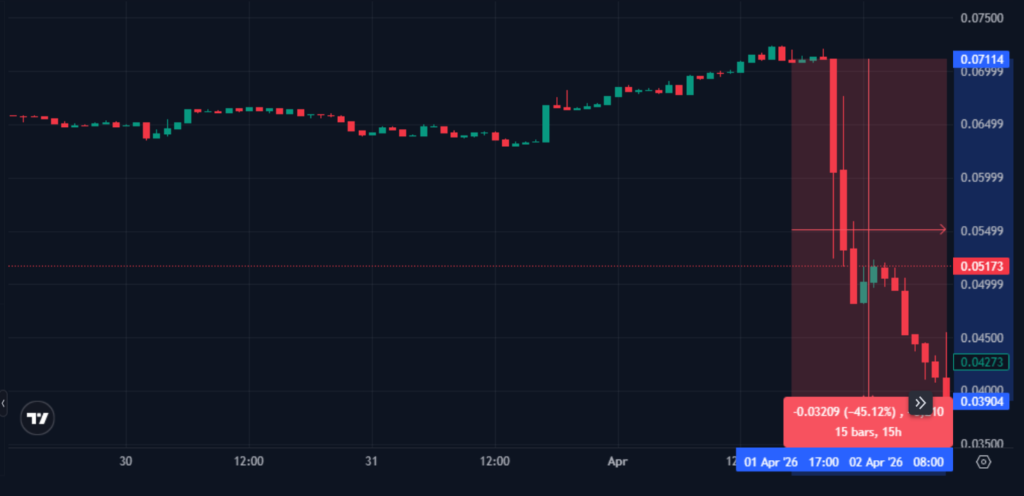
DRIFT token price chart. (Source: TradingView)
How This Affects the Perspective on DeFi Security
The Drift exploit highlights a dangerous blind spot within the DeFi space; even audited, high-TVL DeFi protocols are susceptible to attacks if administrative keys are not secured through either multi-party computation or hardware security measurement. Even worse, the fact that the hacker was able to transfer nine-figure sums via CCTP without triggering freeze parameters demonstrates a systemic weakness in cross-chain systems, one that centralized stablecoin issuers have the capacity to correct, but did not in this case.
Final Take
The Drift exploit serves as a harsh reminder that the security of all DeFi platforms is only as strong as its weakest key‑management practice. Until mandatory multi-signature or threshold signature schemes are instituted as an industry-wide best practice for administrative functions, and until stablecoin issuers develop mechanisms to monitor anomalous cross-chain transactions in real time, the likelihood of similar breaches will remain high. So far, Drift’s collapse represents a USD 285 million lesson about the consequences of privileged access.


