




The U.S. Securities and Exchange Commission (SEC) has approved Nasdaq’s plan to allow certain stocks and exchange-traded products to be traded in tokenized form, giving the exchange a closely watched regulatory win that could help bring blockchain-based settlement into the center of U.S. equity markets.
The order, issued on March 18, approves Nasdaq’s proposal and links the initiative to a pilot program run by the Depository Trust Company. Under that framework, eligible Nasdaq members will be able to trade tokenized versions of certain securities while continuing to clear and settle through the existing market structure.
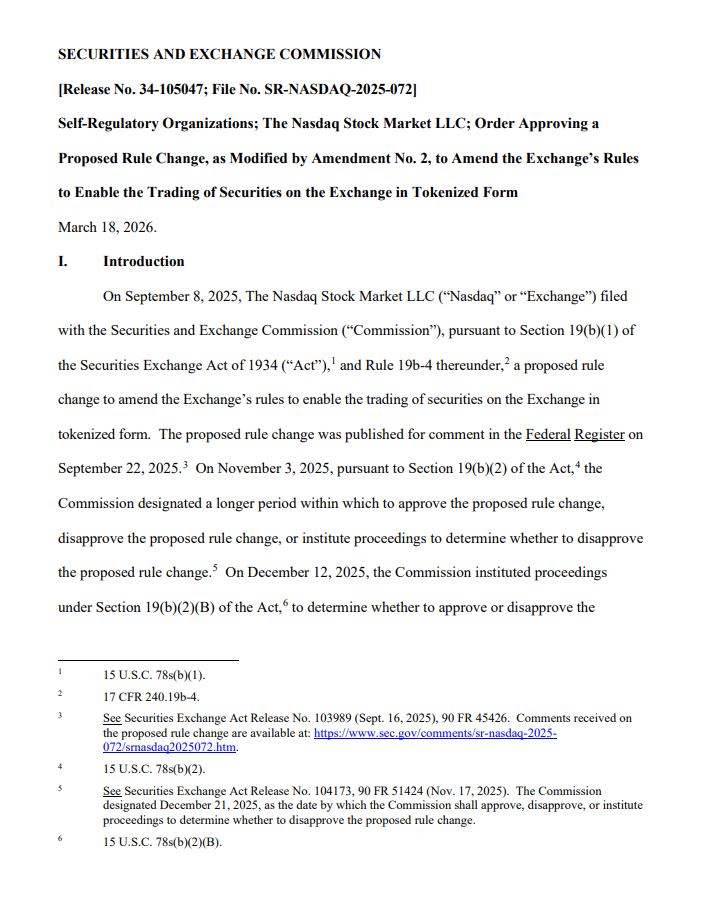
The decision shows the SEC is willing to let tokenization develop within the traditional securities system, with Nasdaq keeping tokenized shares on the same exchange book as conventional ones under the same symbol and CUSIP, as long as they remain interchangeable and carry the same shareholder rights.
Pilot Keeps the Existing Market Structure Intact
Nasdaq said the plan is limited to the DTC pilot and covers one tokenization method under review, with DTC managing post-trade processing for eligible securities rather than reshaping stock trading more broadly. Qualified participants will be able to indicate when entering an order whether they want an eligible trade to clear and settle in tokenized form, and Nasdaq will pass that instruction to DTC after execution.
If a participant does not qualify, if the security is not eligible, or if DTC cannot process the tokenization instruction, the trade will settle in its traditional form. That fallback is a central feature, as it allows the exchange to test tokenized settlement without interrupting normal market operations.
The initial list of eligible securities is also narrow, as tokenization will be limited at launch to Russell 1000 stocks, including later additions, and certain exchange-traded funds tied to major benchmarks such as the S&P 500 and Nasdaq-100.
For investors and traders, the actual trading process is designed to look almost unchanged. Nasdaq told the SEC that order types, routing, trading sessions, opening and closing crosses, connectivity, and fees will remain the same whether a security is tokenized or not, while market data feeds will not distinguish between tokenized and conventional shares.
Tokenized Shares Hold the Same Rights as Traditional Stock
The approval addresses emerging concerns over potential pricing gaps between tokenized and traditional shares, token holders’ rights, and the amount of detail provided to the market on DTC’s process.
The SEC said those concerns were addressed by later disclosures and by requirements that tokenized shares be fungible with their traditional counterparts, carry the same identifiers, and confer the same dividend, voting, and liquidation rights.
What This Means for Nasdaq
For Nasdaq, the approval offers a regulated way to bring tokenized securities into its existing market structure without forcing users onto a separate venue or unfamiliar trading system. The model keeps tokenized and traditional shares on the same order book, while allowing eligible participants to choose tokenized post-trade handling through DTC, which could make adoption easier for brokers and institutional users already operating inside Nasdaq’s framework.


