




NuNet launches Cardano payments. The decentralized peer-to-peer (P2P) network has created an integration for processing Cardano (ADA) payments through its multi-chain payment processing system, adding real-world utility to cards through a decentralized physical infrastructure network (DePIN). Users will be able to deploy and pay for compute jobs on the Cardano blockchain (such as AI training and rendering), using their ADA balance in the network, and interact with Ethereum and Cardano addresses if desired.
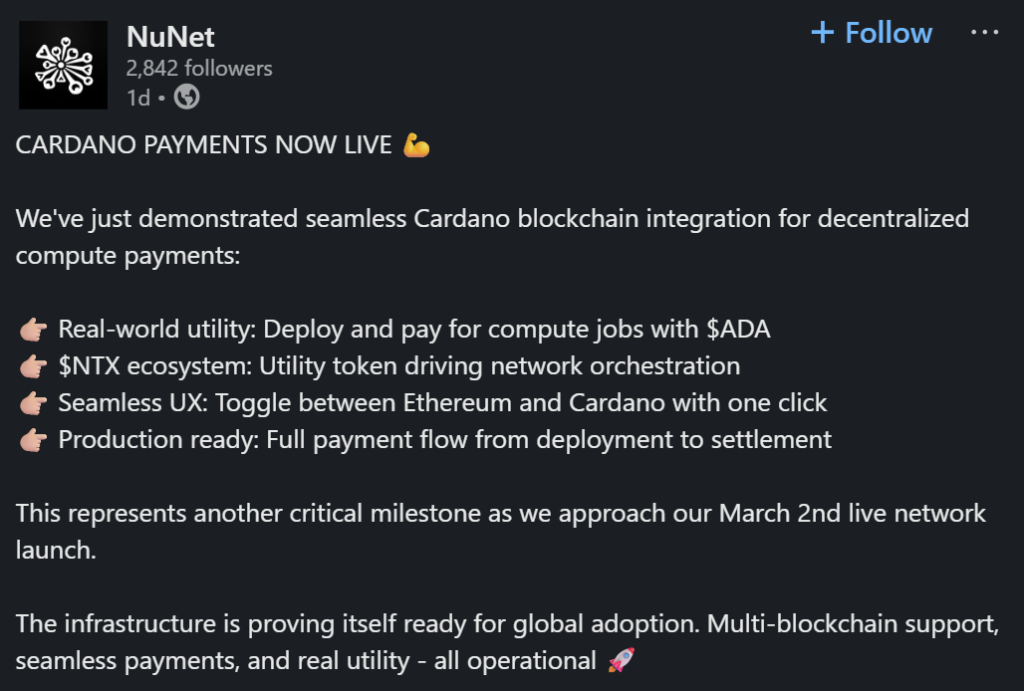
NuNet’s Multi-Chain Payment Processing System Operability
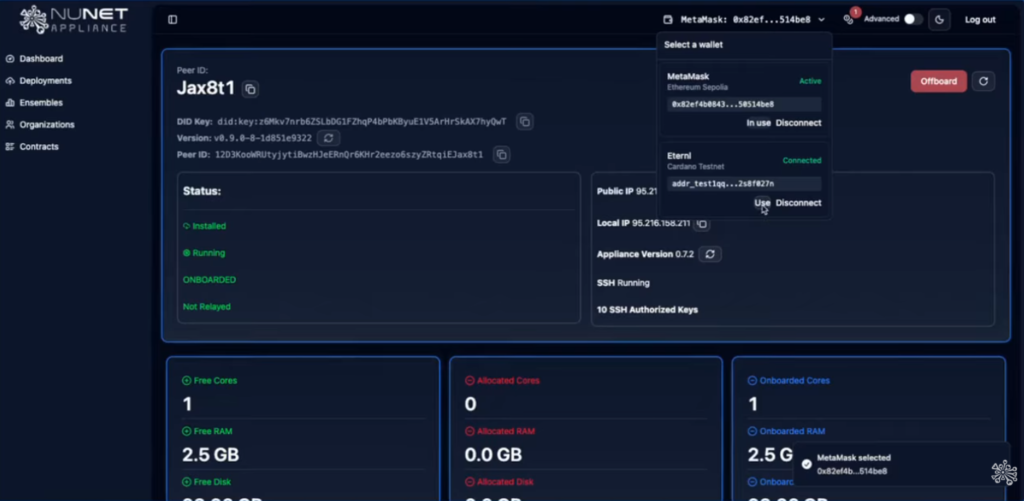
NuNet launches Cardano payment, but not a future roadmap item; the integration is currently live. The release of NuNet’s Device Management Service (DMS) v0.9.0 allows users to pay for compute jobs directly through Cardano (with Ethereum support) while checking out, initiating a payment flow that handles deployment, execution, and final settlement in ADA.
On the other hand, the role of NuNet’s NTX token will remain unchanged and will still be used to facilitate network coordination and orchestration, meaning ADA acts as the payment layer and NTX handles the resource matching logic. This allows users to choose which network they prefer to work within, based on the assets required for a specific job or simply the fee structure
Implications for Cardano and the DePIN Ecosystem
This integration highlights a major vote of confidence in Cardano’s capabilities for real world, machine-to-machine commerce as more DePIN projects are being developed and launched in the network.
NuNet launches Cardano payments, providing access to a vast and active number of users within the crypto economy who will be able to utilize their assets and gain computing power.
For the overall DePIN ecosystem and Cardano, this means an evolution towards maturity and efficiency, separation of function for the marketplace and settlement layers, which allows for greater choice and efficiency for users of DePIN services.
By demonstrating that the overall ecosystem can grow beyond the limitations of single chains and become interoperable through the economy of multiple systems, DePIN can continue, using existing technology, to facilitate new and innovative products and services through greater economies of scale and resource sharing.


