




Polygon plans to implement a significant upgrade to its network to help increase transaction finality (when a transaction cannot be reversed) and overall network responsiveness. The Polygon Giugliano Upgrade will go live on April 8, at block 85,268,500 on the mainnet. The upgrade was successfully tested on the Amoy testnet, resulting in a reduction of the finality time of transactions by 2 seconds.
How the Polygon Giugliano Upgrade Enhances Performance
The Polygon Giugliano Upgrade will improve performance for both users and developers primarily by changing how blocks are produced within the Polygon network. Specifically, validators will create blocks in such a way that they are able to announce them earlier in the production process, reducing the time that elapses between when users submit a transaction and when that transaction is considered “final” (i.e., unreversible). Improved finality times will also provide users and devs with enhanced predictability of the time it takes for the transaction to settle, which is vital for payments, high-frequency trading, and settling real-world assets (RWAs).
Additionally, the Giugliano Upgrade will also improve the overall structure of the Polygon network by embedding the fee parameters associated with each transaction into the headers of the blocks, thereby enhancing the transparency of the fee process and making it much easier for developers to access the fee data associated with those transactions on the network.
Moreover, the aforementioned changes related to finality of transactions and transparency/payment fees, the Giugliano Upgrade includes a new Application Programming Interface (API) support process, enabling builders to access this fee information in a much more efficient manner, thereby enhancing the infrastructure being utilized for decentralized finance (DeFi) protocols, analytical tools, and wallets. The upgrades are also part of Polygon’s broader Gigagas Roadmap that aims to increase throughput so it can more effectively support payments and RWA’s use cases.
Network Stability and Context
The recent Polygon Giugliano upgrade follows a time of technical challenges. Polygon’s finality bug from last year caused transaction delays and caused the Heimdall system to go down due to a validator exiting. Each of these events demonstrated the necessity of both speed and stability, as well as the ongoing renovations around block production and fee processing to create a more resilient system for the ever-increasing demand for DeFi and tokenized assets.
Polygon (POL) Token Price
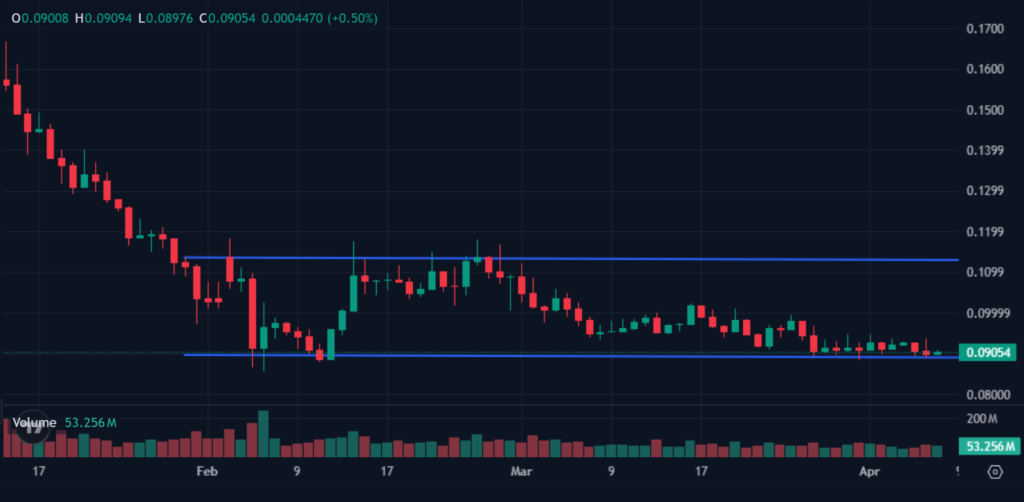
As for the Polygon token, POL (previously MATIC), it’s signaling a sort of recovery and accumulation phase since February, after a catastrophic fall from USD 0,30 since September 2025. Trading at USD 0,09 at the time of writing, a 3.50% down in 24 hours. The community expects that after some recent developments/upgrades, the introduction of its private memepool with direct routing to validators, institutional adoption, and proposals that are left to approve (or not), could set a new path for the now “classic blockchain.”


