




The Solana Foundation has released an enterprise-centric set of tools, known as the Solana Developer Platform (SDP). This enterprise-oriented toolkit aggregates best-in-class technology to provide users with a single Application Programming Interface (API) to access some of the highest quality available today. The SDP will eliminate the technical barriers that have previously existed for financial services companies looking to build and deploy their products on the Solana blockchain.
What Enterprises Can Expect from SDP
Enterprise features of the SDP consist of three primary modules. The first two modules are already live, and the third one will be ready in late 2026:
- The Issuance module is primarily designed to allow users to create a tokenized deposit, issue a GENIUS-compliant stablecoin, or create a tokenized representation of a real-world asset (RWA) on the Solana platform.
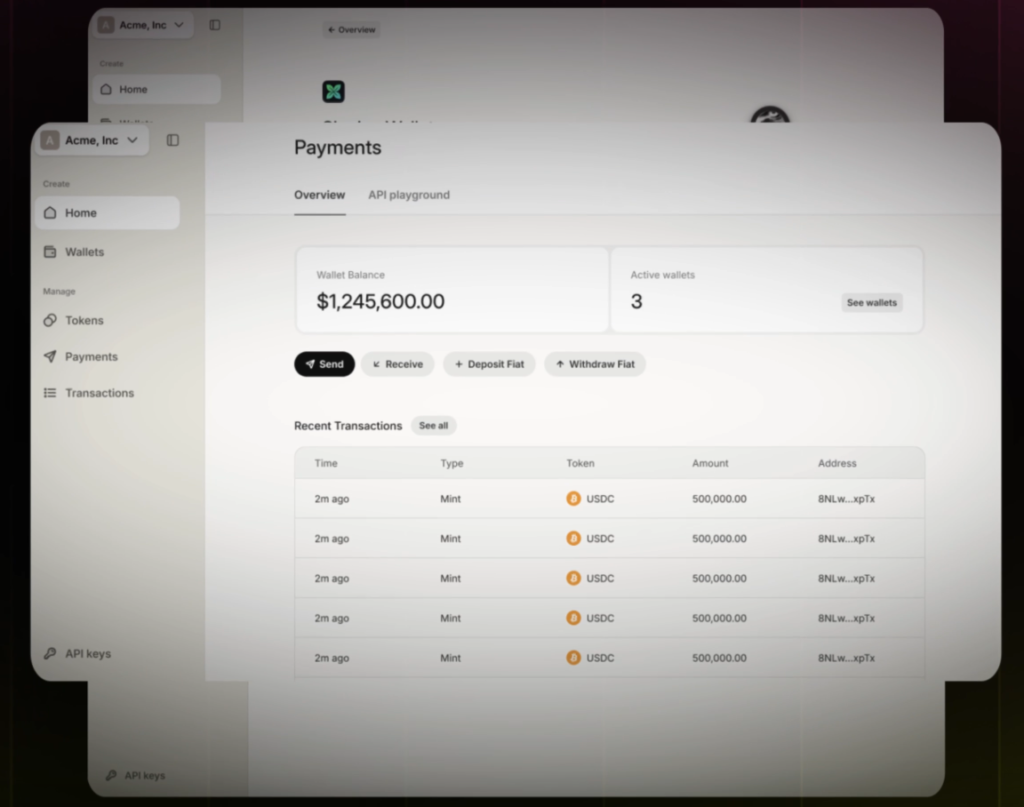
- The Payments module is designed to facilitate the flow of funds between users utilizing both fiat and stablecoin payment methods through, but not limited to, on-ramps, off-ramps, or on-chain payment transactions offering B2B, B2C, and P2P payments.
- The Trading module is currently under development and will allow users to use atomic swaps to complete trades, store assets using vaults, and convert currencies using onchain foreign exchange (FX).
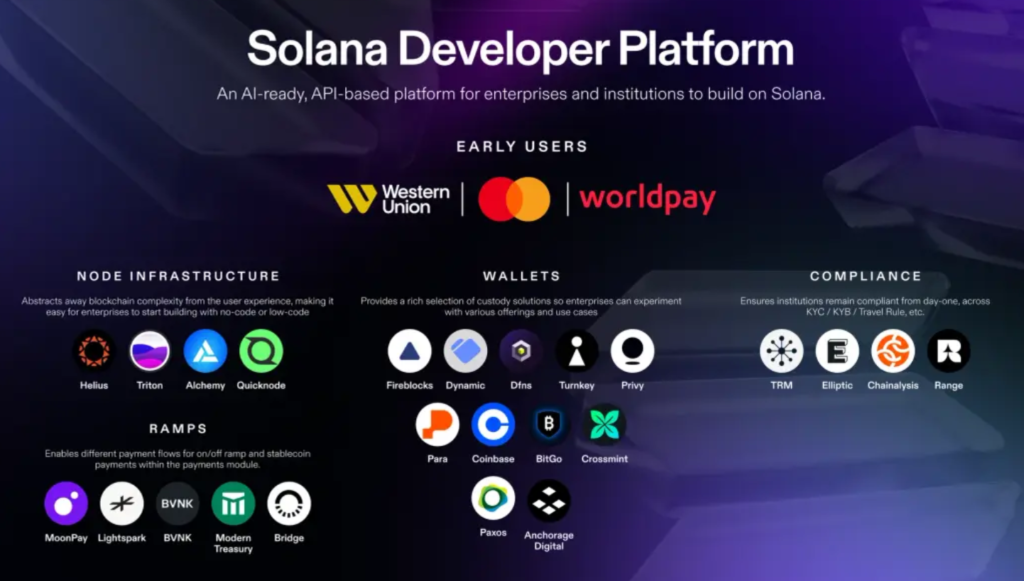
In addition, the Solana Developer Platform contains a pool of more than 20 different infrastructure provider partners across node services (Alchemy, Helius, Quicknode), custody (Anchorage, BitGo, Coinbase, Fireblocks), compliance (Chainalysis, TRM Labs), and ramps (Bridge, MoonPay). Furthermore, the SDP is also working with AI Coding platform partners, including Claude Code and Codex, enabling developers to create with natural language prompts.
Vibhu, the Chief Product Officer of the Solana Foundation, quoted this as “a labor of love,” adding that they are “delighted to debut this powerful new sandbox today.”
Why Early Partners Chose SDP
The Solana Developer Platform (SDP) has gained traction with large institutions like Mastercard, which is using it for direct stablecoin settlements, and Western Union, using it to facilitate fiat and stablecoin cross-border payments via their existing legacy network by implementing a new onchain layer. Worldpay, on its side, is leveraging SDP to provide merchants with seamless access to onchain settlement and tokenized assets.


