




Deployed on mainnet this week, the ERC-8004 standard will extend the use cases of Ethereum by allowing for the direct use of verified identities and reputations for AI agents on-chain, thus allowing for decentralized collaboration.
What ERC-8004 Does to Improve AI Collaboration
At its core, the ERC-8004 standard addresses the primary question: how do we establish a system that allows AI agents to trust each other? As Artificial Intelligence (AI) agents begin to execute transactions and make decisions, the traditional trust model that relies on one central authority will be rendered ineffective. This neutral layer provides on-chain registries where agents obtain a persistent identity while keeping the bulk of their interactions and computations off-chain for efficiency.
With this designer approach, the AI agent’s established reputation for performance acquired from its transactional history or service delivery becomes a portable asset that can be transferred across all decentralized applications, not just within one company’s walled garden.
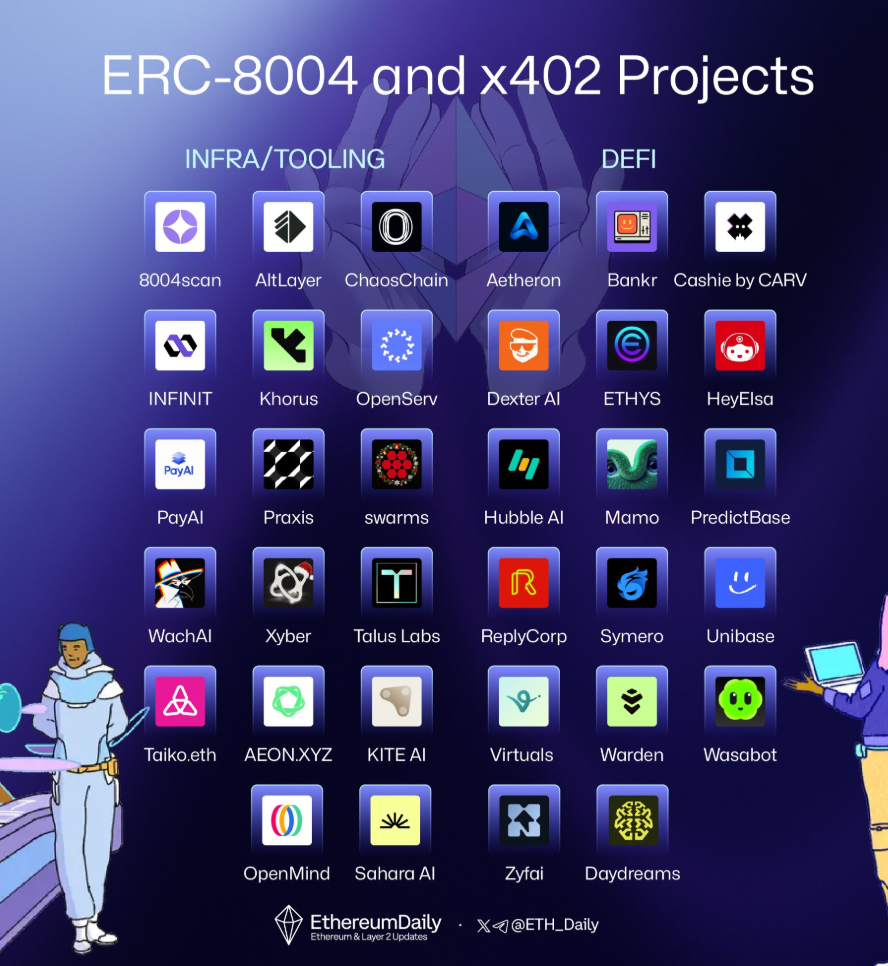
How this Ethereum Upgrade Will Shape the Future of Web3
The ERC-8004 upgrade is an important moment for Web3. We have transitioned from using AI solely as a tool to using it as an active collaborator in the digital economy. The ERC-8004 standard provides the framework for building trusted communication and accountability between AI agents. Through this standard, agents from various protocols can prove their trustworthiness prior to entering sensitive negotiations or exchanging data with another agent.
So far, this solves a coordination problem associated with interactions between AI agents. Ethereum is now evolving from a platform that provides a settlement layer architecture for financial assets to a network that supports the development of a decentralized machine-driven economy, where trust can be programmed and transferred.


