





According to a report from on-chain data analytics company Santiment, the Ethereum Proof-of-Stake (PoS) staking deposit contract (Ethereum PoS address) now has more than 50% of all Ethereum ever issued held in it, a point that has taken over 11 years to reach. This was calculated using historic issuance numbers prior to the Ethereum network burning tokens and puts the figure at 50.18%.
How the Ethereum PoS Address Functions as a One-Way Vault
The Ethereum PoS address is a unique blockchain smart contract in the sense that it is not a typical smart contract and thus functions differently than traditional ERC20s. Santiment calls it a “one-way vault,” where ETH sent into the contract to help secure the network is “temporarily” locked up and cannot be traded since it is considered staked at the time of deposit. After a validator exits the network, funds are released back into circulation as newly issued ETH on mainnet rather than being taken out of the vault. This is why staked amounts are significantly smaller than the total number of sold or held ETH, including the remaining amount of around 37 million ETH (30% of the total 121.4 million ETH currently in circulation) that are currently in active staking. Of the remaining 3.9 million ETH (aprox) wait in the validator entry queue with 67-day delays, while exit queues sit at minimal levels.
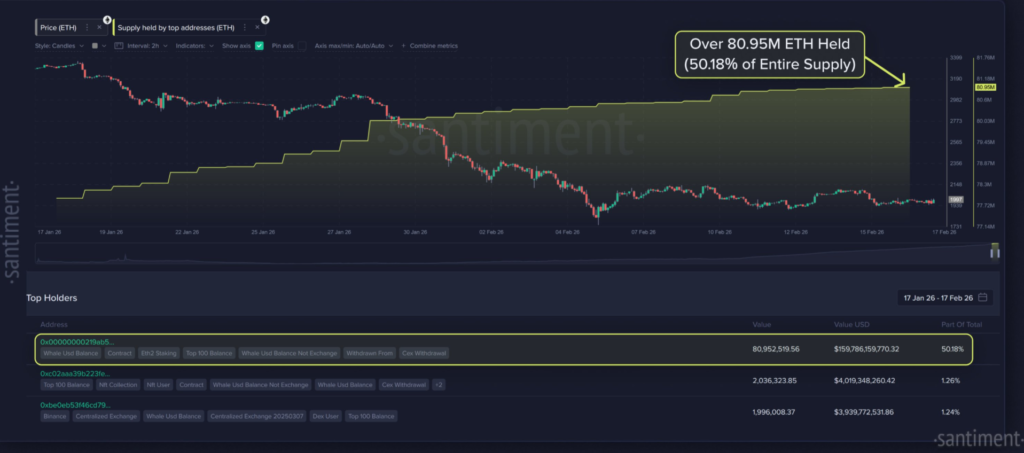
Price Declines and All-Time High Participation
As the price of ETH hovers at USD 2,000 at the time of writing (1.8% up in 24 hours), and retail panic has created a bear market for the second largest crypto, this structural milestone also marks a shift in how people see ETH as an investment opportunity.
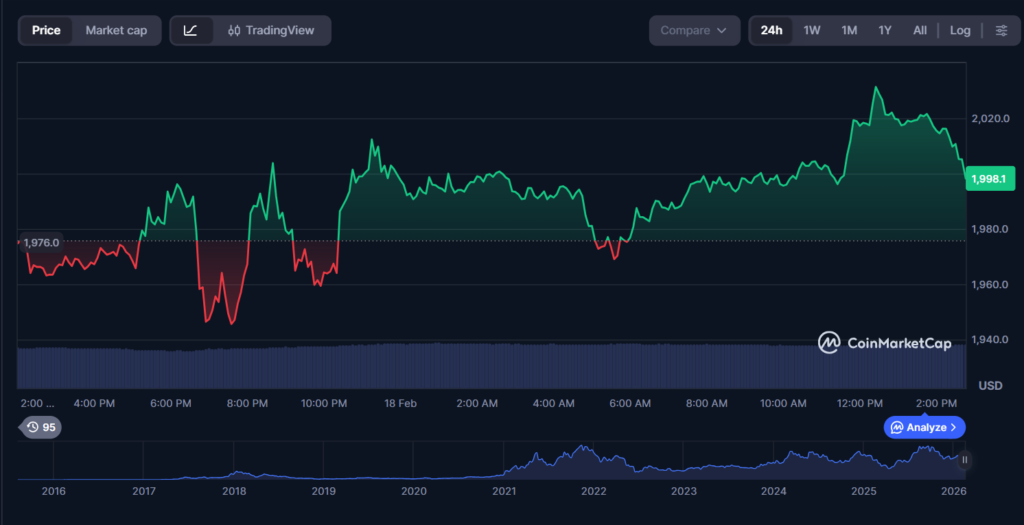
Some analysts noted that “Ethereum isn’t expensive right now; it’s kind of boring, and boring is where market participants build positions.” The resultant combination of all-time high staking demand and a thinner circulating volume of tokens suggests a potential supply compression; however, if there is validator and exit activity (i.e., newly minted exit coins), then a wave of selling pressure activity may erupt.


