





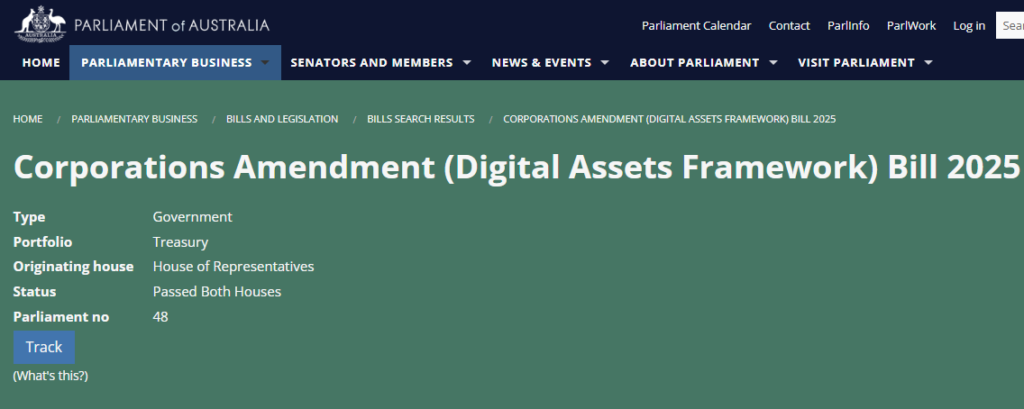
With the passage of The Corporations Amendment Digital Assets Framework Bill 2025, Australia has introduced a comprehensive crypto licensing law that will require digital platforms to adhere to the similar regulations as traditional banks and financial firms, making it easier for Australians to safely transact and invest using their digital tokens. In addition, the new legislation has established clear definitions of various types of digital tokens, platforms and custodial (or storage) services.
Australia’s Crypto Licensing Law Requirements
Under the new law, digital asset platforms and custodial providers must obtain an Australian Financial Services License (AFSL) before providing services within the country. Current financial service laws will apply specifically to these digital asset marketplaces, including some exemptions for certain types of digital token offerings, and the Australian Securities and Investments Commission (ASIC) will have the authority to regulate with Minister expanded powers to regulate platforms and providers.
Legal Status of Digital Tokens
Digital assets will also fall under the existing legal framework for property, taxes, consumer protection and financial conduct, which means that there will no longer be uncertainty related to the legal status of these matters. The new framework has emphasised the need for transparency, accountability and strong governance and requires that each provider discloses how customer assets are held, and that each provider meets the corresponding risk management and security requirements.
Implementation and Industry Reaction
The framework will become operative twelve months post-Royal Assent to provide businesses time to amend operations and make arrangements for their new licenses. The industry has been positive about the benefits of finally offering consumer protection to crypto users, but they still request further assistance in regards to the definitions of stablecoins and tokenized assets. Additionally, there are still concerns over banking accessibility for crypto businesses that have experienced significant issues, affecting operations across the sector.


