




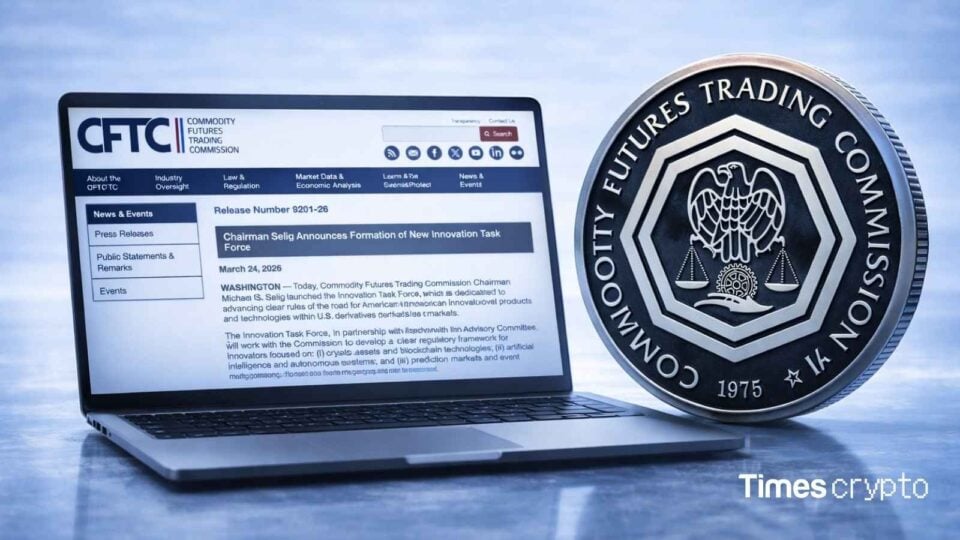
The Commodity Futures Trading Commission (CFTC) established an Innovation Task Force focused on preserving and clearly defining “the rules of the road” in terms of emerging technology and U.S. derivatives markets. Chairman Michael S. Selig launched this initiative to facilitate responsible innovation through three primary themes: crypto assets and blockchain; artificial intelligence (AI) and autonomous systems; and prediction markets and event contracts.
Why the Innovation Task Force Matters?
The Innovation Task Force is significant because it signals a shift in CFTC’s regulatory approach in the face of converging traditional and digital financial markets. To this point, the core objective is to collaborate with the existing Innovation Advisory Committee to create regulations that prioritize both innovative ways of doing business and maintaining the integrity of U.S. derivatives markets.
As the products and solutions develop in the emerging technologies sector, the task force will coordinate with the Securities and Exchange Commission (SEC) and other federal agencies to ensure that regulatory oversight is not fragmented; this will be particularly important as products like tokenized commodities and AI trading systems fall into a “grey” area regarding jurisdictional boundaries.
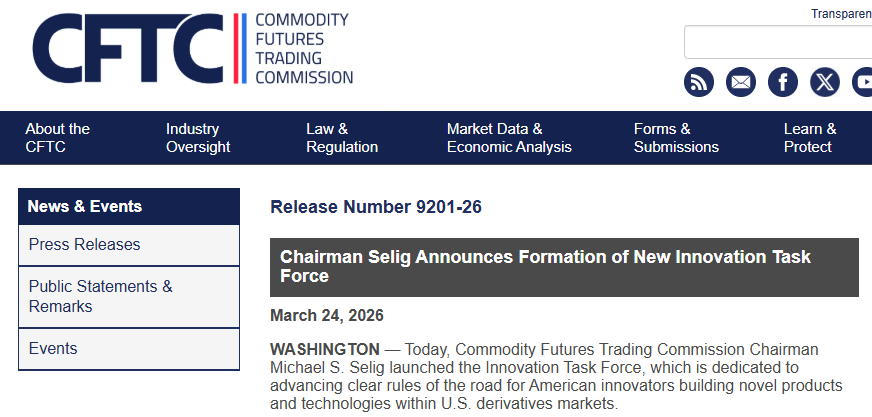
The move follows the recent SEC-CFTC Memorandum of Understanding (MOU) signed earlier this month, whereby both agencies reaffirmed their commitment to “avoid a ‘turf war’ mentality”, which prevents them from effectively regulating financial markets. For instance, the introduction of the Innovation Task Force, the Commission aims to facilitate the transition from this MOU into actionable policy.
Next Directions
Michael J. Passalacqua, a senior advisor to Chairman Selig, will lead the CFTC’s Innovation Task Force. A few of the task force’s top priorities are determining how existing rules for derivatives apply to crypto and setting standards for using AI in trading and risk management; it will also help clarify the regulatory status of prediction markets, which have seen a total volume increase of USD 18 billion in February.
The task force plans to work with market participants and innovators, as well as other regulatory agencies, in creating proposals to be released later in 2026.

