





Key Takeaways
- Citadel Securities has urged the SEC to regulate platforms offering DeFi tokenized stocks under existing securities regulations.
- The firm argues against granting “exemptive relief” to DeFi protocols, claiming they act as unregistered exchanges.
- The crypto community has slammed the move as an attempt by a traditional finance incumbent to stifle disruptive innovation.
Table of Contents
A Direct Challenge to DeFi’s Equity Ambitions
Citadel Securities, one of the largest financial companies, has sparked a heated discussion by stating that it has requested the U.S. Securities and Exchange Commission (SEC) to implement tighter restrictions on platforms that permit individuals to trade DeFi tokenized stocks.
In a public letter, Citadel claimed that any entity capable of providing an environment for people to purchase tokenized U.S. equities is likely to fall under “exchange” and/or “broker-dealer” classification, as defined by the SEC, and should not be eligible for any exemption related to regulatory oversight or authority.
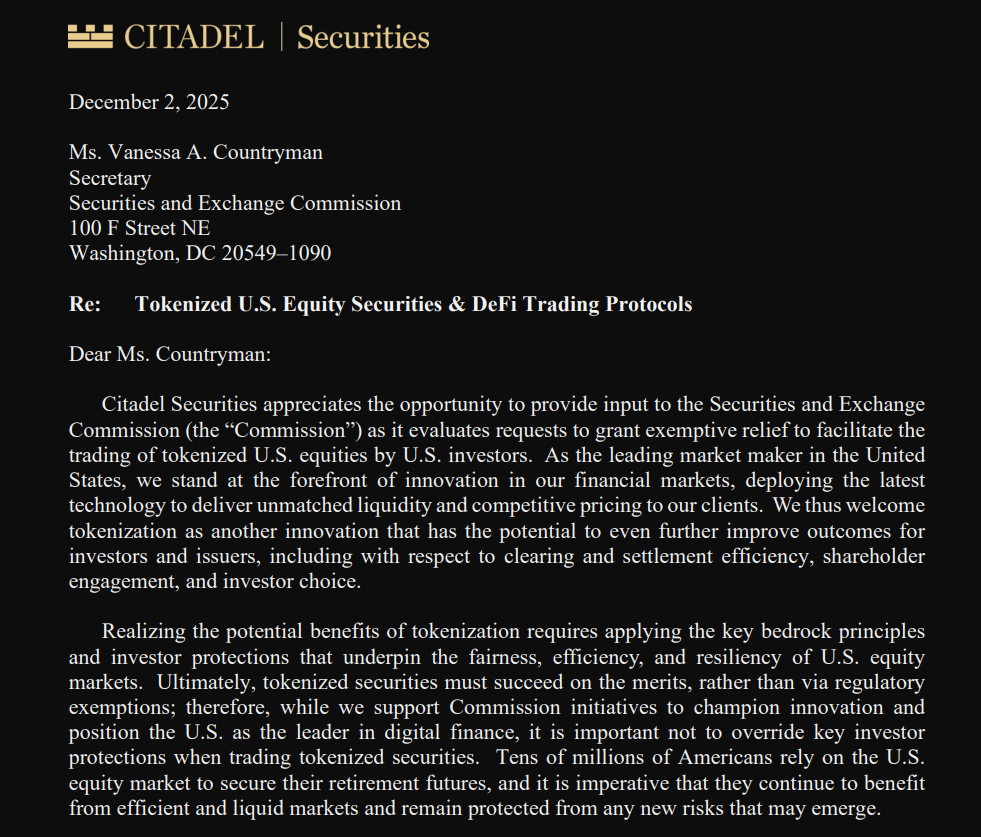
Citadel’s response is contrary to the current operating model employed by several decentralized finance projects providing DeFi tokenized stocks, i.e., the absence of a centralized intermediary in the buying and selling process.
Read also: World Federation of Exchanges Demands Crackdown on Crypto “Mimic” Stocks
The Core of the Controversy
Citadel is against providing a separate regulatory framework that would be “lighter” regarding DeFi tokenized stocks, stating that it will create a lack of market integrity and investor protection, thus creating an unlevel playing field for those persons purchasing “the same security.”
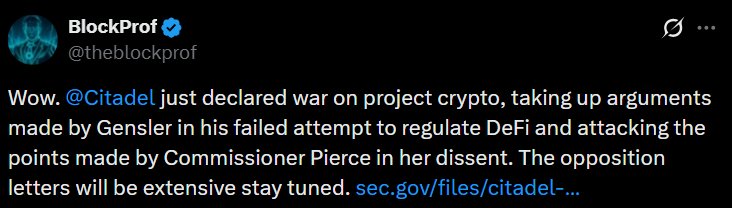
Citadel further argues that those who are identifiable as the individuals behind decentralized “protocols” that facilitate the buying and selling of tokenized stocks are essentially just creating themselves as intermediaries who profit from the sales made on the protocol. However, most crypto advocates view this claim by Citadel as an outright attempt to protect traditional market makers by creating regulations that limit their direct access to customers and prohibit disintermediation.
Read also: AI regulations: Congress Rejects Federal Override, Preserving State AI Laws
A Defining Regulatory Battle
The case involving DeFi tokenized stocks is part of the ongoing struggle between traditional financial systems and decentralized protocols. While Citadel’s argument hinges on regulatory fairness and protecting investors, groups like the Blockchain Association believe that Citadel is looking to “undermine US competitiveness” and “drive innovation offshore.”
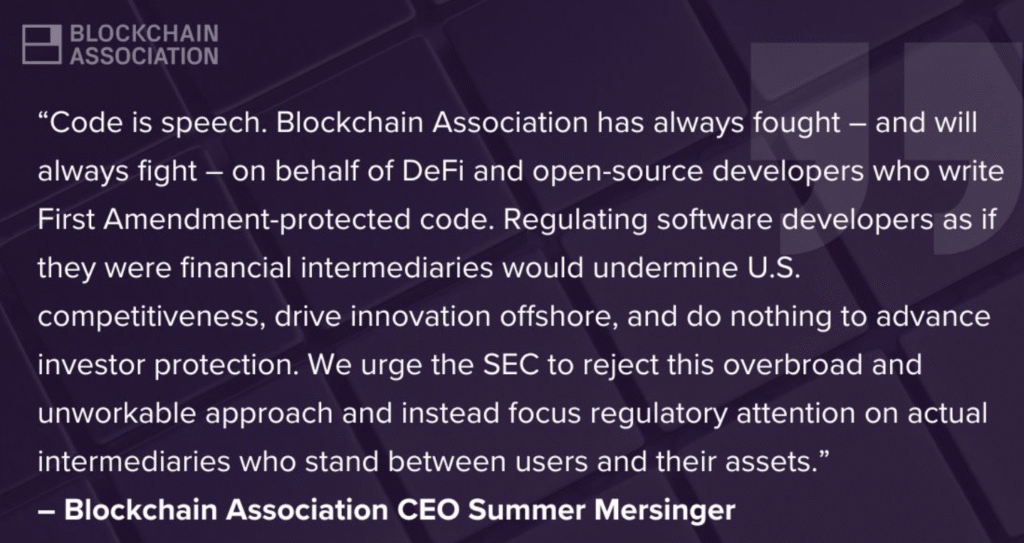
Additionally, how the SEC will ultimately define DeFi tokenized stocks as acceptable or innovative market structures versus just a non-regulated replica of traditional finance will set the tone and direction for the future of the DeFi industry.
FAQs
What are DeFi tokenized stocks?
They are blockchain-based tokens that represent ownership or exposure to a traditional stock (like Apple, Tesla, or Microsoft). They are issued and traded on decentralized finance (DeFi) platforms rather than through traditional stock exchanges.
Why is Citadel against them?
Citadel argues that the DeFi platforms offering these tokens function like unregistered securities exchanges or broker-dealers, bypassing important investor protection, transparency, and surveillance rules that govern traditional markets.
What does the crypto community say?
Leaders like Uniswap founder Hayden Adams and the Blockchain Association argue that regulating software developers as financial intermediaries is unworkable and anti-innovation. They believe that the primary financial intermediary, Citadel, is pursuing these regulations to protect its current business from being disrupted by open-source technological developments.
For more policy-related stories, read: U.S. Launches Scam Center Strike Force to Combat $10B Crypto Fraud Epidemic

