




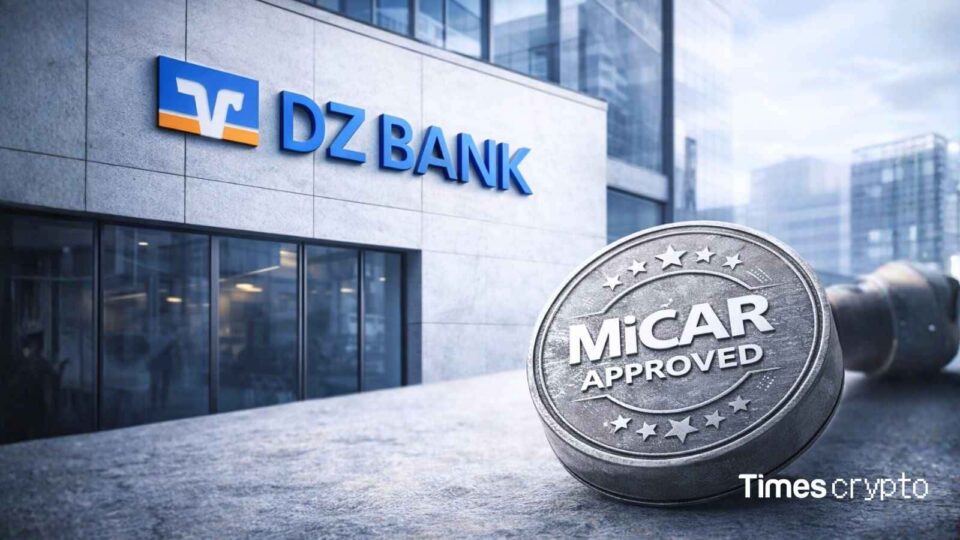
Germany’s second-largest bank clears a key regulatory hurdle to offer crypto to millions of clients.
DZ Bank receives MiCAR approval from the Federal Financial Supervisory Authority (BaFin) to provide customers with access to the meinKrypto crypto-trading service. This approval is an important milestone for the continued growth of the crypto industry in Europe, as it provides DZ Bank (Germany’s second largest bank) with the ability to offer its €760 billion asset base of a fully regulated, vast network of cooperative banks, and a legally compliant method for accessing Bitcoin and other digital assets.

What DZ Bank’s Crypto Approval Actually Means for German Savers
Although this Markets in Crypto-Assets Regulation(MiCAR) approval does not mean that DZ Bank will operate a centralized public exchange, it does permit DZ Bank, as the central financial institution for more than 700 local cooperative banks (Volksbanken and Raiffeisenbanken), to utilize the meinKrypto crypto-trading platform under a white-label approach.
In addition, all local participating banks will have to individually register with BaFin to access this service. Local customers will be able to use the existing VR Banking app to create a fully integrated mobile crypto wallet and trade in Bitcoin (BTC), Ethereum (ETH), Litecoin (LTC), and Cardano (ADA).
On the other hand, the custody is handled by Boerse Stuttgart Digital Custody, with execution via EUWAX, ensuring a fully regulated environment.

A Pivotal Moment for European Crypto Regulations
DZ Bank receives MiCAR approval, signaling a clear indicator that crypto regulations are becoming an accepted framework for large, risk-averse financial institutions in the EU, providing their customers the proper access to products or services related to digital assets.
Today, approximately a third of the cooperative banks are reportedly intending to offer crypto assets through the ‘meinKrypto’ platform, and they may do it in the near future, allowing mainstream customers to easily use their current banking relationships to invest in digital currencies and crypto related products. This also expands the opportunity for banks to increase their customer base, accelerating adoption far beyond the niche crypto-native audience.

