




Key Takeaways
- The European Parliament has voted for stringent Social Media and AI age limits, proposing a default access age of 16.
- The resolution calls for bans on addictive features like infinite scrolling and targeted ads for minors.
- While not yet law, the vote signals a major push for future EU-wide legislation to create a safer digital environment for children.
Table of Contents
A Joint Commitment to Digital Child Safety
The European Parliament has passed a resolution to safeguard minors, calling for strict social media and AI age limits. The resolution was passed by 483 votes, with a recommendation that sets a minimum age of 16 years to access social media services, video-sharing platforms, and any artificial intelligence-based companions across the European Union.
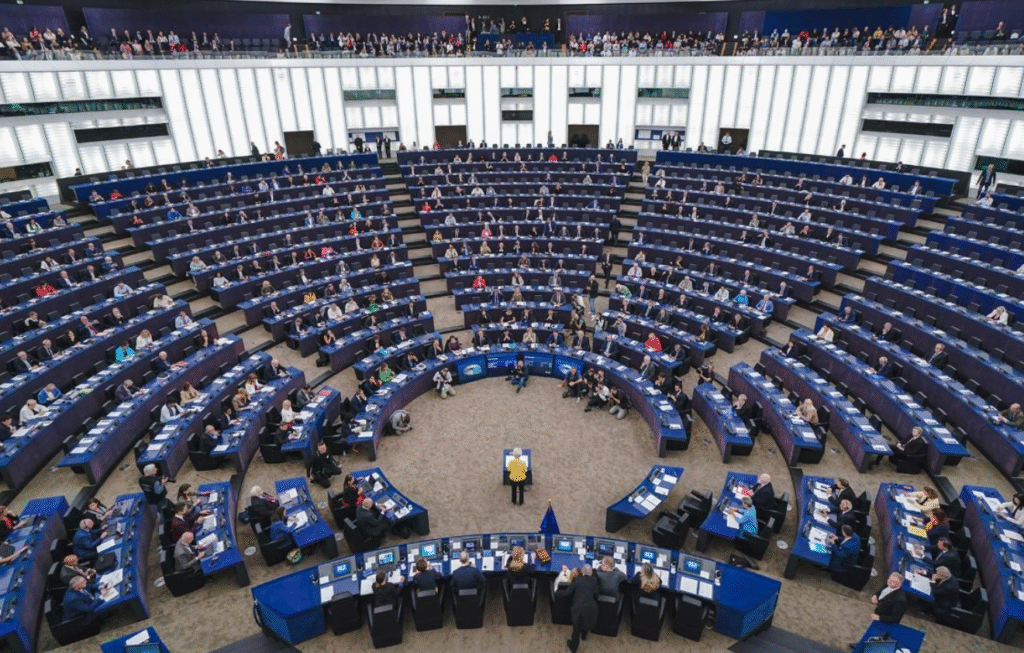
The proposed resolution reflects lawmakers’ concerns regarding what they believe is an epidemic of ‘problematic’ mobile phone use, coupled with the anxiety associated with significant online mental health consequences posed by manipulative online design.
Read also: Blockrise Secures Coveted MiCA License, Pioneering Regulated Bitcoin Finance in the EU
Key Demands of the Resolution
The approved text provides a detailed outline of how the EU can establish a comprehensive framework for protecting children online. The major requirements of this approved text are:
- A default minimum age of 16, with access for 13- to 16-year-olds permitted only with verifiable parental consent.
- Removal of the most dangerous forms of addictive behaviors (such as those generated by algorithms based on consumer database data or social media accounts) that promote infinite scrolling and auto-play functions.
- A prohibition on “loot boxes” and other gambling-like mechanics in games.
- Stronger enforcement of the Digital Services Act (DSA), including potential personal liability for senior managers at non-compliant companies.

Read also: SEAL’s New Fight Phishing Scams Tool Uses Cryptographic Proof to Expose Fake Sites
Addressing the Core of the Problem
The push for Social Media and AI age limits is substantiated by disturbing statistics, as outlined in the report, where one in four minors exhibits questionable behaviours related to smartphone use that resemble addiction behaviours.

Regrettably, social media and AI companies are not constrained by regulations or standards that would prohibit them from creating products intended for adults, posing a unique challenge to their continued design and development, and ultimately to the social media and AI age restrictions.
As a result, the implementation of these asset classes (both of which are very similar to traditional asset classes) as age limits for both social media and AI will, in effect, reset the digital relationship that exists between many young people and the digital world.
Read also: AN0M App Sting Nets 55 New Arrests in Latest Phase of Global Crime Operation
The Next Step Toward Legislation With Teeth
The passage of this vote is not likely to have a direct effect on creating additional protections for consumers; however, this vote intends to act as a clear message to the European Commission that it must draft formal legislation to create similar age restrictions as recommended in this report, thus converting these recommendations into binding law.
The approval of the social media and AI age limits resolution is a significant milestone in creating laws that protect the most vulnerable members of society from the devastating effects of digital innovation.
FAQs
Is it now illegal for minors under 16 in the EU to use social media?
Not yet. This is a non-binding resolution, meaning it’s a formal recommendation from Parliament. It now pressures the European Commission to propose actual legislation to make these rules law.
What about teenagers between 13 and 16?
The proposal allows for this age group to access these platforms, but only with explicit and verified parental consent, creating a controlled gateway rather than an outright ban.
What happens to platforms that don’t comply with the social media and AI age limits?
The social media and AI age limits resolution urges stricter enforcement of existing rules like the Digital Services Act (DSA), which could lead to massive fines and even potential bans for platforms that persistently fail to protect minors.
Read also: The TimesCrypto Crime Report: Unmasking the New Wave of Sophisticated Crypto Scams

