




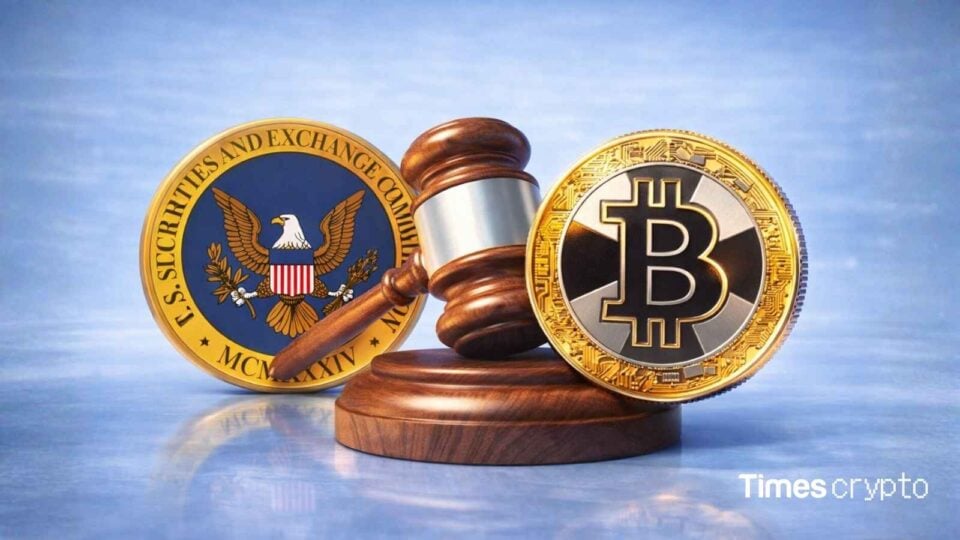
The U.S. Securities and Exchange Commission (SEC) on Tuesday issued a clarification of how federal securities laws apply to certain crypto assets and related transactions, in a move the agency said was intended to end years of uncertainty for digital asset market participants.
The Commodity Futures Trading Commission joined the SEC and said it would administer the Commodity Exchange Act in a manner consistent with the SEC’s approach, in a coordinated move by the two agencies to draw clearer lines around how crypto assets are treated under U.S. law.
SEC Chairman Paul S. Atkins said the move would give market participants a clearer understanding of how the agency treats crypto assets under federal securities laws after more than a decade of uncertainty, adding that the clarification also recognizes that most crypto assets are not themselves securities and that investment contracts can come to an end as circumstances change.
CFTC Chairman Michael S. Selig said the joint action was meant to give builders, innovators, and investors the clear direction they had long been waiting for under both securities and commodity laws, while the CFTC added that some crypto assets that are not securities may still fall within the definition of a commodity under the Commodity Exchange Act.
A Clearer Split in Oversight
The new guidance marks the latest step in a broader push by U.S regulators to build a more formal framework for digital assets, and it comes just days after the SEC and CFTC announced a memorandum of understanding on March 11 aimed at improving coordination between the two agencies in areas of shared oversight, including crypto markets and other forms of financial innovation.
The SEC said issuers, innovators, and individual investors should review the clarification to better understand where the boundaries between SEC and CFTC jurisdiction may apply in practice, adding that the document will be published on its official platforms and in the Federal Register.
Years of Uncertainty
The clarification matters because crypto oversight in the United States has long been shaped by overlapping claims, shifting enforcement, and court fights that left issuers and investors without a clear dividing line between securities and commodities.
The SEC’s 2020 case against Ripple argued XRP had been sold as an unregistered security, but a 2023 court ruling drew a distinction between some institutional sales and programmatic exchange sales, showing that the legal status could depend on how and where the token was sold.
At the same time, the CFTC’s 2023 case against Binance showed that not all crypto activity would be treated the same way, highlighting the blurred line between securities regulation and commodity oversight.


