




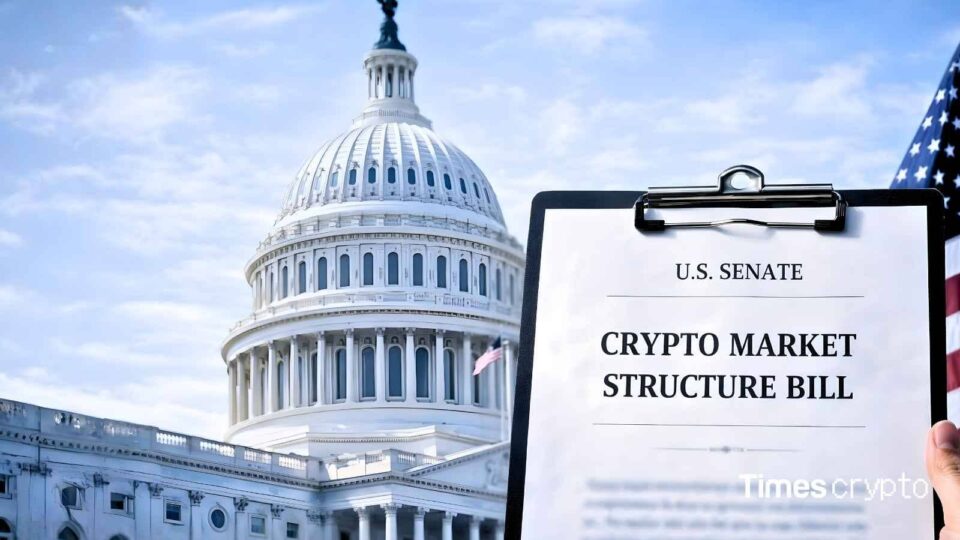
A U.S. Senate committee on Thursday narrowly approved a sweeping cryptocurrency bill that would put the Commodity Futures Trading Commission (CFTC) in charge of overseeing trading in “digital commodities,” marking a milestone for federal crypto rules but exposing deep partisan divisions.
The Senate Agriculture Committee voted 12–11 to advance the Digital Commodity Intermediaries Act, its share of a broader market-structure package known as the Clarity Act. All 12 Republicans backed the measure, while all 11 Democrats opposed it, even though several had helped shape earlier drafts.
From Joint Draft to One-party Bill
Committee Chair John Boozman, a Republican from Arkansas, pressed ahead after a bipartisan process broke down, even though he had spent months working with Democrats on an earlier draft.
The current text builds on the House-passed Clarity Act and is intended to be merged later with legislation from the Senate Banking Committee, which shares jurisdiction over digital assets.
CFTC at The Center of New Crypto Market Structure Bill
At its core, the Agriculture Committee bill would write a definition of “digital commodity” into law and create a registration and oversight regime at the CFTC for spot-market platforms, brokers, and other “digital commodity intermediaries.”
Boozman said the measure is aimed at giving consumers basic protections, such as conflict-of-interest safeguards, segregation of customer assets, and disclosure requirements.
The legislation also responds to a series of fraud cases, including scams routed through crypto ATMs, by expanding the CFTC’s tools to police misconduct in spot markets that until now have largely been regulated by enforcement actions and improvised guidance.
Trump’s Growing Crypto Footprint Sparks Clash Over Conflicts of Interest
Democrats described their opposition less as a rejection of crypto regulation and more as a protest over ethics gaps, particularly with President Donald Trump now deeply invested in the sector.
Several Democratic senators argued that Congress cannot credibly set clear rules while the president and his family are, in their words, making “billions” from digital-asset ventures. They pushed amendments to bar top officials, including the president, from trading or investing in crypto while in office and to write stricter conflict-of-interest rules into law.
Those proposals, along with amendments addressing participation by foreign adversaries in U.S. digital-asset markets and ensuring Democratic representation at the CFTC, all failed on party-line votes, as Republicans said some of the ethics and national security issues were better handled by other committees.
Stalled Banking Markup and Heavy Lobbying Weigh on Outlook
The Agriculture Committee’s vote is only one step in a long process. The Senate Banking Committee, which controls key pieces of the Clarity Act dealing with stablecoins, DeFi, and securities law, abruptly postponed a planned Jan. 15 markup after a clash between the banking lobby and the crypto industry, including Coinbase, over how to treat interest-bearing stablecoin products. That markup has not been rescheduled, leaving the timing for a full Senate vote unclear.
Until Congress agrees on a final framework, the CFTC and Securities and Exchange Commission are expected to share responsibility through joint guidance and enforcement, relying on existing securities and derivatives laws to govern this fast-evolving market.

