





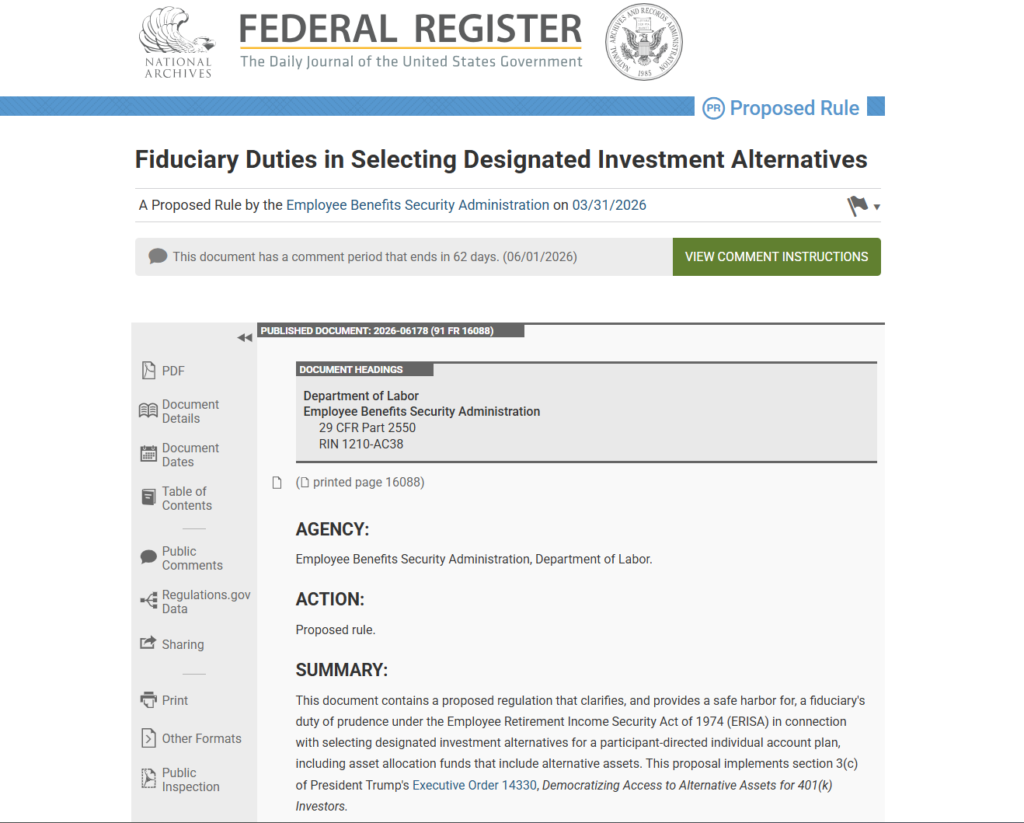
A historic proposed rule from the U.S. Department of Labor (DOL) may give people who use 401(k) retirement plans the chance to buy alternative investments (such as crypto and private equity). This proposed regulation establishes a ‘process-based’ safe harbor for plan fiduciaries who assess investment options in a well-reasoned, objective fashion and thoroughly evaluate them based on performance, fees, liquidity, valuation, and complexity.
What the 401(k) Proposal Means for Crypto?
The proposed rule reverses a trend that began under the Biden administration, which issued a compliance release in 2022 warning fiduciaries against including cryptocurrency options in 401(k) retirement plans. This new proposed rule (following Trump’s Operation Checkpoint 2.0 from August 2025) will protect plan managers from any litigation if they meet the requirements established by the new proposed analytical framework for assessing investment options. This change is very important considering that recently, the Supreme Court agreed to hear a challenge related to fiduciaries’ investment choices for alternative investments.
Labor Secretary Lori Chavez-DeRemer commented that this proposed rule is helping fulfill the president’s promise of creating a new golden age by building a retirement system that allows more Americans to retire with dignity.
On its side, Treasury Secretary Scott Bessent stated that “this rule is an initial step in implementing the President’s Executive Order safely and smartly, broadening access to additional retirement plan options for millions of Americans, while being mindful of the importance of protecting retirement assets.”
Broader Implications
A finalized rule means that a huge amount of new capital could be made available to the digital asset industry. Currently, there is approximately USD 13.8 trillion in assets held within the 401(k) accounts; this would cover the 801,000 companies that provide 401(k) retirement plans to over 156 million workers. For the crypto space, this proposal marks the first clear regulatory pathway for retirement accounts to allocate to digital assets without triggering fiduciary liability concerns.
The financial industry has generally held the belief that investing in private markets will increase both the long term return on an investment and the diversification benefits. However, skeptics are concerned that these investments may come with increased fees, more complicated structures, and the inability to easily convert to cash (limited liquidity).
The proposed rule intends that analytical requirements done by private capital (and the method of calculating the return on their investment) become a part of the decision-making process for a fiduciary.


