




Key Takeaways
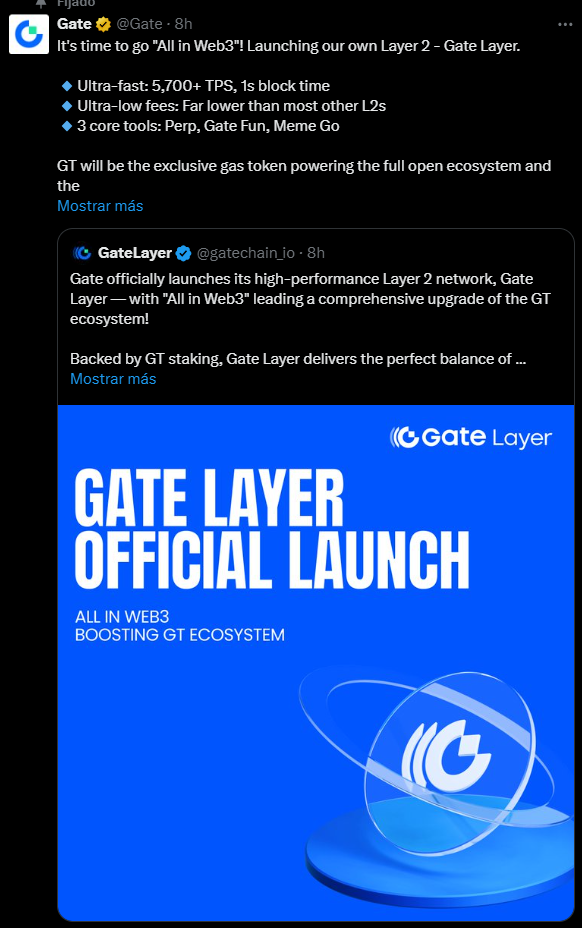
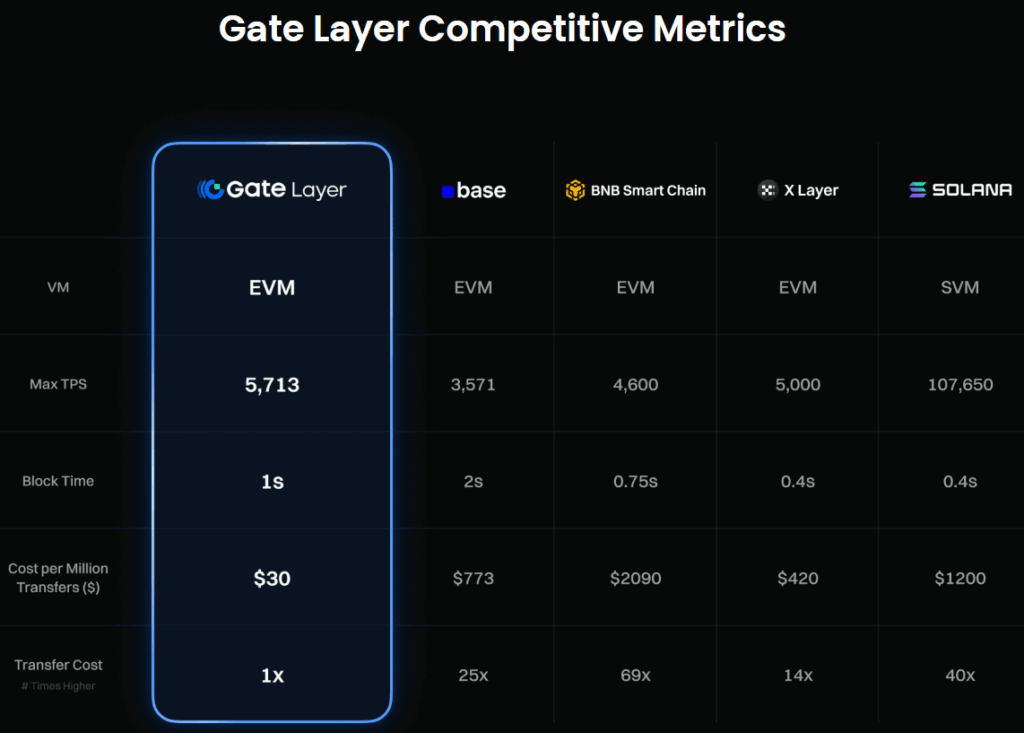
- Gate Layer 2 Network is built on the OP Stack and now offers over 5,700 transactions per second (TPS) and ultra-low transaction fees.
- GT becomes the only gas token on the network and, therefore, will have far greater usage and relevance in this revised tokenomics model.
- This new ecosystem launches with three core products: a perpetual futures hub (Perp), a token launchpad (Gate Fun), and a meme coin tracker (Meme Go).
Table of Contents
Gate Layer 2 Network: A High-Performance Scaling Solution
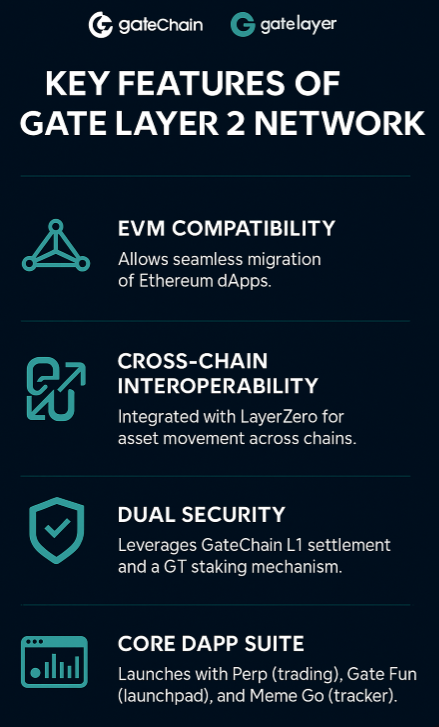
The recently launched Gate Layer 2 Network, created to solve the traditional blockchain trilemma of scalability, security, and cost, is built on the Optimism OP Stack and is Ethereum Virtual Machine (EVM) compatible. It will deliver a high-performance increase to users and stakeholders, with 1-second block times and transaction fees significantly lower than many of its competitors. The L2 will be secured by Gate’s proprietary Layer 1 blockchain, GateChain, which recently underwent a significant upgrade to function as a settlement layer.
Read also: VeChain Hayabusa Upgrade: DPoS Shift and Tokenomiks Audit Set for December
Supercharging the GT Token Ecosystem
The launch is intrinsically linked to a major value upgrade for the GT token. GT is now the mandatory gas token for all transactions on the Gate Layer 2 Network, creating a direct demand sink as ecosystem activity grows. This utility is compounded by GT’s established deflationary mechanism, which has already burned over 60% of the token’s original supply through scheduled quarterly burns and an Ethereum Improvement Proposal 1559 (EIP-1559)-style on-chain fee burn.
Read also: Solana Alpenglow Upgrade: 150ms Finality Could Make It Faster Than Stock Exchanges
A Comprehensive Web3 Plan
Gate is not just building infrastructure, but it’s filling it. The “All in Web3” strategy is exemplified by Gate launching three flagship products simultaneously, appealing to all types of users, including serious traders on Perp and creators launching tokens on the no-code Gate Fun platform. This enables the Layer 2 (L2) to have immediate utility and liquidity for users upon launch.
Read also: Ethereum Foundation Launches dAI Team to Power AI Agent Economy
More Than Just an Exchange
With the Gate Layer 2 Network, Gate.io is transitioning from a centralized exchange (CEX) into a comprehensive Web3 ecosystem builder. With ownership over the entire stack from L1, L2, and core applications, Gate is establishing an approach of vertical integration to capture value across the full user experience of decentralized finance (DeFi).
Final Thought: Can a centralized exchange successfully build a decentralized future, or is this the necessary evolution for CEXs to survive?
FAQs
What is the OP Stack?
The OP Stack is a standardized, open-source development stack used to build Layer 2 blockchains, most notably by Optimism. It provides the core software needed for a high-performance, Ethereum-secured rollup.
How does GT’s burn mechanism work?
GT has a dual burn: scheduled quarterly burns based on exchange revenue, and an automatic burn of the base fee from every transaction on the network, similar to Ethereum’s EIP-1559.
What is EIP-1559?
EIP-1559 is an Ethereum improvement proposal that changes the fee market. It introduces a base fee that is burned (destroyed) with each transaction, making the token deflationary as network usage increases.
For more blockchain upgrade stories, read: Mantle Network Becomes World’s Largest ZK Rollup After Major Succinct Upgrade – MNT Surged 15%


