





The famous Git repositories platform has introduced GitHub Agentic Workflows in technical preview, which is a new capability that enables AI agents to automate the management of repositories within GitHub Actions. This feature is being developed as part of GitHub’s concept of “continuous AI” and allows developers to specify goals for automation in plain Markdown language instead of using complex ‘yet another markup language’ (YAML) specifications.
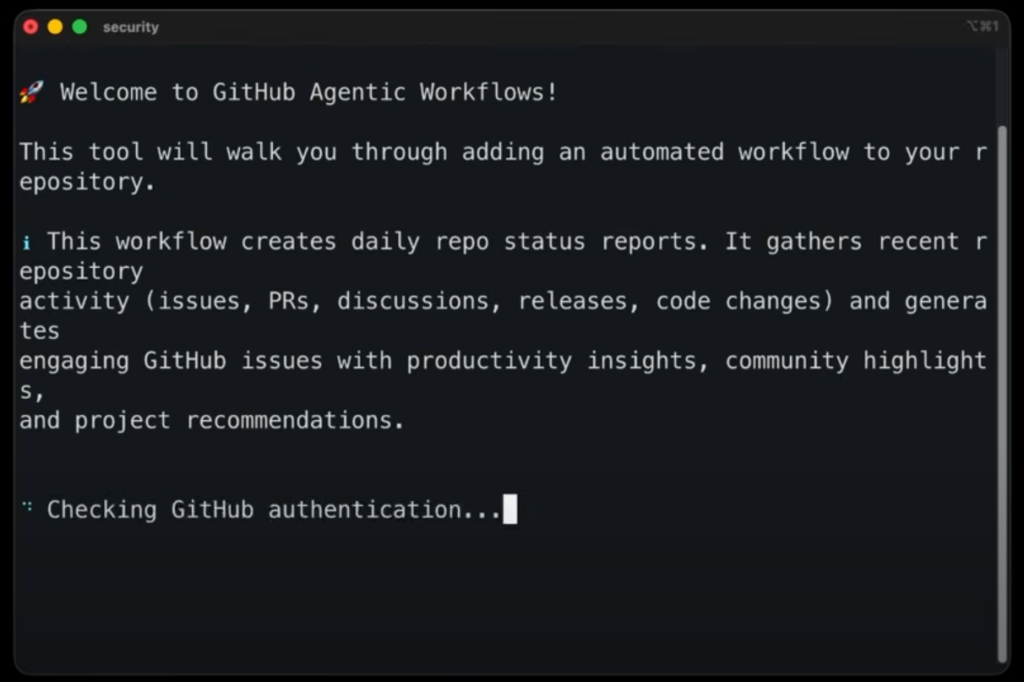
How Agentic Workflows Work
GitHub Agentic Workflows will compile the user’s Markdown description into executable Action scripts by using the GitHub Command Line Interface app (CLI). Using any of these engines: Copilot CLI, Claude Code, or OpenAI Codex, agents can perform activities that require judgment, such as triage issues, review pull requests, investigate continuous integration (CI) failures, and update documentation. Different from traditional CI/CD pipelines, which perform deterministic actions, Agentic Workflows allow for subjectivity in the use of AI.
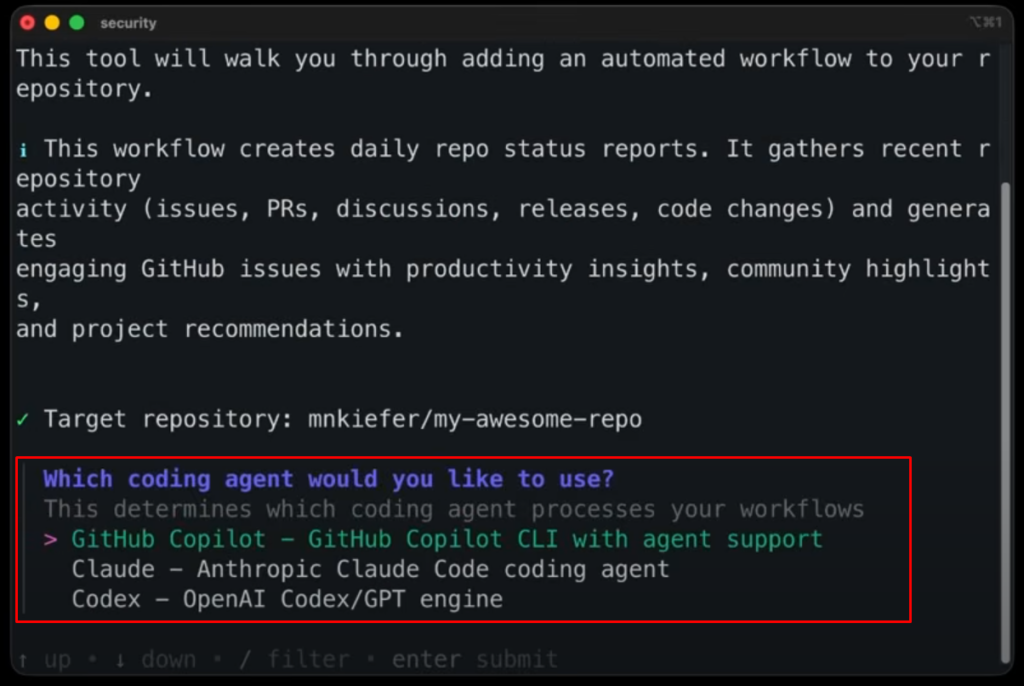
The workflows have been designed with security at the core of their architecture: The workflows have a default read-only permission and can only modify resources that are specified as “safe outputs” before execution (e.g., create an issue or comment on an issue). Workflows are also protected by several additional forms of security, such as executing within sandbox containers, isolated from the network, and sanitizing user input to mitigate the risk of prompt injections.
Importance of How this is Done
The new GitHub Agentic Workflows are a significant change from the current interactive AI state of how to best maintain repositories in an autonomous way that enhances but does not replace traditional CI/CD methods. Home Assistant, Carvana, and Visual Studio are all early adopters already leveraging these workflows to provide large-scale analysis of issues as well as automated workflows across repositories.
This open-source initiative, created through collaboration with Microsoft Research, will encourage exploration by the community, even at this early stage, despite the existing “use at your own risk” warning.


