





Grayscale, the digital asset manager, said Bitcoin faces a lower quantum computing risk than many other cryptocurrencies from a technical standpoint, but warned that the harder challenge is whether its community can agree on how to respond before future threats emerge.
In a note backing a recent Google Quantum AI paper, Grayscale said Bitcoin’s structure gives it some advantages, as it uses a UTXO model, relies on proof-of-work, does not support native smart contracts, and includes address types that are quantum-safe if they are only spent once.
However, Grayscale said that while Bitcoin may be better positioned than some rival blockchains from an engineering perspective, the bigger question is whether its community can agree on how to handle key vulnerabilities, such as lost or inaccessible coins.
Google Urges Early Action
Google’s paper argues that although no quantum computer today can run Peter Schor’s algorithm at the scale needed to break modern cryptography, progress may come in sudden leaps rather than gradual steps. That makes delay risky, especially for public blockchains that need time to coordinate technical upgrades and build consensus across decentralized communities.
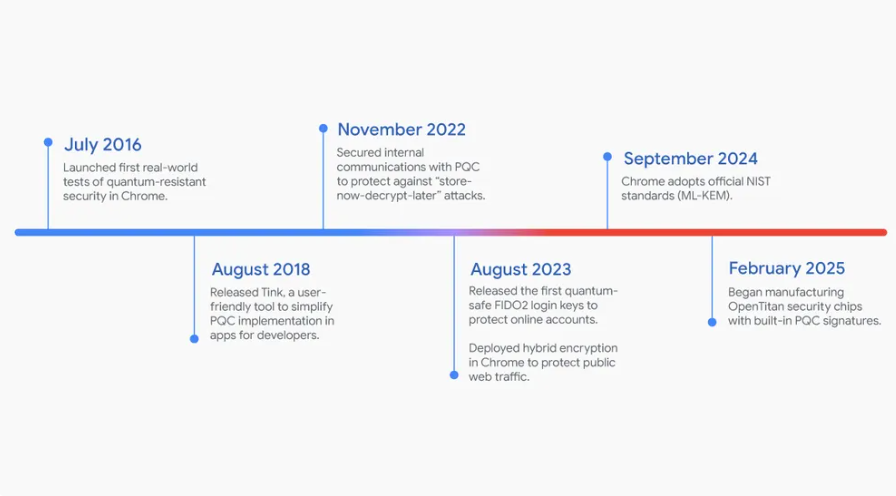
The paper says the solution is already clear: blockchains should begin moving toward post-quantum cryptography, a field Google described as mature and increasingly deployed. It also noted that the risks vary across networks depending on their structure, consensus mechanism, smart contract exposure, and transaction design.
Bitcoin’s Real Test Is Consensus
For Bitcoin, Grayscale said the central issue is what to do about coins tied to lost or inaccessible private keys. Once quantum computers become powerful enough, those dormant holdings could become vulnerable if linked to exposed addresses, even though Bitcoin itself is considered less exposed than many other blockchains from a technical standpoint.
The firm said Bitcoin has some structural advantages in a post-quantum scenario, as it uses a UTXO model, relies on proof-of-work consensus, does not have native smart contracts, and includes certain address types that are not vulnerable to quantum attacks if they are not reused after spending.
The community, Grayscale said, has several possible responses. It could choose to burn those coins, leave them untouched, or slow their release by limiting the rate at which funds from vulnerable addresses can be spent, adding that all of those options are conceptually possible, and none is technically out of reach.
The difficulty is political, not technical, the company said, as Bitcoin has no central authority to push through changes and even narrow upgrades have a history of sparking prolonged disputes, including last year’s debate over image-like data stored on the blockchain.
That leaves Bitcoin in an unusual position, less vulnerable than many of its peers from an engineering standpoint but harder to adapt due to its challenging social consensus.
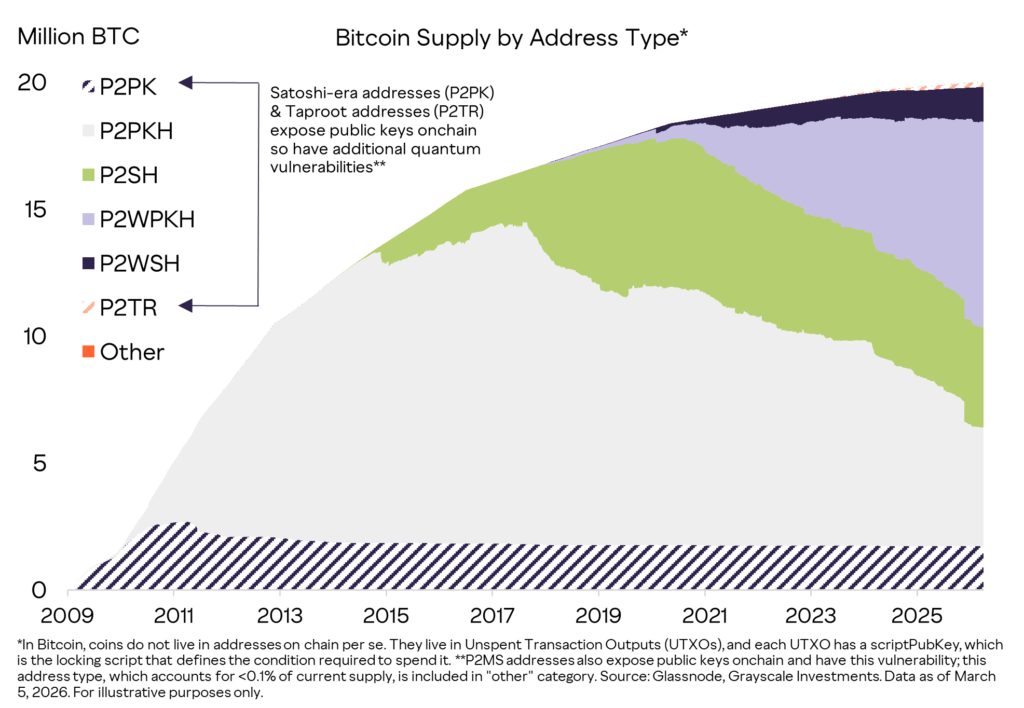
Grayscale’s broader conclusion was that investors should not be alarmed by any immediate threat, as quantum computers do not yet pose a direct security risk to public blockchains. However, for Bitcoin and other decentralized networks, preparation should begin now, because technical solutions may be clearer than the governance process needed to implement them.


