




Key Takeaways
- New Kamino Security Page outlines the multi-layered security framework for the decentralized finance (DeFi) protocol.
- The system currently secures deposits of over $4 billion and has successfully liquidated loans totaling $120 million without any bad debt.
- Security measures include 18 audits, formal verification, and advanced fuzzing campaigns.
Table of Contents
The Kamino Security Page: A New Standard for DeFi Transparency
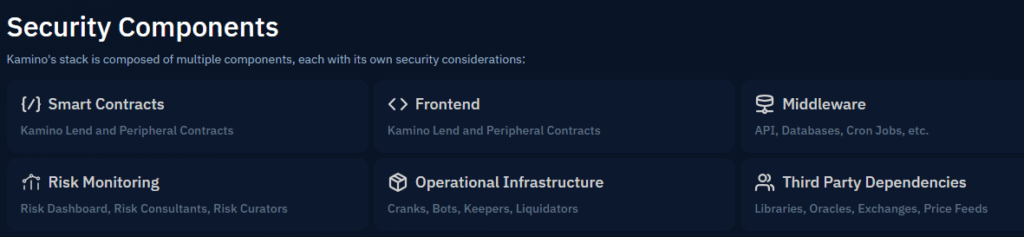
By launching the Kamino Security Page, the project is making a major move towards institutional-grade transparency in decentralized finance (DeFi). The security page provides a single place to view all of the security information relevant to the protocol. This goes beyond periodic security reports to provide a real-time perspective of the protocol’s defenses. The Kamino project was built around the philosophy of layered security, which aims to have multiple redundant systems in place to prevent the loss of user funds if one component mechanism fails.

The Pillars of Kamino’s Defense
Kamino’s protocol is arguably the most thoroughly compliant in the market, having successfully passed 18 external audits with zero critical vulnerabilities and being the first Solana DeFi protocol to complete comprehensive formal verification with Certora, which mathematically proves the correctness of its core code. The Scope Oracle, which prices $4 billion in assets, is independently triple-audited and uses data from several providers, improving accuracy and resilience.
The list below remarks the core security initiatives:
- Formal Verification: Mathematical proof of code correctness for Lend, Earn Vaults, and Limit Orders.
- Verifiable Builds: Ensures the on-chain code matches the open-source repository.
- Advanced Fuzzing: Millions of test instructions were unable to violate solvency invariants.
- Real Support Stress Test: $120M liquidated on main net with $0 bad debt.
Read also: BDIC Launches Crypto Insurance: Stablecoins Get FDIC-Style Protection
Establishing Trust Through Experience and Results
The Kamino Security page is not only written on a promise, but has a three-year run behind it. The protocol has been through extreme volatility and over 100,000 liquidation events without a single dollar in bad debt. This established track record is very important for building trust as DeFi enters areas with complexity, such as borrowing against tokenized equities.
Refunding Trust on DeFi
Kamino is set to improve the whole DeFi ecosystem by demystifying its robust security stack. To this point, transparency is a large section for establishing the level of trust needed to bring users and capital to the decentralized finance market.
Final Thought: As the DeFi space continues to mature, will full security pages become just as important as a whitepaper for the leading protocols?
FAQs
What is formal verification?
Formal verification is a process that utilizes mathematical proofs to ensure a smart contract actually functions as intended, thus eliminating some category of bugs, which may be missed by an audit.
What are verifiable builds?
Verifiable builds provide proof that the smart contract code running on the blockchain is an exact match for the open-source code that was audited, preventing malicious deployments.
What is fuzzing?
Fuzzing is a type of automated testing process that bombards a system with random, invalid, or unexpected data, attempting to discover vulnerabilities that may not have been found by a manual review.
For more protocol enhancement stories, read: Solana Alpenglow Upgrade: 150ms Finality Could Make It Faster Than Stock Exchanges


