




Nebius (NASDAQ: NBIS), an AI cloud company, announced that it is building a 310 MW AI factory in Finland, in Lappeenranta city, regional capital of South Karelia. When the fully built site (a multi-building campus on a 100-acre property), opens, it will be one of the largest AI facilities in Europe. The first capacity to be delivered to customers is anticipated to occur in 2027.
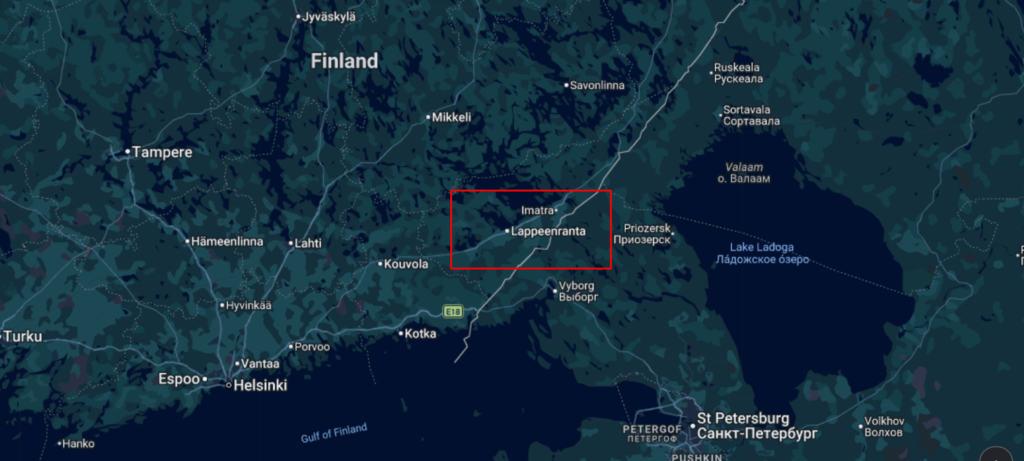
But Why Finland?
Nebius has expanded its operations after recently upgrading its first Finnish data center (located in nearby Mäntsälä) from 25 MW to 75 MW. In total, the company has 750 MW of contracted power across multiple Europe, the Middle East, and Africa (EMEA) locations, including a 240 MW facility under development near Lille, France. The Lappeenranta AI factory is expected to generate significant economic benefits for the South Karelia region by creating approximately 700 jobs during construction and 100 permanent positions.
A Key Architectural Principle of Sustainability
The AI factory in Finland will use a closed-loop liquid cooling system, which means it does not depend upon local water resources for intake. The excess heat from the servers will be donated to the local district heating system (DHS), which also reduces heating costs to residential homes by 10%, minimizing 4,000 tonnes of CO₂e in 2025 in Mäntsälä, the test site for the DHS system.
The Strategic Context
Nebius is now a leader in purpose-built AI compute infrastructure through its expansion plans from currently just over 2.0 GW to more than 3.0 GW contracted power by the end of 2026. Recently, it received approval for its first gigawatt-scale AI compute facility in Independence, Missouri. This facility will be built to serve AI builders with the newest NVIDIA Blackwell and Rubin accelerated compute platforms.
Mayor Tuomo Sallinen of Lappeenranta, Finland, welcomed the announcement of the 310 MW AI factory, saying, “This facility will make our city an important contributor in creating Finland’s AI ecosystem, establishing us at the forefront of Europe’s needs for AI for many decades.”


