




Key Takeaways
- A major new Binance lawsuit accuses the exchange of processing over $1 billion for terrorist organizations.
- The suit, filed by victims of the October 7th attacks, names founder CZ and an executive as defendants.
- This civil case uses anti-terrorism laws to seek damages, going beyond the exchange’s previous criminal settlements.
Table of Contents
The Core of the Binance Lawsuit
A new Binance lawsuit has just been filed in the U.S. District Court in New York City by more than 300 people who were victims or family members of those who were killed or injured in the terrorist attack on October 7, 2023, in Israel. The lawsuit alleges that Binance knowingly enabled terrorist organizations, including Hamas and Hezbollah, to receive substantial amounts of money from Binance’s platform.
The civil lawsuit, spanning 284 pages, was filed under the Anti-Terrorism Act and claims that Binance processed more than $1 billion in transactions for organizations designated as terrorist organizations by the U.S. government.
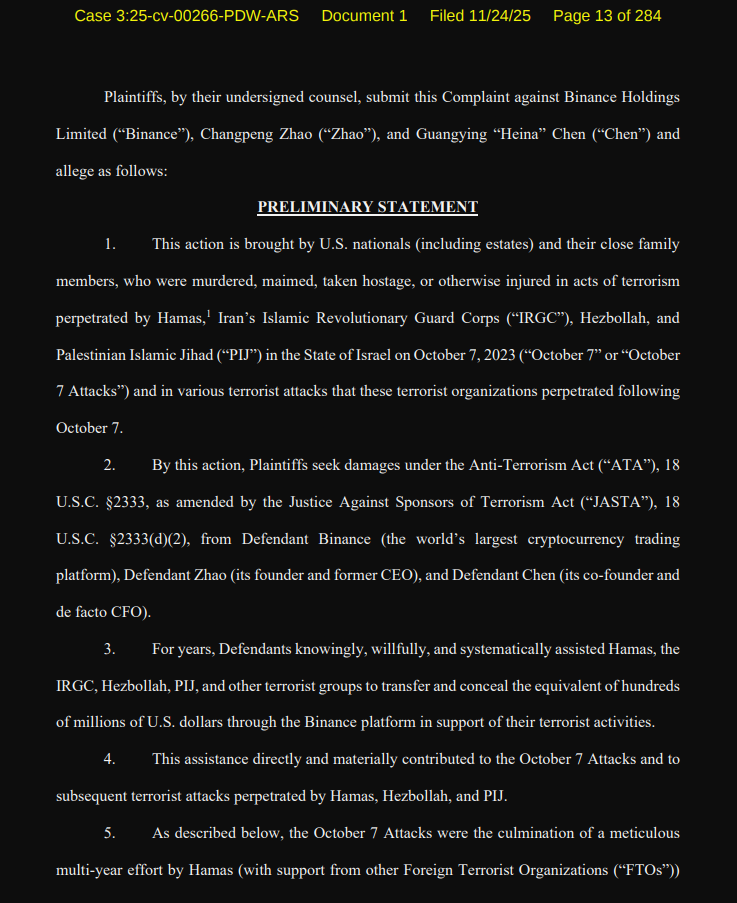
Additionally, this lawsuit represents a major step forward in efforts to hold both Binance and Changpeng “CZ” Zhao (founder and CEO) and Guangying Chen (Senior Executive) responsible for their roles in facilitating the movement of funds to terrorist organizations.
Read also: Ex-Binance Exec Tigran Gambaryan Accuses Nigeria Gov of $50M Extortion
Failure of Control Systems
The plaintiffs believe that Binance’s corporate structure is designed to be a “refuge for illicit activity,” creating a system that disregards court orders that allow the seizure of funds from users. The suit claims that Binance has allowed flagged users to move their funds through internal accounts without any restrictions. Additionally, the lawsuit alleges that Binance allowed these transactions to continue even after Binance pleaded guilty in 2023 for violating the Money Laundering Act (MLA) by paying $4.3 billion in fines for the violations.

The Binance lawsuit outlines in great detail several of the specific wallets used by these terrorist organizations. The lawsuit alleges that Binance had knowledge of these wallets’ existence and had ample opportunity to know that the funds would be used for terrorist activities.
Read also: CZ Targeted by Government-Backed Hackers, Suspects North Korean Lazarus Group
A Legal Reckoning with Global Reach
This lawsuit against Binance may hold the company liable under U.S. anti-terrorism laws, potentially opening the door for victims to seek compensation and have their damages tripled under the law.
Although Binance maintains that no jurisdiction exists and denies the allegations in other lawsuits, a judge in the State of New York has determined that the plaintiffs have sufficiently established that Binance either knew or was substantially involved with the conduct of terrorist organizations.
Should the courts decide in favor of the demandants, it may set a historic precedent for the rest of the crypto industry to recognize that they, too, play an integral part in the global financial system.
FAQs
What is this Binance lawsuit about?
It’s a civil case alleging that Binance, its founder Changpeng “CZ” Zhao, and an executive knowingly allowed their platform to be used to process over $1 billion in crypto transactions for terrorist groups like Hamas and Hezbollah.
How is this different from Binance’s previous legal issues?
This is a civil case filed by victims under anti-terrorism laws, seeking damages for specific violent acts. It extends beyond the 2023 criminal case, in which Binance pleaded guilty to general money laundering violations.
What are the potential consequences?
If the demandants succeed, Binance and the named individuals could be held liable and forced to pay triple damages under the Anti-Terrorism Act, creating a massive financial liability and a powerful legal precedent.
For more Binance-related stories, read: YZi Labs Builder Fund Deploys $1B to Supercharge BNB Ecosystem

