




Key Takeaways
- The U.S. sanctioned eight individuals and two entities for a sophisticated crypto laundering scheme.
- These North Korean bankers helped move funds from cybercrime and IT worker fraud.
- The operation laundered over $3 billion in crypto over three years to fund weapons development.
Table of Contents
Sanctions Target DPRK’s Financial Enablers
The U.S. Treasury Department has imposed sanctions against a network of North Korean bankers and institutions for their central role in a worldwide crypto laundering scheme. The action targets eight individuals and two associated firms, including bankers from North Korea’s state-owned financial institutions, such as First Credit Bank, who handled millions in illicit proceeds.
According to Under Secretary John K. Hurley, these actors “directly threaten U.S. and global security” by generating revenue for Pyongyang’s nuclear weapons program through stolen digital assets.
Read also: North Korea Crypto Hackers Smash Record with $2 Billion Stolen in 2025
A Multi-Pronged Illicit Funding Scheme
Sanctions illustrate a dual-pronged strategy for illicit fundraising:
- First, sponsored state hackers have utilized complex cyberattacks to steal more than $3 billion in crypto.
- Second, a worldwide web of IT workers who hide their nationality to receive freelance contracts that return hundreds of millions to support the regime.
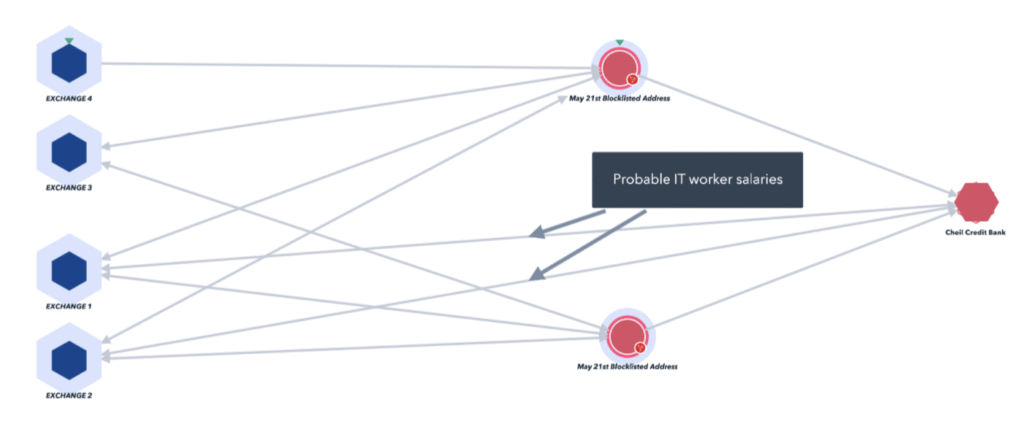
The designated North Korean bankers acted as the critical linchpin, laundering these funds through complex transactions, including moving $5.3 million in crypto linked to ransomware attacks on U.S. victims.
Read also: CZ Targeted by Government-Backed Hackers, Suspects North Korean Lazarus Group
Shutting down an Illicit Financial Pipeline
This broad move is an unequivocal attempt to dismantle the financial infrastructure that supports North Korea’s weapons programs. By sanctioning the crypto laundering specialists and the banks they represent, the Treasury aims to cut across a multi-billion-dollar illicit revenue stream.
This action also tracks an escalating focus on the digital asset channels that have become lifeblood for the sanctioned regime.
FAQs
What were the North Korean bankers engaged in?
The North Korean bankers were managing and laundering millions of dollars obtained from cybercriminal activities, such as ransomware attacks, and from IT workers fraudulently employed overseas.
How does the crypto laundering benefit North Korea?
Crypto laundering allows North Korea to convert stolen digital assets into usable currency, bypassing international sanctions and generating an approximate $3 billion over three years to fund its weapons programs.
What entities faced sanctions?
Key entities sanctioned include First Credit Bank and Ryujong Credit Bank, which were integral to the structure of the crypto laundering network, along with an IT company, Korea Mangyongdae Computer Technology Company (KMCTC).
For more North Korean-related stories, read: SBI Hack: North Korean Hackers Suspected of $21M Crypto Theft


