




Micron Technology (ticker: MU): Due to the current industry demand for high-end computing solutions such as AI-related technologies, product manufacturers are facing supply constraints associated with High Bandwidth Memory (HBM). The memory giant’s strategic position in the AI chip stock market, and the demand for HBM, continue to increase at unprecedented levels. Micron Technology is strategically positioned in this area, which should allow it to continue growing revenues from HBM sales through 2026 and beyond.
The HBM Supply Crunch Fueling Micron’s Ascent
Today, advanced AI chips require enormous amounts of High-Bandwidth Memory (HBM), a specialized, 3D-stacked Dynamic Random Access Memory (DRAM) that acts as a super-fast data conduit. But, even with these challenges, Micron has passed Nvidia’s quality checks for its High Bandwidth Memory 3E (HBM3E) products, securing its presence as a key supplier. To take into account, producing HBM consumes 3-4x more wafer capacity than standard DRAM, thus creating a supply shortage that is sending prices soaring.
Micron Technology’s recent performance is a reflection of this imbalance in supply and demand: fiscal Q1 revenue jumped 57%, with earnings per share (EPS) nearly tripling as gross margins expanded to 56.8%. With its 2025 HBM capacity fully booked, the tech company is in a powerful pricing position. Through 2025, Micron has fully allocated its HBM production capacity to customers, allowing them to maintain a relatively strong pricing position in the current marketplace. Starting in 2026, the firm just announced its expansion to New York.

Valuation Debate: Overvalued or Still Undervalued?
On the back of a 234% annual increase in value, and at $365 a share, the stock is now at the centre of a heated debate over its valuation. BlackGoat has highlighted one side of this debate by estimating that Micron is 21.6% overvalued and that the fair price for the stock should be approximately $300 because it has been priced for aggressive future growth based on evidence from previous performance.
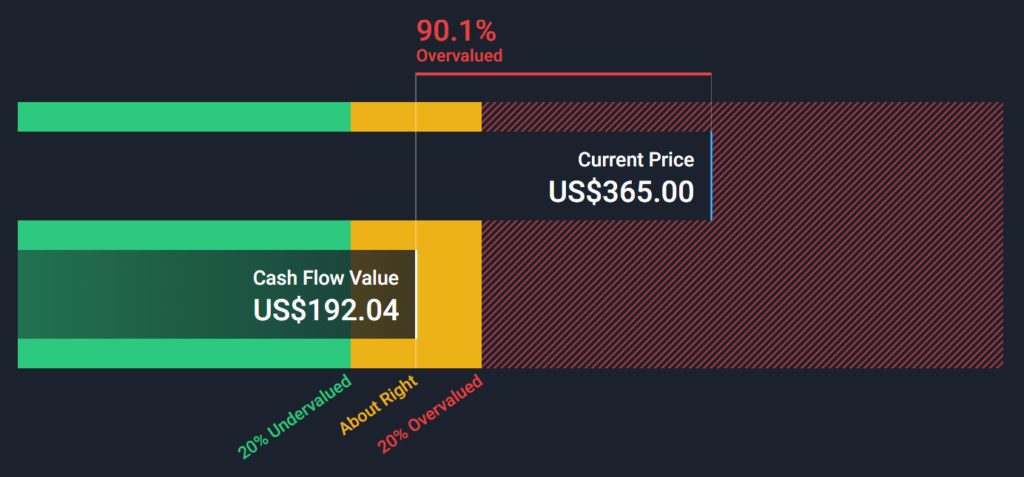
However, looking at the other metrics used to compare companies, it is evident that Micron has a trailing price-to-earnings (P/E) ratio of 34.5x. In comparison, the average P/E ratio for the U.S. semiconductor sector is 43.4x, and the peer group P/E average is 63.2x.
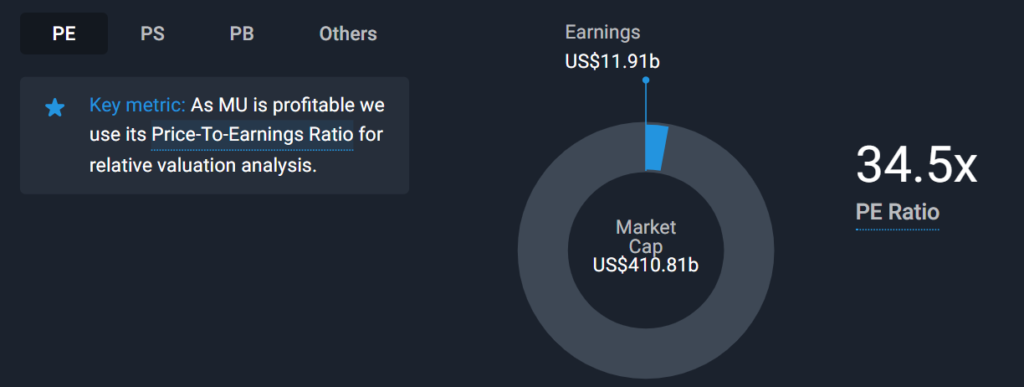
So far, this represents a significant discount and indicates that the market has not fully valued Micron’s participation in the AI supercycle compared to similar chip makers. Though if successful execution continues, the company could see multiple valuation expansions from this lower starting point.


