




Key Takeaways
- Bipartisan Win: Passed 68-30, establishing Treasury-led stablecoin rules with reserve transparency requirements.
- Trump Profits Stand: Democrats failed to block presidential crypto earnings ($57M disclosed in 2024).
- Corporate Rush: Amazon, Walmart reportedly preparing stablecoin payment systems.
- Controversy Remains: Warren calls it “worse than no bill” over lax AML and tech giant allowances.
The Crypto Industry’s Watershed Moment
Following years of regulatory uncertainty, stablecoins just got their first U.S. rulebook. The Senate’s passage of the GENIUS Act signals a tectonic shift for the $250B stablecoin sector, legitimizing it while giving the U.S. Treasury full supervisory oversight over it. The win came with a concession: Democrats couldn’t stop a provision that allows President Trump to profit from his TRUMP memecoin and other (likely) crypto activities down the line.

(Image source: banking.senate.gov)
Washington acknowledged what some traders knew for years: stablecoins aren’t crypto’s wild west, but its railroads.
What the GENIUS Act Does
1. Reserve Rules
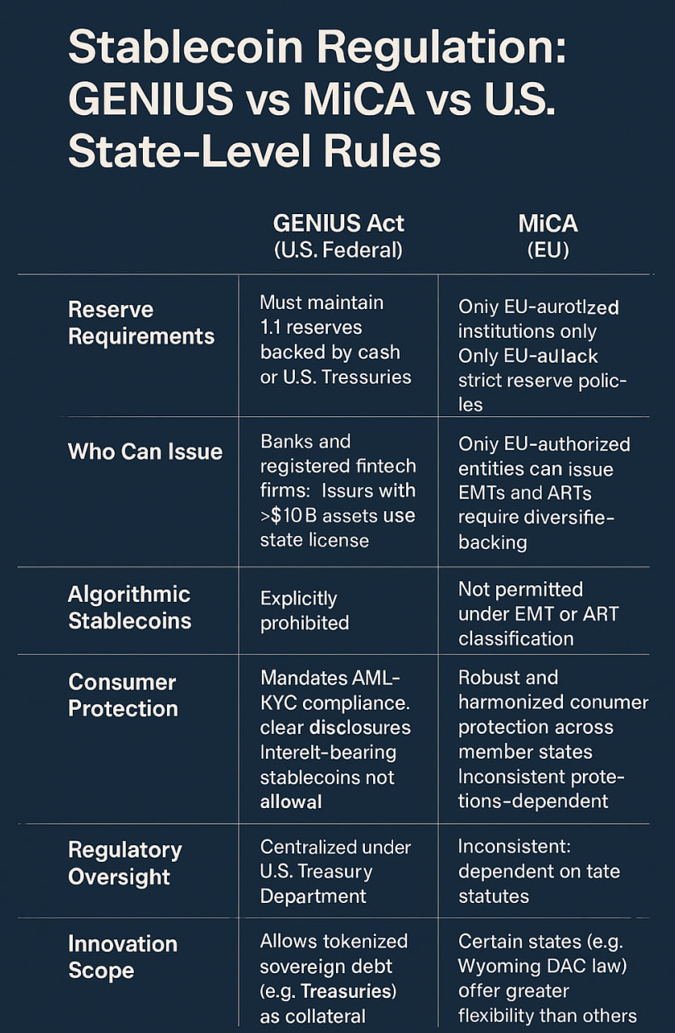
- Stablecoin issuers must back tokens 1:1 with cash or Treasuries.
- Monthly reserve audits become mandatory.
2. Who Can Issue
- Banks and registered fintechs get green lights.
- Tech giants like Amazon face no explicit bans (yet).
3. Political Fallout
- Trump’s $57M crypto earnings remain legal.
- Officials must disclose holdings over $5,000.
What This Means for the Crypto Space
- Payment Revolution: Instant settlements could disrupt ACH/Wire transfers.
- Corporate Arms Race: Walmart’s rumored “WallyCoin” and Amazon’s project gain clarity.
- Global Edge: Aims to counter China’s digital yuan and the EU’s MiCA framework.
Critics warn:
⚠️ AML gaps persist for foreign issuers.
⚠️ Tech monopolies could dominate private stablecoins.
What’s Next?
The House of Representatives must now address its version of the bill before the August recess. Three main battle lines are now forming: possible limits to tech giants like Amazon or even Meta from issuing stablecoins, jurisdictional disputes between federal and state regulators, and remaining questions about exclusions that could help Trump-affiliated crypto companies. The decision will determine whether the United States moves forward with a single stablecoin approach or an overall system of compromise.
Summing Up
Let’s face it – this bill is a confusing compromise. It gives the legitimacy that crypto firms need and lets the politicians hold their bags. As a DeFi user, I’m conflicted: clear rules could finally kill the “stablecoins are securities” fear, uncertainty, and doubt (FUD), but allowing corporations to issue unregulated stablecoins feels like just switching bank oligarchs for tech oligarchs.
Final Thought: Will this bill stabilize crypto, or just politicize it further? One thing is obvious: the next time you buy coffee with a Walmart token, you’ll have the GENIUS Act to thank (or curse).
For more stablecoin-related news, read: Societe Generale Makes Banking History with First Public Stablecoin: USDCV

