





Pierre Rochard, chief executive of The Bitcoin Bond Company, has urged U.S. banking regulators to clarify how Bitcoin-related activities would be handled under their proposed Basel III capital overhaul, arguing that the lack of precision could leave banks facing legal uncertainty over how those exposures should be classified.
In a comment letter filed on the agencies’ March proposal, Rochard said the issue is not simply whether Bitcoin exposures can be squeezed into broad existing categories, but whether regulators are clearly telling the market what framework they intend to apply. His argument is that banks, investors, and public commenters cannot fairly assess the rule if key parts of the treatment remain implied rather than stated outright.
A Dispute Over Categories, Not Legality
Rochard’s letter does not claim that Bitcoin-related activities sit outside the current capital regime, nor does it argue for a blanket exemption. Instead, it presses regulators to identify which rules should govern which type of exposure, saying a direct spot holding, a bitcoin-backed loan, a custody arrangement, and a derivative position should not be treated as though they raise the same prudential concerns.
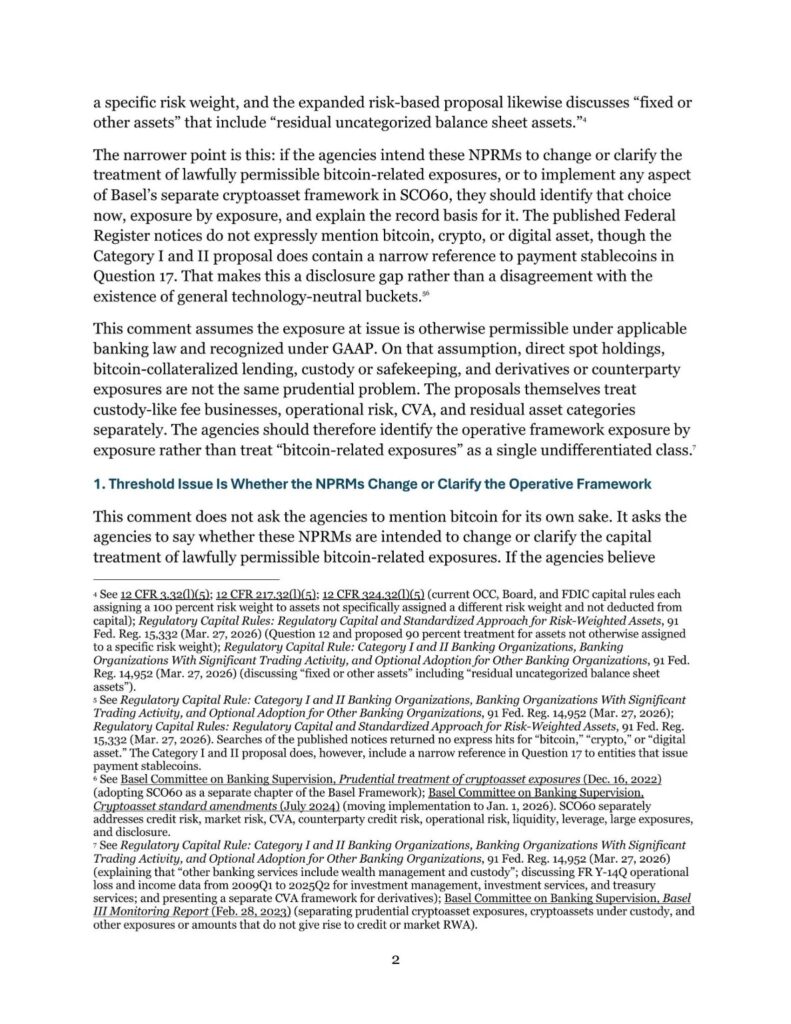
That distinction matters because each form of exposure presents a different risk profile. Direct holdings are more closely tied to principal market exposure, while custody and safekeeping may fit more naturally into operational and service-related risk, and derivatives can trigger counterparty credit and credit valuation adjustment questions. By treating “bitcoin-related exposures” as a broad, undifferentiated category, Rochard said, the proposal risks creating confusion where banks need clarity most.
Basel Benchmark Seen as Incomplete Guide
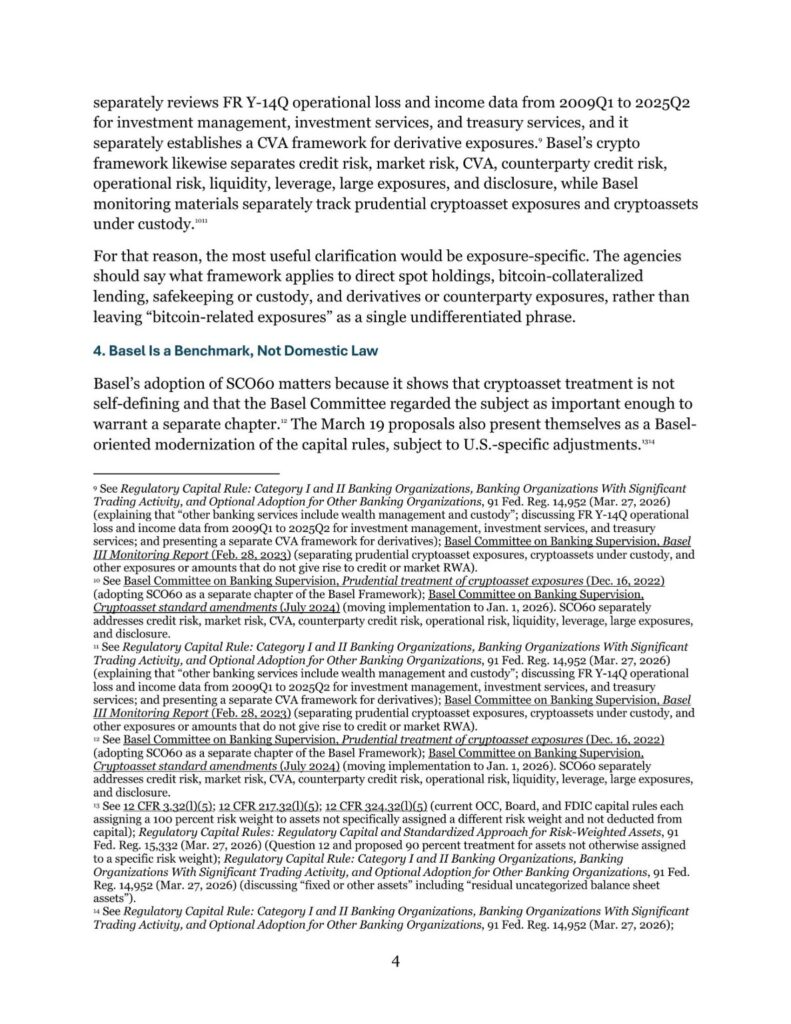
The letter also argues that regulators should be explicit if they intend to borrow from the Basel Committee’s separate cryptoasset framework, rather than relying on default classifications that group together assets not otherwise specified when accounting for Bitcoin activity. Rochard said Basel may be an important benchmark, but it is not U.S law by itself, and that distinction becomes crucial when banks are being told how much capital they must hold against a particular business line.
His broader case is that the agencies should say plainly whether the rule is meant to preserve current treatment, clarify existing categories, or import parts of Basel’s crypto standard. Without that disclosure, he said, commenters are left debating possibilities rather than a clearly defined regulatory choice.
Industry Pushes Economic Case
Rochard paired the legal argument with a policy one, saying better-defined Bitcoin banking rules would help banks improve net interest margins and, in turn, lower borrowing costs for customers. That claim reflects a wider industry push to frame Bitcoin as a potentially productive part of bank balance sheets if handled through clear and workable rules.
The filing adds another crypto-focused voice to the debate over Basel III implementation, while underscoring an increasingly important question for regulators: not whether Bitcoin exists within banking, but how precisely they intend to measure its risks.


