





Bitcoin is showing renewed weakness around the $69,000 mark, a price area that built up significant trading history in the previous cycle and is now acting as a critical stage, according to market analyst Keith Alan.
Alan, cofounder of crypto analytics firm MI Algos, noted in a recent post on X that bitcoin spent roughly eight months in 2024 moving sideways in this band. That prolonged consolidation, layered on top of the peak from the 2021 bull run at a similar level, has created what he describes as strong structural support and resistance on longer-term charts.
The repeated trading around this zone has turned it into a reference point that many participants recognize, offering traders a rare element of predictability in a market that is driven by sharp swings and fast-shifting sentiment.
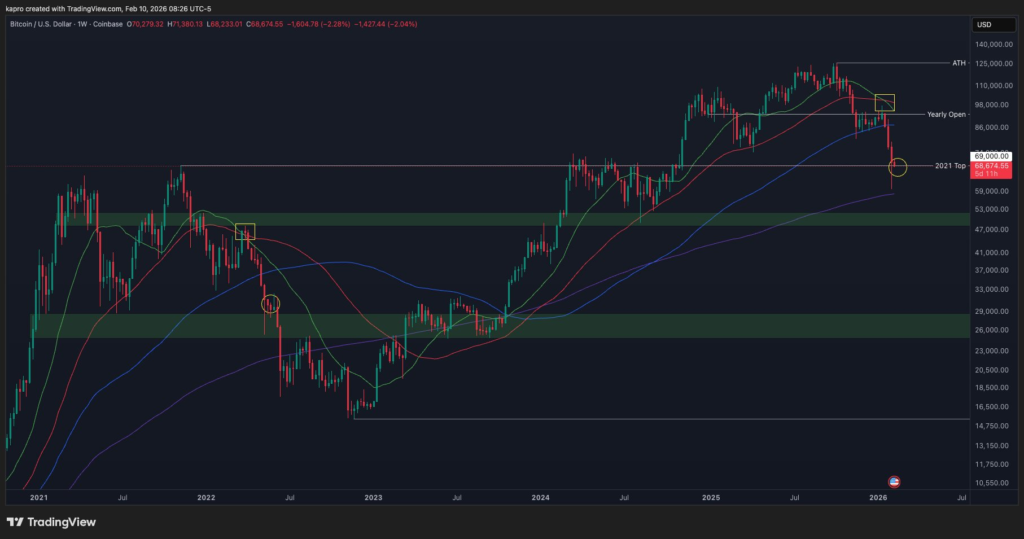
Alan outlined two paths from here. If a positive catalyst emerges and sparks a rebound from current levels, he argued that the extra time spent consolidating around 69,000 dollars would amount to further reinforcement of support, suggesting buyers are willing to defend that area more aggressively.
If the current downtrend continues instead, history implies that the same zone is likely to stop Bitcoin’s rally and behave as even firmer resistance than it did in 2024.
Alan stressed that this does not make the level unbreakable, but it does suggest that a decisive move through it would require far stronger momentum than the market is currently showing.
What could push Bitcoin above $69,000?
Several clear triggers could give Bitcoin enough strength to move decisively through the $69,000 area, a level that has formed a strong barrier in recent trading.
First, United States lawmakers are working on a broad crypto market structure bill. If Congress passes a law that clearly outlines which watchdog supervises spot trading, how stablecoins are regulated, and what obligations apply to exchanges and custodians, it would remove much of the legal fog around the digital assets, making it easier for large banks, brokers, and asset managers to expand Bitcoin-related products.
Second, a fresh wave of demand for spot Bitcoin exchange-traded funds would help push the price, as persistent net inflows often indicate a steady underlying demand that can support a breakout.
A third possible catalyst lies in the wider economy. Convincing signs that interest rates have peaked, together with easing signs of major trade disputes, would improve risk appetite across markets and could draw more capital back toward Bitcoin.


