





Circle is facing renewed scrutiny after blockchain investigator ZachXBT said the company froze USDC held in 16 hot wallets linked to crypto businesses, disrupting operations and reopening a wider debate over centralization in the stablecoin market.
ZachXBT, an independent blockchain investigator known in the crypto industry for tracing stolen funds and uncovering scams, said in a post on X that Circle froze USDC held in 16 hot wallets tied to crypto businesses.
He said one affected business told him the action was linked to an ongoing U.S. civil case whose details have not been made public. He added that his review of on-chain activity suggested the wallets belonged to exchanges, casinos, and foreign-exchange businesses that did not appear to be connected to one another.
The allegation has drawn attention across the industry due to the importance of hot wallets to crypto firms, as they are commonly used to process customer deposits, withdrawals, and day-to-day transaction flows, meaning a freeze can hit operating businesses immediately, even before the legal basis for the action is fully understood publicly.
Circle has not publicly disclosed why the wallets were grouped together. But its USDC terms give it authority to freeze tokens, block addresses, and surrender related reserve assets when required by law.
Supporters of that framework say it is necessary for compliance, while critics argue that it leaves too much discretion in private hands, particularly when operational business wallets are affected.
Earlier Warnings Return to Focus
The new dispute echoes criticism raised in February, when New York Attorney General Letitia James and several district attorneys warned that the GENIUS Act, the U.S. stablecoin law signed in July 2025, did not do enough to protect fraud victims.
The prosecutors said the law gives stablecoins greater legitimacy while failing to require issuers to return frozen funds to victims. They argued that Circle’s approach can be particularly harsh from a victim’s perspective, as the company may continue controlling the underlying assets while the funds remain locked.
Circle rejected that criticism at the time, saying it follows U.S. legal and regulatory obligations and has consistently prioritized financial integrity.
Yield Fears Hit Circle Shares
The fresh scrutiny coincided with a sharp drop in Circle’s shares, which was widely linked to growing concern over the CLARITY Act’s proposed limits on stablecoin yield and reward programs.
Earlier this year, reports said the Senate bill would bar crypto firms from paying interest simply for holding stablecoins, while still allowing some activity-based rewards.
On Tuesday, investors reacted to reports that a revised compromise could tighten those limits further, pushing Circle shares down about 20% in their sharpest one-day fall since listing.
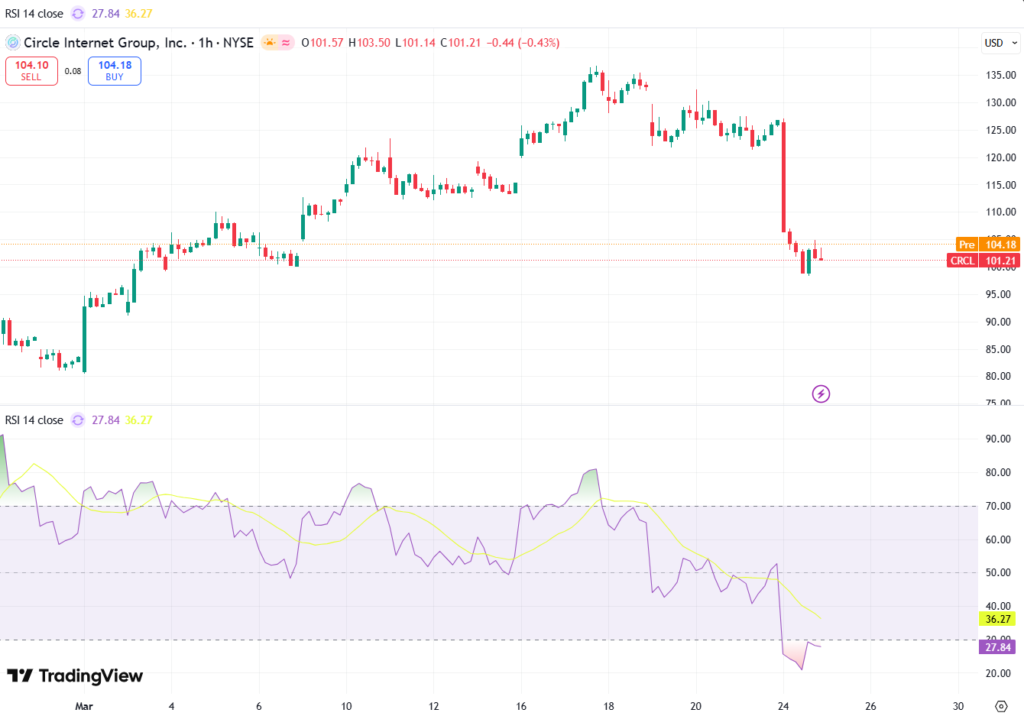
The selloff reflected fears that stricter rules on rewards could weaken demand for USDC and hurt a key growth driver for Circle’s business.


