





The crypto market is trying to achieve stability after enduring an extended period of market decline. Bitcoin maintains its position above a crucial technical support level that exists at $76,4930, while Ether currently trades at approximately $2,269, at the time of writing. The market demonstrates this particular stability because major altcoins lost their previous gains after midnight UTC. The market showed slight progress for traditional risk-off investments, which included precious metals and U.S. equities. Digital assets need to overcome existing pressure that they face against traditional markets because the market experiences either increased sensitivity to macroeconomic changes or ongoing internal challenges that affect the crypto industry.
Sentiment indicators show that the confidence people possess right now remains at deeply impaired levels. The Crypto Fear and Greed Index currently stands at 17, a level associated with extreme fear. This reading shows that the October peak established a structural high point for the previous bull market, which ended with the October peak. The price movement has shifted from its corrective phase to a stage that shows signs of developing into a complete trend change. The community sentiment relates to Bitcoin entering a mild bear market, which will establish permanent support at $60,000. However, on-chain and derivatives-based indicators show that the market participants are still in a cautious mood.
Altcoin Divergence: Resilience and Speculative Activity
The market performance has shown different results because individuals anticipate the situation will bring bad outcomes. The prevailing market conditions suggest that altcoins display strong resilience, but the market stays divided into multiple segments. The value of HyperLiquid’s native token has experienced a strong rise of over 70% during the last week. The primary factor driving that was its silver futures market trading activity. The growth indicates that investors have started to move their funds into specific DeFi platforms that focus on derivatives because they want to make quick profits. The tokens like Polygon’s POL, LIT, and MORPHO experienced price increases of up to 13% over the past 24 hours soon after the assets bounced back from a selling spree over the weekend. The market showed low liquidity because its order books contained only a few orders, which made price movements more extreme when the market participants started to scale in.
In contrast, privacy-oriented cryptocurrencies have continued to underperform. The assets focused on privacy, like Monero and Zcash, are down more than 20% on a weekly basis, with additional losses of roughly 3.5% overnight. The declining risk appetite of the market participants and regulatory policies around the narratives point market weakness.
Derivatives and Volatility: Hedging and Leverage Dynamics
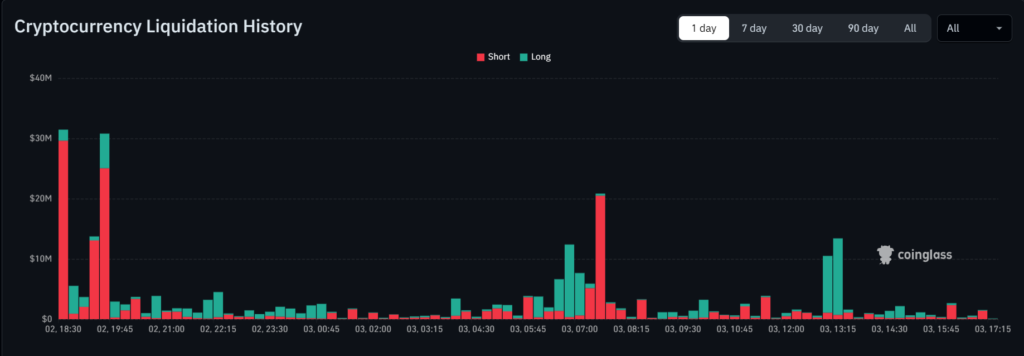
The past 24-hour period saw the liquidation of nearly $300 million in leveraged futures positions at all major exchanges. The total notional open interest at present has reached a level of approximately $110 billion, which represents a multi-month average. The current consolidation phase of the crypto sector indicates that the majority of leverage has been taken out, which cuts down the chances of immediate liquidations.
Derivative markets show wider market trends. The reason being the Bitcoin’s 30-day implied volatility that exceeds its 200-day average. The relative trend indicates that the traders are expecting heightened volatility for the digital assets. Ether exhibits the same pattern, which shows that more investors are using hedging and options trading methods.
Open interest composition reveals important divergences. Open interest in major assets such as Bitcoin, Ether, Solana, and XRP has contracted steadily, consistent with reduced speculative engagement. The HYPE futures market experienced a 20 percent increase in open interest, which showed that traders were placing their bets on rising prices of that particular market. The funding rates for major perpetual contracts show a slight positive trend, which demonstrates that traders maintain a mild preference for long positions, although they do not reach extreme levels of bullishness. The elevated put premiums that exist across most expiries demonstrate that traders maintain strong interest in protecting themselves against market downturns. The block trade data demonstrates that traders are still active in Bitcoin strangles and Ether risk reversals, which they use to trade during times of expected market volatility when they have no clear view of the market direction.
Structural Outliers: Institutional and Fundamental Drivers
The Canton network’s CC token stands as the single cryptocurrency that has performed better than the rest of the altcoin market. The trading pattern shows that this particular movement connects to essential market changes. Canton operates as a privacy-focused layer-one blockchain system that serves the needs of institutional finance and real-world asset tokenization. The project gained traction after it announced its collaboration with DTCC to develop a U.S. Treasury security tokenization system. This event demonstrates the existence of two separate markets within the cryptocurrency industry. Retail-oriented tokens remain highly impacted by the market sentiment and liquidity conditions, while infrastructure projects aligned with institutional use cases may benefit from longer-term structural tailwinds.
The existing market conditions indicate that current consolidation patterns will persist until future market trends reach their final outcomes. The market depends on Bitcoin to maintain its present support zone because this element serves as a critical factor for evaluation. The market would experience another wave of price fluctuations together with forced liquidation activities if the current price drop continues, whereas positive market stabilization will lead to rising market trust.


