



Most major cryptos were affected by broad selling pressure, with heavy liquidations and a risk-off mood causing big drops, especially in the Solana ecosystem. At the same time, a small number of protocols, especially those linked to high-performance decentralized trading infrastructure, held up well and drew in new investments.
This Week’s Top 5 Gainers
MYX Finance (MYX)
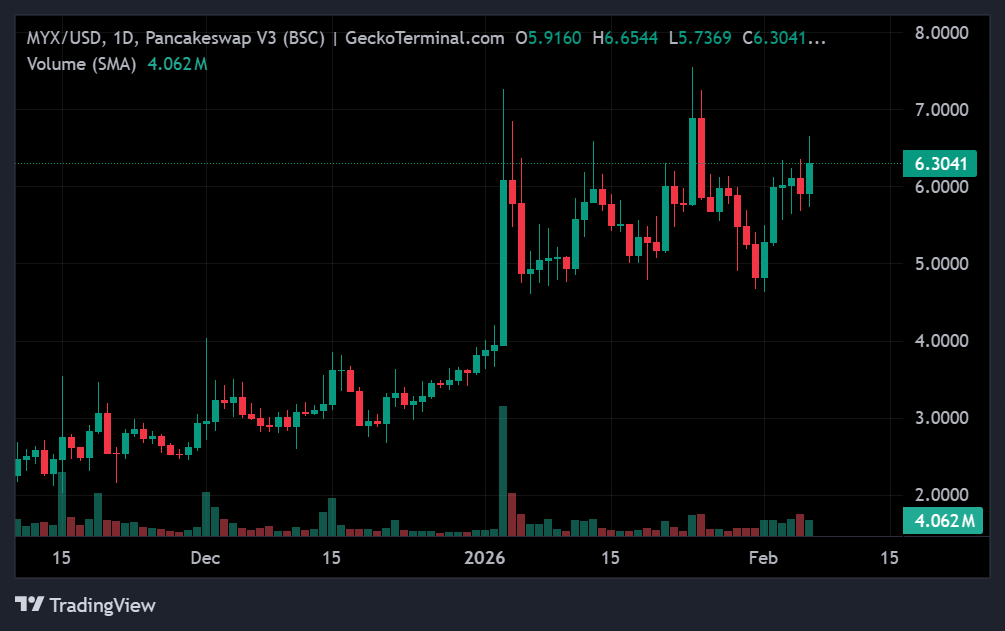
MYX Finance had the best week because its value increased by more than 16% while trading volume reached nearly $68 million. The protocol operates as a non-custodial derivatives exchange, which enables users to trade perpetual contracts through its on-chain system that supports multiple tokens via an automated market maker system. The system aims to decrease slippage while reducing the required funds for liquidity providers and providing traders with centralized platform functionality. MYX operated independently of market trends during risk-off periods because it maintained strong fundamental assets, and its trading system executed without slippage while more users accessed DeFi derivatives trading.
Kinetiq Staked HYPE (KHYPE)
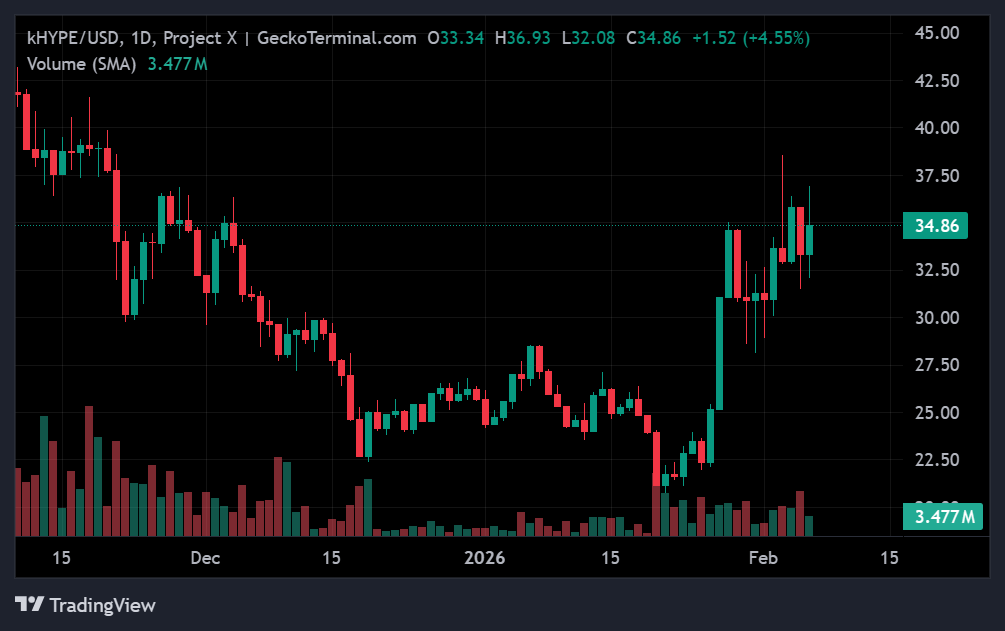
Kinetiq Staked HYPE, which operates as a liquid staking derivative for the Hyperliquid native token, experienced a 14.5% increase in value due to high trading volume. Users of KHYPE can stake HYPE on the Hyperliquid Layer-1 network while conserving liquidity through a staking reward-earning token. The Hyperliquid ecosystem requires liquid staking assets because decentralized perpetuals trading has grown into a widely used trading method. The protocol demonstrates that the market participants believe in its ability to expand and its revenue potential.
Hyperliquid (HYPE)
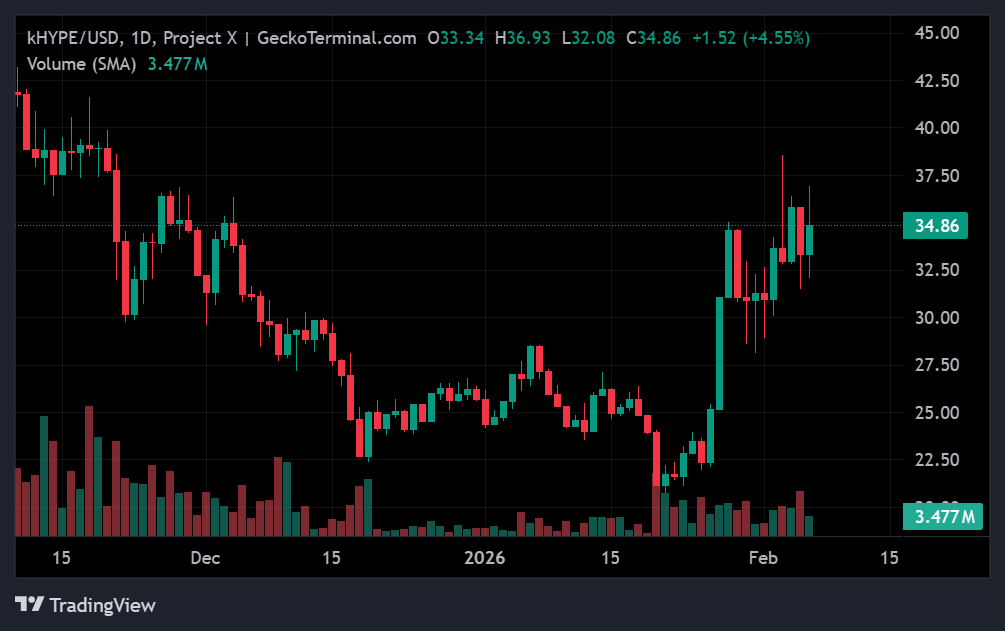
The native token of Hyperliquid was one of the best performers of the week, rising close to 14% on a trading volume of more than $1.3 billion. Hyperliquid operates as a highly efficient Layer-1 blockchain, which was specifically developed for decentralized finance applications. The system operates a complete on-chain order book, which supports both perpetual futures and spot market trading. The platform’s quick transactional processing and low fees, collectively with its intelligent economic system design, have resulted in rapid growth of open interest and daily user activity. HYPE benefits solely from network use through the involvement in staking, governance participation, and fee capture. The asset retains its value through market volatility on account of this particular feature.
MemeCore (M)
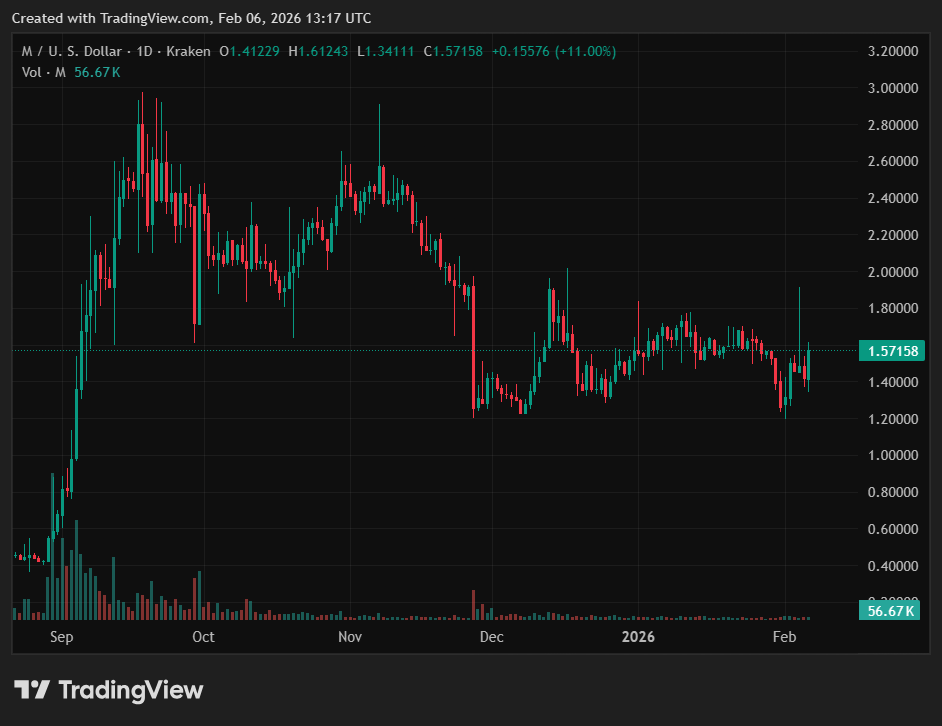
MemeCore had a successful week since it achieved an 8.1 percent increase, which resulted from consistent trading volume that remained between the range of 13 million dollars and 14 million dollars. The project builds a Layer-1 blockchain that implements Meme 2.0 because it transforms meme tokens into valuable tools for community governance and blockchain-based value creation. Its Proof-of-Meme model, together with its meme asset launching tools, attracts creators and users who seek a culturally based environment. The weekly performance shows that speculative and community-led stories still get a lot of attention, even though the altcoin market as a whole is getting weaker.
Falcon USD (USDF)
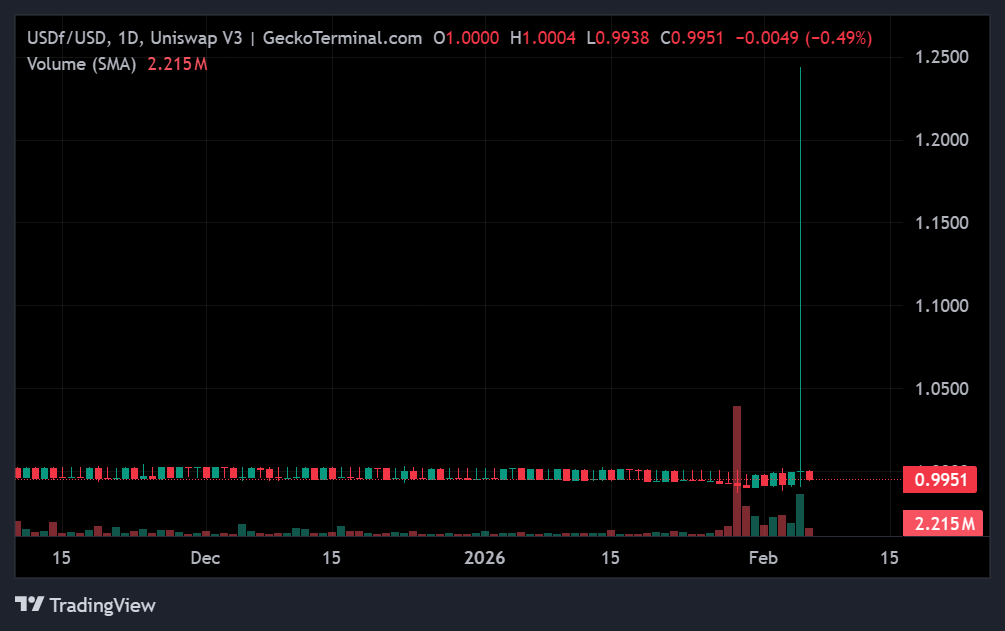
Falcon USD, a synthetic stablecoin with too much collateral, went up by a small 0.3 percent with steady trading. You can mint USDf by putting a variety of eligible assets into the Falcon Finance protocol. These assets include stablecoins, major tokens, and some altcoins. The system is meant to be a flexible dollar alternative that makes money. The USDF’s small premium and stability during a week of volatility and drawdowns show that there is still demand for decentralized dollar instruments that can make money without being directly affected by price changes.
Top Losers of the Week
Zcash (ZEC)
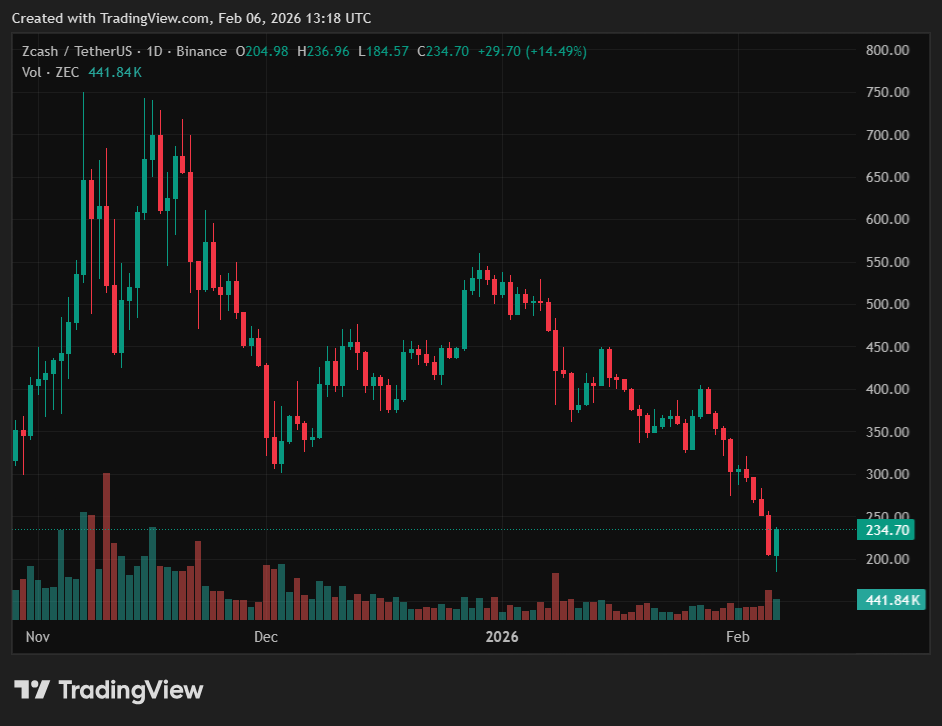
Zcash experienced its largest weekly decline when the cryptocurrency lost over 31% of its value while trading at high volumes. The cryptocurrency operates as a privacy-centered digital asset that enables users to conduct secured and privacy-focused transactions through its shielded transaction system. The asset continues to face three main challenges, which include ongoing regulatory investigations, insufficient public usage, and internal leadership issues that resulted in the departure of critical development team members. The combination of these factors has led to investor uncertainty while several technical support levels experienced failure.
Binance Staked SOL (BNSOL)
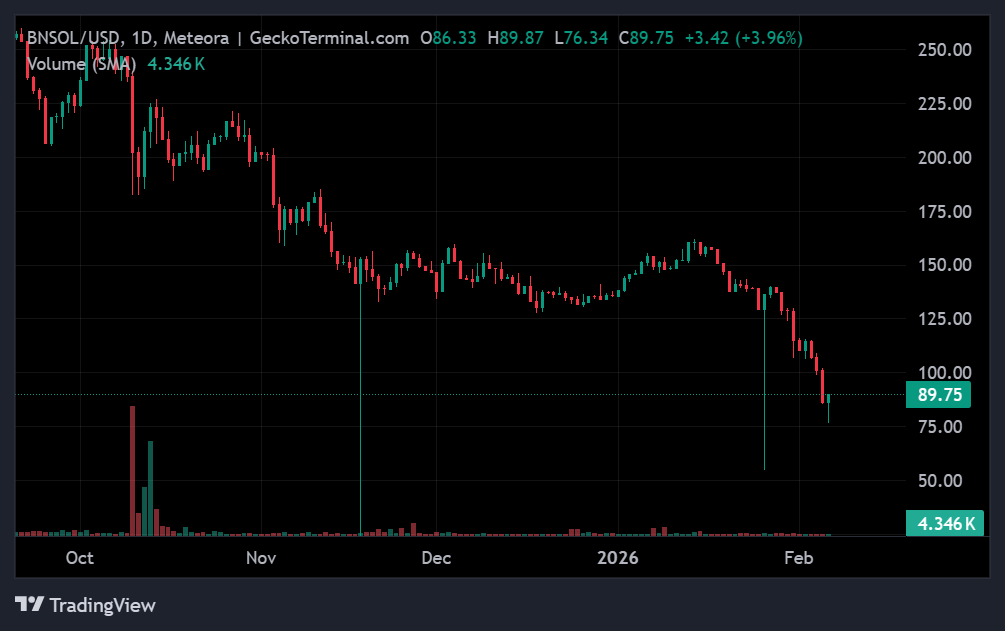
Binance Staked SOL fell close to 30% during a lot of liquidation activity, which was very similar to the drop in Solana. BNSOL is staked SOL on Binance, and it lets users earn interest while keeping an eye on the price. The synchronized sell-off shows that there is a lot of pressure on Solana’s liquid staking assets. This is because deleveraging and ecosystem-specific worries led to a lot of selling and forced position unwinds.
Solana (SOL)
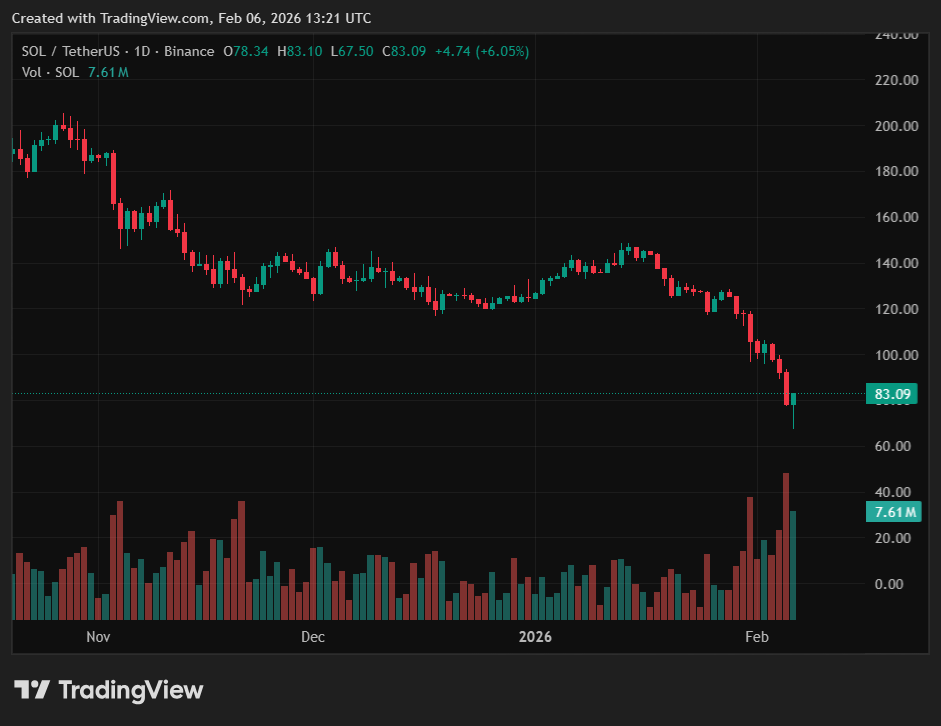
Solana itself dropped by almost 30%, and there was a lot of trading, with volumes over $14 billion. SOL was once a popular high-beta asset because it moved quickly and had a lot of memecoin activity. But now, because of macro risk-off sentiment, big derivatives liquidations, and a shift away from altcoins, it has been heavily sold. There was more pressure because the memecoin market was losing momentum, institutions were pulling out, and there were worries about network concentration. This led to one of the sharpest weekly corrections in a long time.
Jito Staked SOL (JITOSOL)
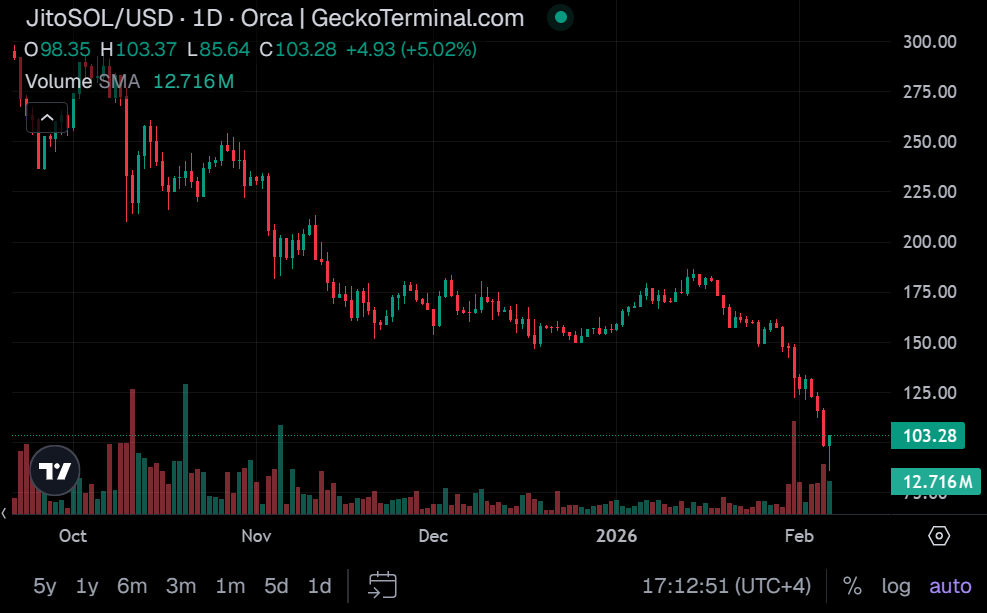
The value of Jito Staked SOL has suffered a decline of nearly 30%, corresponding to the trading activities of the entire ecosystem. JITOSOL is known as a liquid staking asset from the Jito protocol that enables its users to preserve their money while still receiving staking rewards and MEV upside. The fact that it functions almost exactly the same as SOL and other staked variants suggests how closely connected Solana’s liquid staking sector is even in the times of rapid deleveraging and market stress.
Wrapped SOL (WSOL)
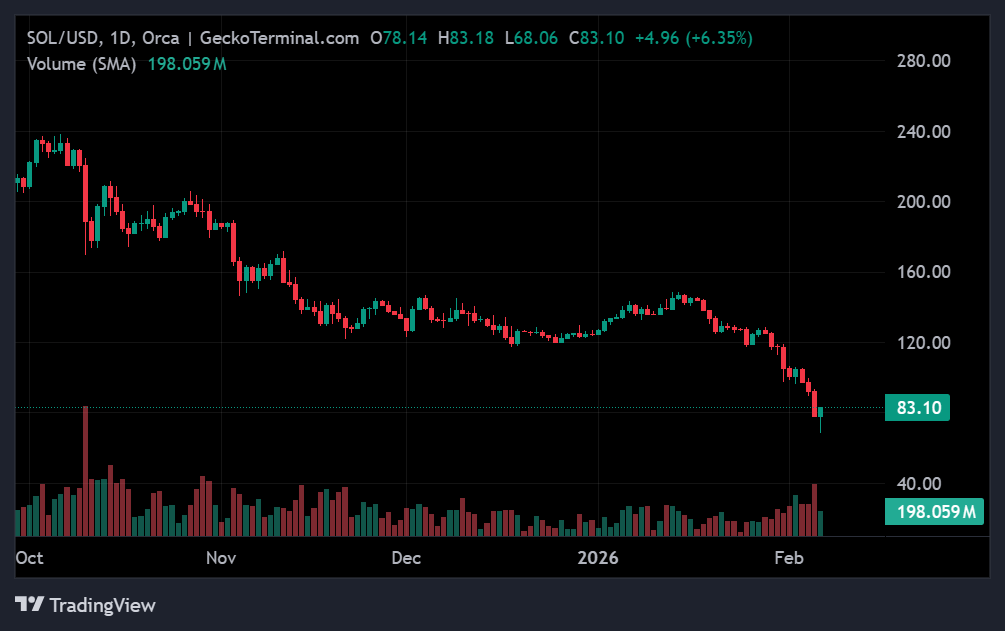
Wrapped SOL experienced its final weekly loss when it dropped nearly 29.5 percent with its trading volume going over $2 billion. WSOL functions as the tokenized representation of SOL. It is used by DeFi applications and cross-chain systems to enhance and achieve their operational compatibility. The asset has proved its identical performance to its main asset while undergoing intense selling pressure and decreased network activity. In addition to this, a market shift towards safer investments primarily affected high-beta Layer-1 ecosystems.


