





Ethereum (ETH) is trading back near the $3,000 level after a volatile week that witnessed sharp intraday swings, improved activity on the network, and fresh pressure on listed funds.
Over the past week, Ether has moved between roughly $2,828 and $3,115. It started the period near $3,065, slipped toward $2,827 around the middle of the week, and then recovered to just under 3,000 by the weekend. One large move came on 19 December, when the price jumped from the low 2,800 to around $2,980 in a single session, underscoring a sharp pick-up in intraday volatility and buying interest.
However, Ether stabilized on Tuesday at around $3,000, up about 1.3% on the day and giving the network a market cap of roughly 365.4 billion dollars.
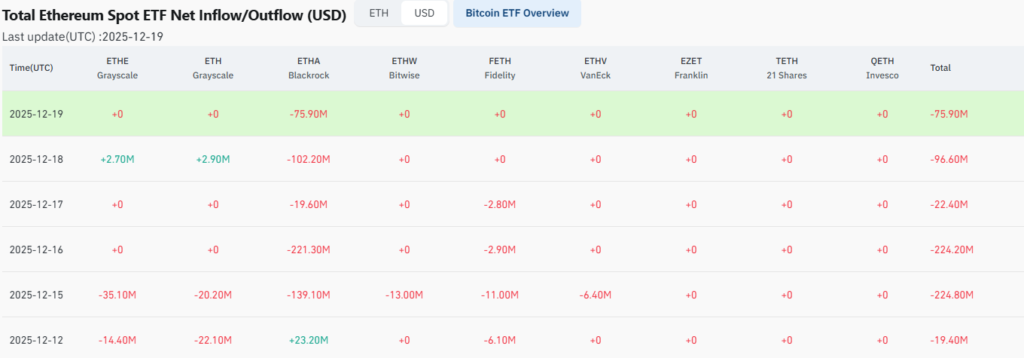
Despite the recovery in the spot market, U.S. Ethereum exchange-traded funds (ETFs) continued to bleed as the ETF group posted a net outflow of about 643 million dollars last week, with most of the redemptions coming from BlackRock’s ETHA fund, which alone shed roughly 558 million dollars over the period.
Meanwhile, on-chain activity tells a more optimistic story, with the wider Ethereum ecosystem setting a new record for monthly transactions.
Base processed about 452.8 million transactions in the latest month, Arbitrum handled around 80.1 million and World Chain added roughly 53.0 million.

In total, these networks processed close to 855,000,000 organic, non-system transactions over one month, signaling that user activity and application usage remain very strong even as some listed investors take money off the table.
Protocol Changes As Buterin Calls For A Simpler Network
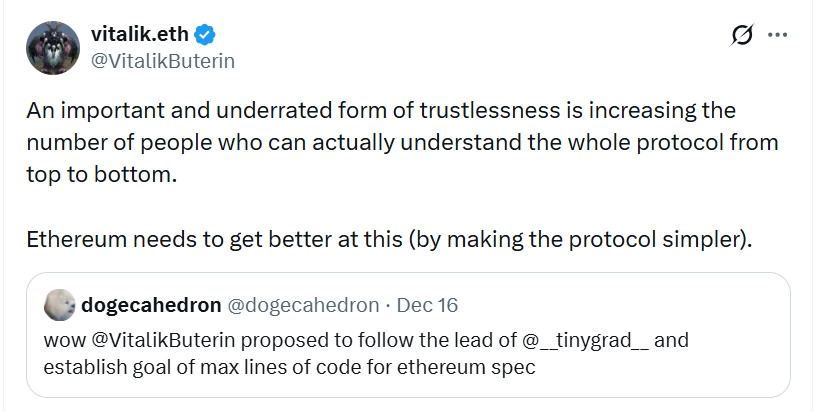
The jump in network usage comes as Ethereum co-founder Vitalik Buterin once again stresses the need for a simpler core protocol that more users can fully understand.

In a recent post on X, Buterin stressed the need for a simpler Ethereum design while warning that growing complexity risks undermining the network’s claim to be truly trustless.
This hike also comes after Ethereum’s Fusaka upgrade, which introduced PeerDAS, a new data sampling system that lets nodes handle much more blob data without downloading it in full.
By increasing the data space available to rollups on the main network, Fusaka is designed to lower transaction costs on major layer two networks and support higher throughput during busy periods. For users, that should mean cheaper transfers, faster confirmations and a smoother experience when activity surges.
Mixed Signals Leave Ethereum At A Crossroads
Taken together, a flat price near $3,000,heavy ETF outflows, and record on-chain usage suggest money is rotating rather than abandoning Ethereum.
However, clearer rules from regulators or a wider crypto rally could help push Ether higher, while ongoing ETF redemptions, a weaker economic backdrop or a sharp fall in activity on layer two networks could put fresh pressure on the price.
Read More: Ethereum(ETH) Price Remains Pressured below $3,000; Will it Rebound?


