





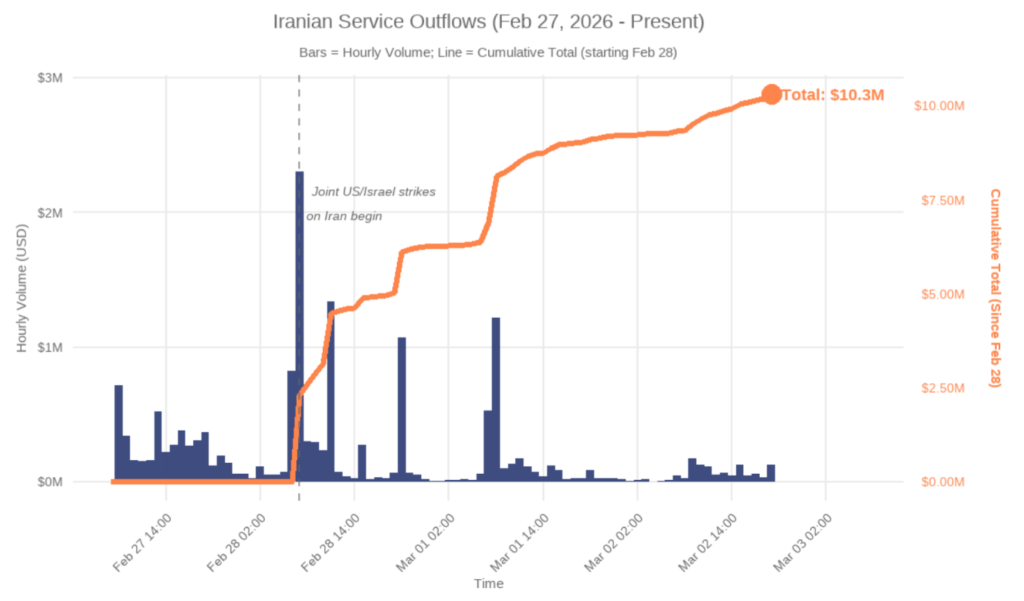
Due to U.S. and Israeli bombardments on Tehran, there was an enormous outflow of funds leaving Nobitex, Iran’s largest crypto exchange, totalling USD 89 million within an hour (an increase of 8 times the previous daily record), according to reports from Elliptic and Chainalysis. In total, over the next 48 hours, there was an outflow of USD 10.3 million from local Iranian crypto platforms (assets leaving crypto exchanges).
From Iran, the Crypto Exodus as a Geopolitical Indicator
These outflows suggest the growing importance of cryptocurrencies as a means of evading sanctions for individuals living in sanctioned countries. Chainalysis, a blockchain analytics firm, has indicated that “some of these flows are almost certainly ordinary Iranians moving funds in response to rising risk.” Potentially, these outflows could also come from exchanges moving liquidity or from individuals supported by the Iranian government taking advantage of using established public exchanges.
TRM Labs estimates that during 2025, the Iranian crypto sector had USD 8 to 10 billion in transactions, with retail investors representing 95% of the overall transaction amount, and frequently using stablecoin holdings as a form of value preservation against the declining Rial.
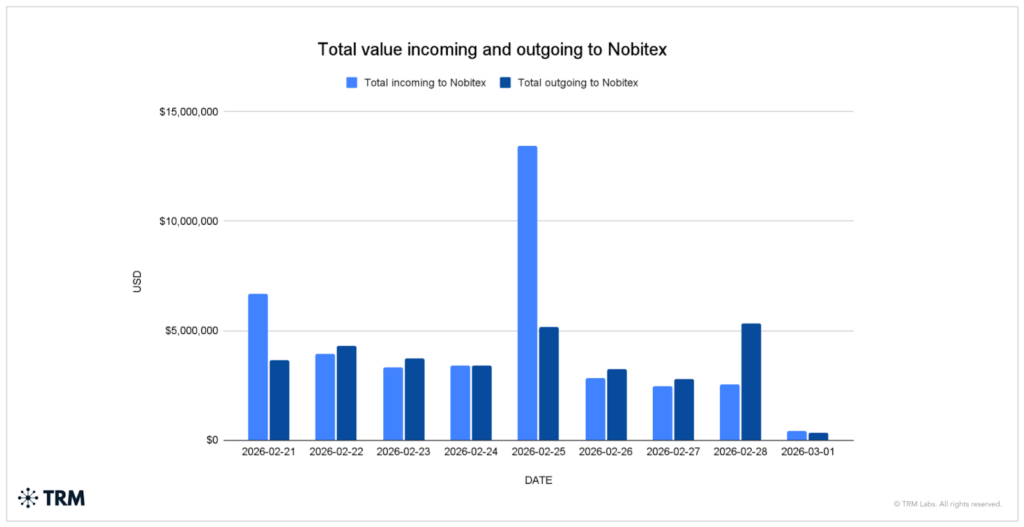
A Flight Path and Not a Panic Exit
From Nansen’s metrics, we know that the balance of substantial cryptocurrencies on Nobitex had a major downward trend throughout 2025, indicating an extended exit/contraction process where people were leaving for reasons other than immediate crisis. According to Elliptic, the Central Bank of Iran was allegedly instrumental in acquiring at least $507 million in USDT in 2025, which was part of a “sophisticated plan” to avoid the international banking system.
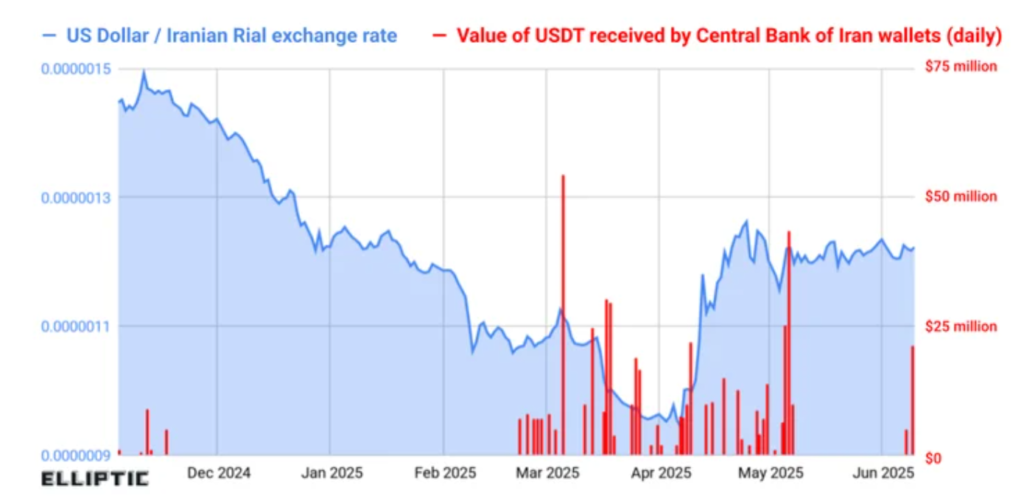
Although Tether has a zero-tolerance policy regarding criminal activity associated with its coins, it must combat a “whack-a-mole” game where sanctioned entities are creating more wallets faster than authorities can freeze them.


