





The crypto markets are always active. There is nothing like the opening bell, the closing auction, or a weekend break. Prices change on Christmas, during worldwide crises, and even in the middle of the night. For a lot of traders, this uninterrupted activity is just like the concept of infinite liquidity, which means that positions can be smoothly entered or exited anytime, anywhere, under any conditions.However, this belief is false.What appears to be continuous trading is not equivalent to deep, resilient liquidity.
Actually, 24/7 markets very often cover fragile microstructure, shallow order books, and sudden liquidity vacuums. When volatility increases, spreads widen, depth disappears and execution quality deteriorates, while the chart still keeps on moving. Liquidity is not about how quickly prices change. It is about how much capital can be moved around without significantly affecting the price. In the case of crypto, that illusion gets broken more frequently than most of the trading participants realize.
Activity Does Not Equal Liquidity
The regular price updates of cryptocurrencies give people a feeling of depth. Trading candles are being developed every second, trades do not stop and there is good volume. However, real liquidity is based on the depth of the order book, the bid-ask spreads and slippage during the stress period.
Many of the assets even Bitcoin and Ethereum in off-peak hours still under thin conditions trading. Just a few aggressive orders can shift the price by a few percent, especially during the late US hours, Asian sessions, weekends or at the time of sudden news. Although the market is open, the liquidity is very weak just below the surface.
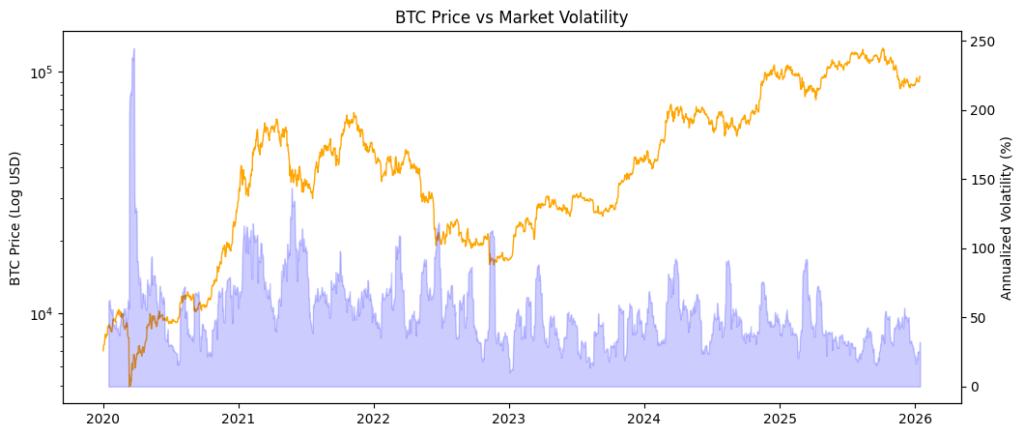
The Fragility Of Continuous Markets
Timeframes in traditional financial markets are stopped for a while. The time when markets are stopped provides an opportunity for the liquidity providers to adjust their holdings, to take care of the risks and reposition themselves. There is no such occasion in the crypto world. Market makers are forced to operate 24/7 across the globe, through every macro shock and geopolitical headline.
Eventually, this becomes a source of fragility in the structure. When there is uncertainty, the market depth becomes thinner, the bid-ask spreads are bigger and the quotes are not there anymore. Liquidity is present until all of a sudden it is not. This is the reason that many of the crypto’s largest price changes happen during the periods when liquidity is low. The price is not moving due to overbearing belief. It is moving because the opposing force is weak.
Liquidity Is Built On Confidence
Timeframes in traditional financial markets are stopped for a while. The time when markets are stopped provides an opportunity for the liquidity providers to adjust their holdings, to take care of the risks and reposition themselves. There is no such occasion in the crypto world. Market makers are forced to operate 24/7 across the globe, through every macro shock and geopolitical headline.
Eventually, this becomes a source of fragility in the structure. When there is uncertainty, the market depth becomes thinner, the bid-ask spreads are bigger and the quotes are not there anymore. Liquidity is present until all of a sudden it is not. This is the reason that many of the crypto’s largest price changes happen during the periods when liquidity is low. The price is not moving due to overbearing belief. It is moving because the opposing force is weak.
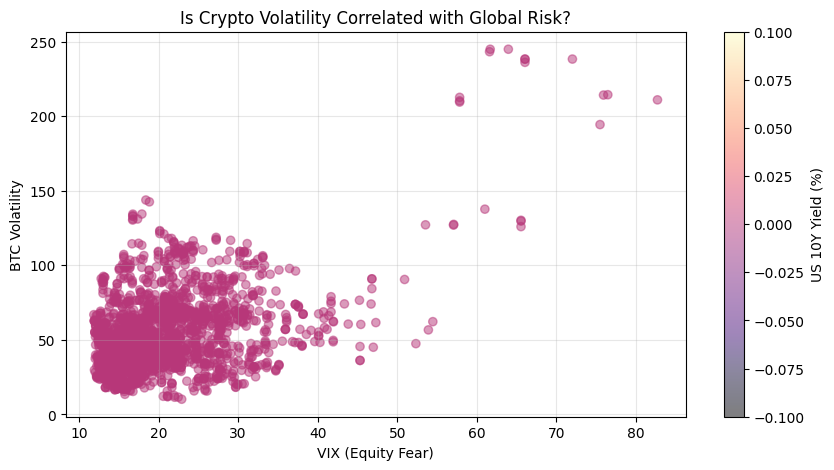
The Illusion Of Easy Exit
The assumption that retail traders can always exit their positions without any issues is mainly due to the fact that the exchange is online, the chart is being updated, and trades are taking place. However, it is only when many players want to exit that the real liquidity shows itself. Slippage multiples, limit orders skip, stop losses activate far from the expected levels, and all this is accompanied by very high funding rates and liquidations that intensify the downward momentum of the market.
A market that at first seemed to be liquid turns out to be a one-way trap. This is not a downside of crypto’s design. It is a typical characteristic of a continuous market that has high leverage.
How Leverage Distorts Liquidity
Perpetual futures amplify the illusion further. High leverage creates constant trading activity, but it also creates forced selling. Liquidations do not provide liquidity. They consume it. Each forced market order eats into the order book, pushing price further and triggering more liquidations. This is why many crypto crashes look mechanical rather than informational. Price collapses not because fundamentals changed, but because liquidity vanished.
Institutional Liquidity Is Conditional
The involvement of institutional players adds liquidity only when the risk can be managed. Institutions retreat during times of macroeconomic uncertainty, regulatory pressure, unstable stablecoins, or exchange risk.
Nonstop market activity does not imply the presence of institutions all the time; it only means that they are undergoing the process of price discovery, which might be unclear and messy though.
What real liquidity looks like
The features of true liquidity include tight spreads, deep order books, very little slippage, stable funding, and the ability to withstand and recover from the price swings. Crypto does at times reach that level, especially when the market is smooth and the investors’ trust is high. But it is not always the case. Liquidity in digital asset markets is occasional rather than unlimited.


