




Ambitious Project Suffers Early Turmoil
TROVE, a Solana-based perpetuals DEX designed for illiquid assets such as Pokémon cards and allowing trading with up to 10x leverage, raised $11.5 million in its ICO from January 8 to 11 at a $20 million fully diluted valuation. During the ICO, there was initially very high interest, but it soon encountered issues that resulted in delays. First, the contract was amended, then there were some delays in the token generation event (TGE), and finally, Hyperliquid’s turnaround at the very last moment created trust issues with investors, and even before its debut, the platform lost confidence.
Token Allocation and Fund Distribution
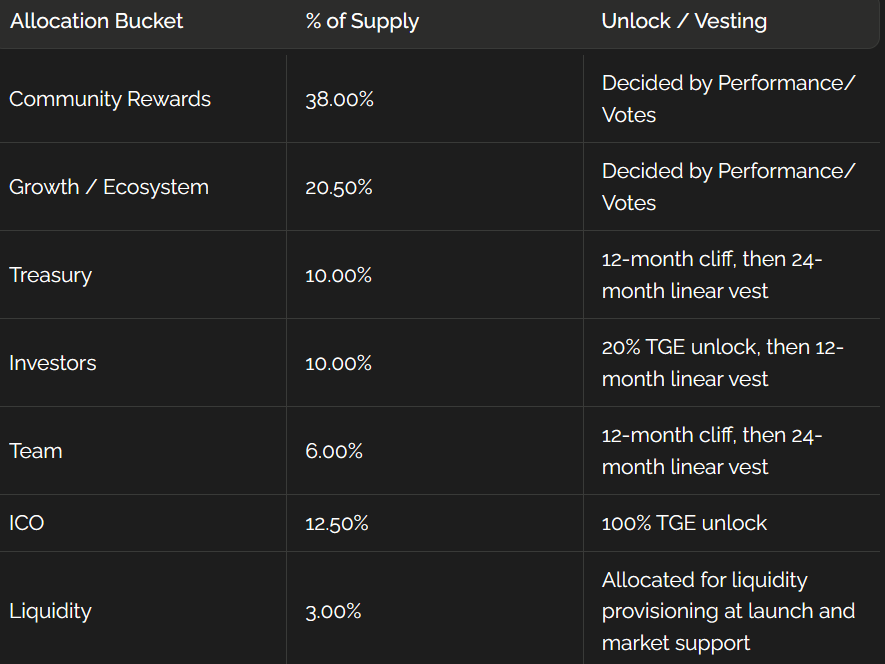
ICO participants received pro-rata tokens alongside small refunds totaling roughly $100,000 to $200,000. Meanwhile, the project team retained approximately $9.4 million. On-chain analysis reveals that around $7.3 million of these funds remain untouched in multisig wallets. Despite this, hostile community sentiment has labeled the project a “rug pull,” fueled by fears over the team’s control and past HYPE token dumps from wallets linked to TROVE insiders.
On-Chain Activity and HYPE Token Dumps
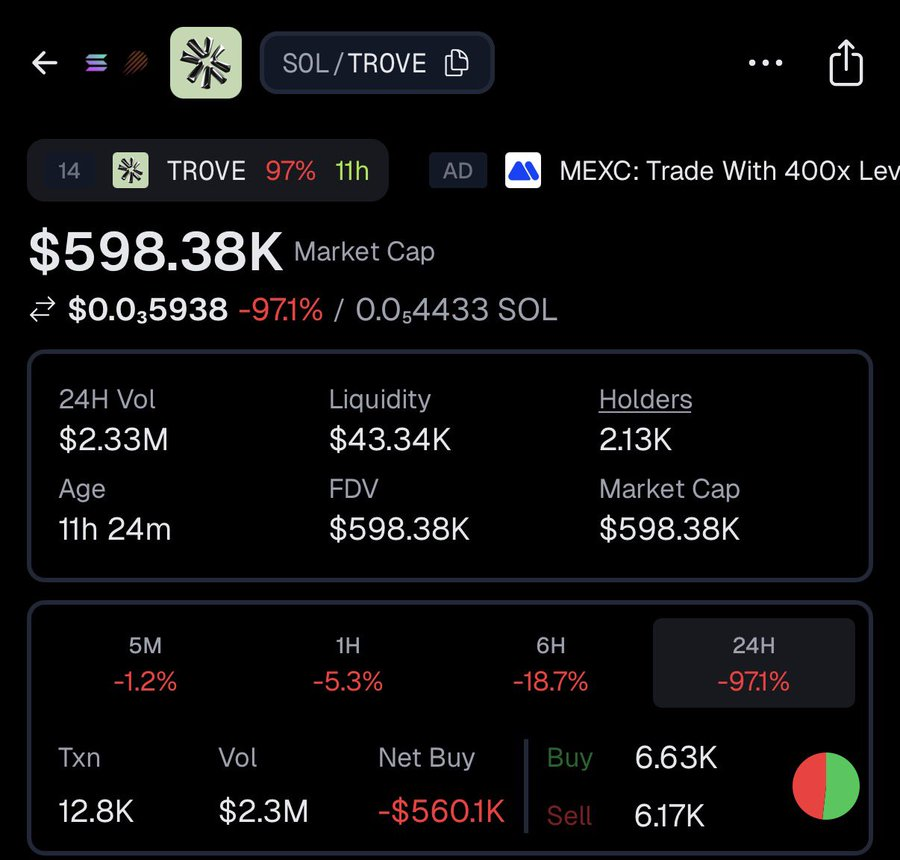
The review of the wallets shared by the team indicates the sale of HYPE tokens to a huge extent just before the TGE, which raised questions regarding the management of the funds. CoinGecko reported that $TROVE experienced a major drop of more than 90%, thus going down from a pre-sale FDV of $20 million to approximately $600,000 after the TGE, which pointed out the market’s reaction to the pre-launch chaos as being very severe and at the same time, it made the ‘rug pull’ rumors widespread. The community has taken these price movements, together with the alterations in the contract and postponed launches, to mean that they are being given a glimpse of the insiders’ advantages. Although no credible transfers of the main ICO funds to outside accounts have been detected, the notion of pre-launch fund activity and liquidity manipulation continues to be rampant, with its accompanying accusations of a rug pull.
Community Backlash and Calls for Investigation
The combination of limited refunds, deferred introductions, and ambiguous administration has caused a huge dispute in the social networks. Users have repeatedly asked for transparency and investigations, and the entire debate highlights a greater risk in DeFi ICOs: the fact that the money remains under multisig control does not effectively prevent poor communication, pre-launch token dumping, and changes in strategy from undermining trust and leading to accusations of fraud.
Trove Core Architecture

TROVE’s original architecture on Hyperliquid used the HIP-3 protocol to run as a lightweight perpetuals layer. By staking 500,000 $HYPE, the team could create and manage custom perp markets for illiquid assets like collectibles and RWAs. Hyperliquid took care of the main exchange tasks, like matching orders, executing trades, setting margins, and closing trades. TROVE built only three components for the proof-of-concept: a rapid oracle updating prices every two seconds, a backend and indexer to process market data, and a simple trading interface. Admins managed to use an EOA wallet and $HYPE deposits for the market listing and delisting and auction processes, which enabled the team to take advantage of Hyperliquid’s engine without having to reconstruct a full DEX.
Lessons and Industry Implications
TROVE’s pre-launch turmoil illustrates that high-profile ICOs can face serious reputational damage even before launch. The project points out the need for transparent fund allocation, careful management of token releases, and clear communication with participants. For retail investors, the case reinforces the need to monitor on-chain activity, understand multisig custody structures, and evaluate project governance before contributing capital.


