




The NFT sector never fully recovered its 2021 peak, and the current market snapshot confirms that narrative has not changed. But within five of the sector’s most-watched tokens, there is a clear split forming: one group is seeing genuine capital rotation, and another is quietly becoming illiquid. Here is a data-level breakdown of IMX, APE, BLUR, ENJ, and FLOW as the market stands today.
IMX: The Sector Leader by a Wide Margin
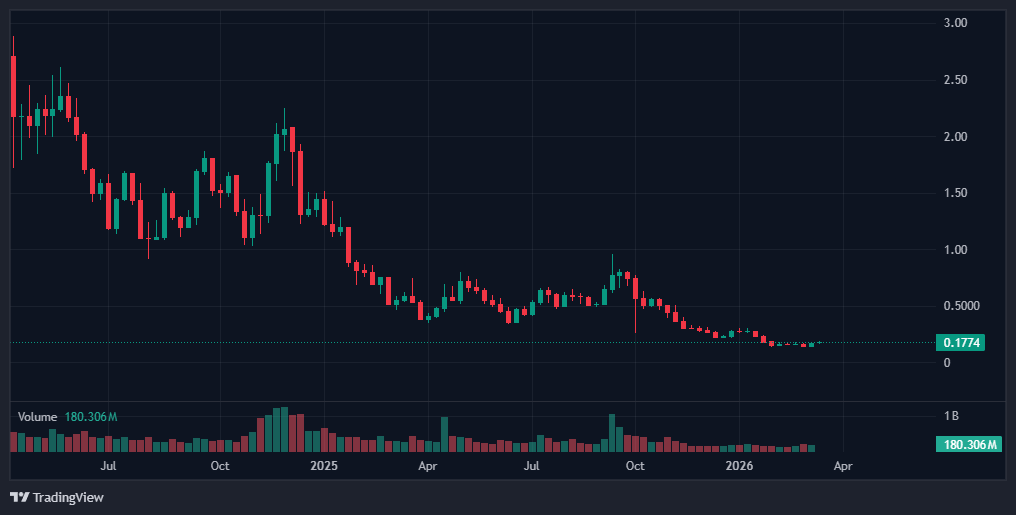
Immutable holds $356 million in market cap, which is more than the other four tokens combined. As an NFT-focused Layer 2, it carries real infrastructure utility, and that distinction shows up in its weekly performance: a 13.28% gain over seven days while pulling $34.98 million in 24-hour volume.
The volume-to-market cap ratio here is roughly 9.8%, which is healthy for a token in this size range. It is not a speculative spike situation. IMX also carries an audit report on CoinMarketCap metadata, which adds a baseline of transparency that matters in a sector where project accountability has historically been inconsistent.
The short-term dip of 2.30% in the last 24 hours does not interrupt the weekly trend. IMX looks like the only token in this group that has managed to build a structural base rather than just bounce.
BLUR: NFT Marketplace Token With Outsized Activity
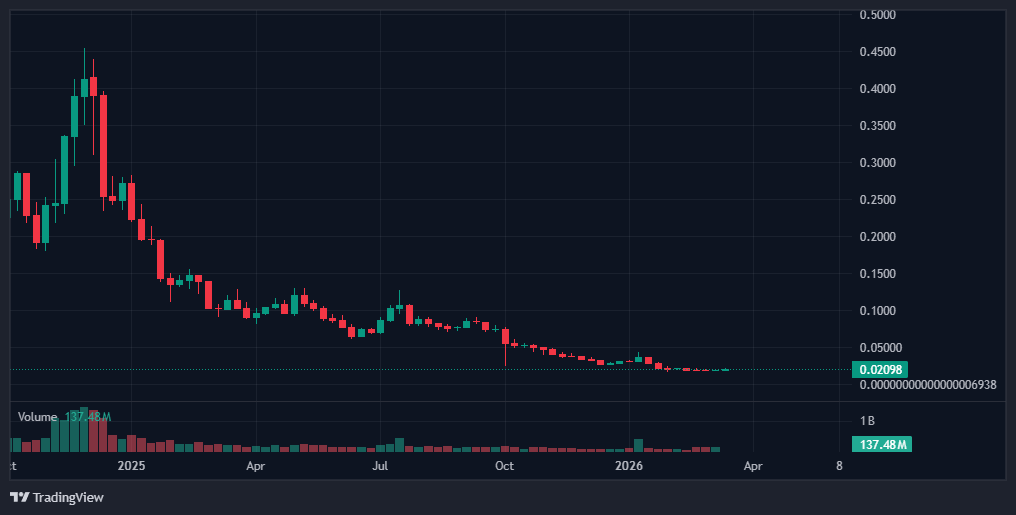
BLUR sits at a $57.95 million market cap and a price clsoe to $0.021, making it one of the smaller tokens in this group by both metrics. However, its 24-hour volume of $24.17 million presents a distinct picture. That puts its volume-to-market cap ratio at approximately 41.7%, which is notably high for a token at this size.
A ratio in that range on a low-cap asset typically signals one of two things: a short-term speculative spike driven by narrative momentum or sustained trader activity clustering around a specific catalyst. The data here does not point clearly to either, which makes it worth watching rather than acting on immediately.
BLUR’s core function as an NFT marketplace token ties its demand directly to NFT trading activity. When NFT volumes pick up on Ethereum, BLUR tends to see correlated interest. The weekly gain of 9.97% suggests some rotation has entered the token, but without a corresponding spike in Ethereum NFT marketplace data, the move reads more as sector-level speculation than a fundamental re-rating. For a marketplace-focused token where smart contract integrity matters to its core use case, that audit report gap is not trivial. Traders sizing into BLUR should treat position sizing conservatively given both the audit status and the low absolute market cap.
ENJ: The Volume Anomaly Worth Scrutinizing
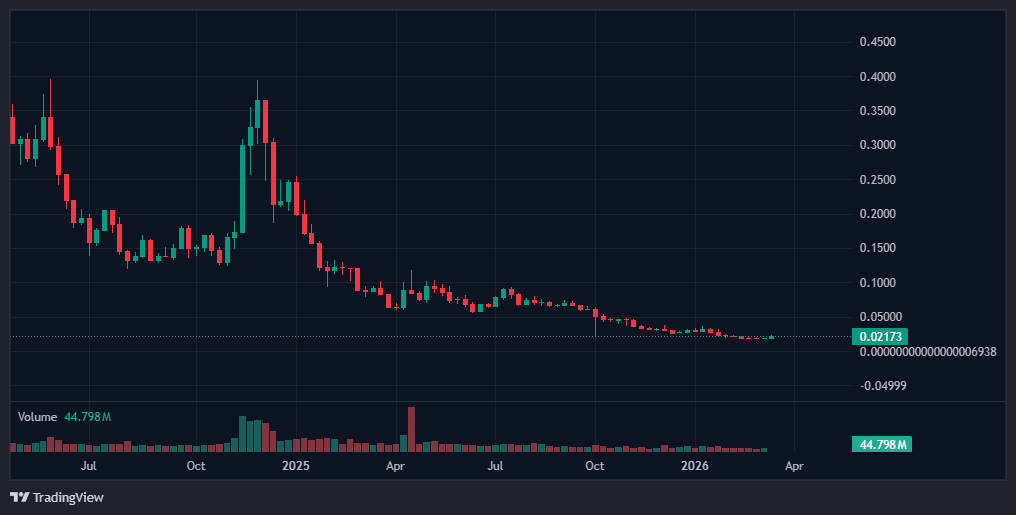
ENJ is the most statistically unusual token in this snapshot. Enjin Coin is priced at $0.021 with a $40.98 million market cap, yet it posted $59.15 million in 24-hour volume. That means ENJ turned over more dollar volume in a single day than its entire market cap, putting its volume-to-cap ratio at roughly 144%.
A ratio above 100% is rare and almost always demands a closer look. It can reflect aggressive short-term speculation, a coordinated accumulation pattern, or elevated activity on a specific exchange inflating the headline number. Without order book data or exchange-level breakdown, the exact driver is not confirmed by this snapshot alone.
ENJ posted the strongest short-term performance in this group, with a 10.95% gain in 24 hours and 18.43% over seven days. That is a meaningful move for a token at this market cap level. The mix of exceptionally high trading volume and strong price changes is a pattern that usually comes before either a continued rise or a sudden drop, depending on whether the volume shows real interest or just a sell-off.
APE: Capital Trapped in a Brand
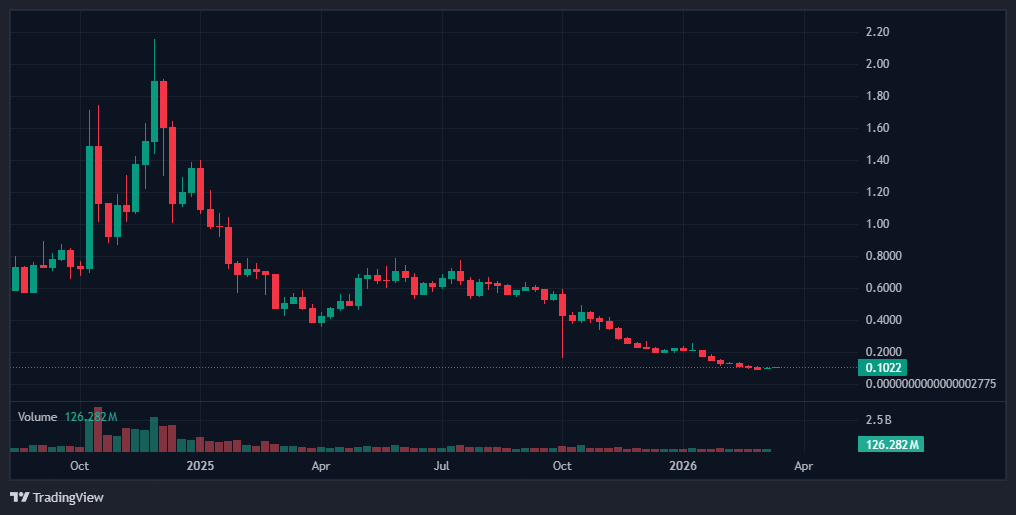
ApeCoin at $0.102 carries a $77.12 million market cap but produced only $14.99 million in 24-hour volume, putting its volume-to-cap ratio near 19.4%. That is low relative to peers in the same size range. APE holds two audit reports in its metadata, which is the most of any token in this group, but audits do not drive price action.
APE’s deeper issue is that it has no demand driver independent of the Bored Ape Yacht Club brand. BAYC’s floor has collapsed from its peak, and no meaningful IP revival has followed. Without that, APE has no fundamental anchor. The low volume confirms the market is not expecting one anytime soon.
FLOW: The Clearest Warning Sign
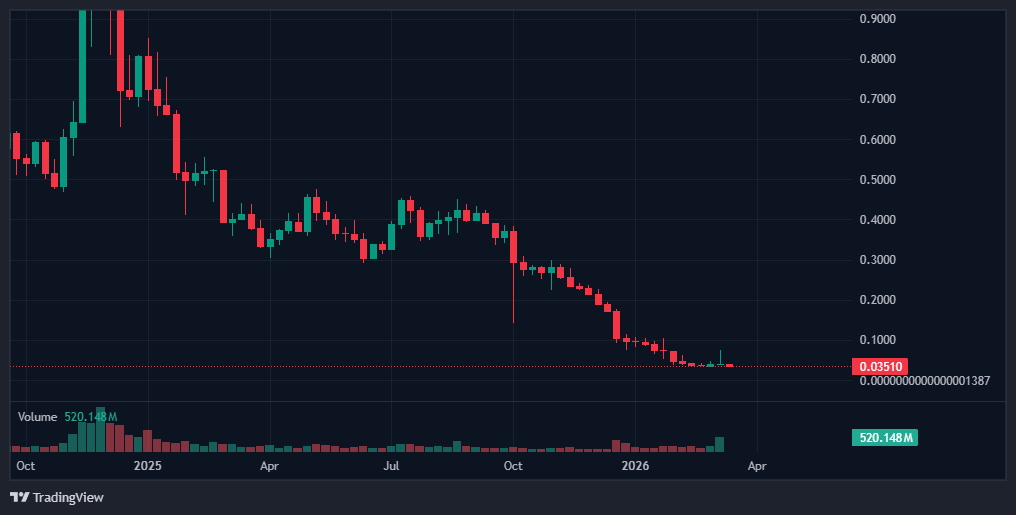
Flow’s seven-day performance stands apart from the rest of this group: -44.31%. While the broader NFT tokens tracked here are showing modest recoveries or sideways movement, FLOW lost nearly half its value in a week.
The 24-hour volume of $22.20 million on a $58.24 million market cap suggests liquidity is still present, but that volume may partly reflect exit activity rather than accumulation. FLOW also carries zero audit reports in its CMC metadata. As a consumer NFT application chain, it faces direct competition from Solana and Base, which have captured the majority of NFT activity that does not live on Ethereum. The data does not show a recovery catalyst.
What the Volume Distribution Actually Reveals
Across five tokens with a combined $590 million in market cap, the 24-hour volume totaled approximately $155 million. ENJ alone accounted for 38% of that. IMX accounted for 22.5%. APE, despite holding the second-highest market cap in the group, contributed less than 10% of total volume. This distribution tells a more honest story about where the actual trading interest sits. Market cap rankings in the NFT sector do not reliably map to real activity or liquidity. BLUR and ENJ, the two cheapest tokens in the group by price, are generating disproportionate trading activity relative to their size.
Implications for Traders
Position sizing matters more than usual in this group. A $40 million market cap token producing $59 million in daily volume is a two-sided opportunity: the liquidity exists to enter and exit, but the move can unwind just as fast. IMX is the only token here that combines reasonable market cap scale with sustained weekly momentum and a defined infrastructure use case. FLOW, given the magnitude of its weekly decline, warrants caution until there is volume evidence of stabilization.


