





Crypto’s top five assets by market cap are all posting gains this week, but the numbers behind each one tell different stories. Bitcoin is holding above $74,000. Ethereum is leading the weekly performance board. XRP is trading near $1.53 with institutional infrastructure building underneath it. BNB is barely moving on a 24-hour basis. Solana is up over 9% on the week but carries an operational risk profile that none of the others share. The macro backdrop threading through all five is the same: the FOMC holding rates steady, the Bank of England parked at 3.75%, and the ECB at 2.00%, with oil-driven inflation from Middle East tensions keeping every major central bank in a wait-and-see posture.
Bitcoin (BTC): $74,367 at $1.49T Market Cap, Up 5.16% on the Week
Bitcoin is up 1.97% in 24 hours and 5.16% over the past seven days, with $55.92 billion in daily volume confirming that the move has participation behind it. At $1.49 trillion in market cap, BTC remains in a category of its own among digital assets.
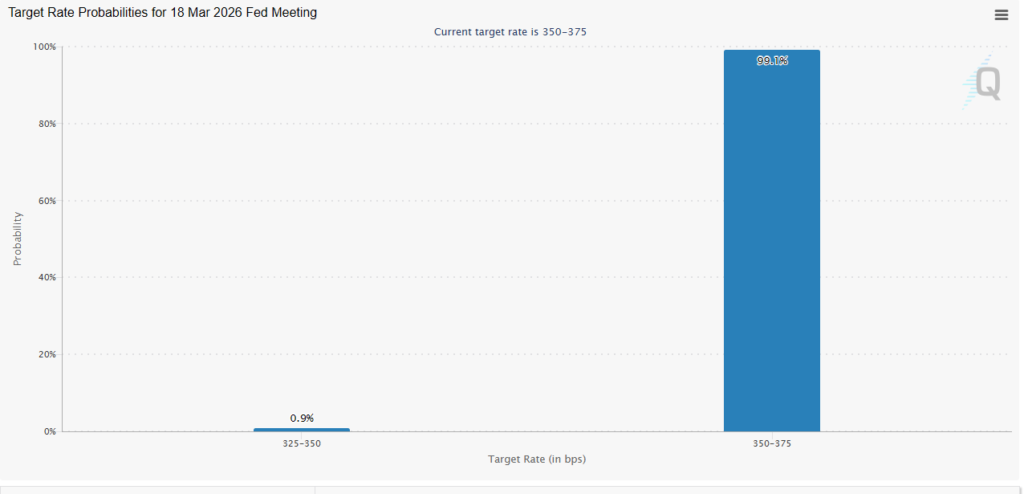
The macro read here is specific. With the FOMC holding rates and no cuts expected in the near term, the higher-for-longer rate environment has not stopped institutional accumulation. As Lacie Zhang, Research Analyst at Bitget Wallet, notes, this policy stance “continues to support Bitcoin’s positioning as a non-sovereign store of value, particularly as it shows resilience during periods of uncertainty.” The implication is that BTC’s weekly gain is not just a price move. It is institutional positioning responding to fiat volatility, with Bitcoin holding above €65,000 against the euro as European inflation risk builds.
When rate cuts do eventually arrive, even gradually, Zhang’s view is that they “are likely to restore liquidity, improve risk appetite, and accelerate institutional participation, driving the next phase of capital inflows into crypto.” BTC, with its $1.49 trillion base and no scheduled supply unlocks, is the asset best positioned to absorb that inflow first.
Ethereum (ETH): $2,330 at $281.25B Market Cap, Up 13.19% on the Week
Ethereum is the strongest performer across the five assets this week. A 13.19% seven-day gain and $36.49 billion in 24-hour volume place ETH clearly ahead of the pack on both momentum and liquidity. The 24-hour change of 4.13% suggests the weekly move is not fading.
ETH operates on a proof-of-stake mainnet with no upcoming token unlocks in current metadata, meaning there is no scheduled supply pressure on the horizon. Protocol upgrades continue to be tracked via Ethereum Improvement Proposals externally, and the combination of no near-term unlock overhang and strong weekly volume makes the current setup relatively clean from a supply-side perspective.
The digital asset market cap currently stands at $281.25 billion. ETH sits well behind the largest cryptocurrency but far ahead of the remaining three assets. The volume-to-market-cap ratio this week is among the highest of the five, which reflects genuine trading activity rather than thin-market price movement.
XRP: $1.53 at $93.52B Market Cap, Up 8.75% on the Week
XRP is trading at $1.53, up 4.11% in 24 hours and 8.75% over the past seven days, with $5.16 billion in daily volume and a $93.52 billion market cap. Spot XRP ETFs have pulled in $1.44 billion in inflows since their November 2025 launch, with Goldman Sachs, Jane Street, Citadel, and Millennium Management all confirmed holders via 13F filings. These are not passive spectators.
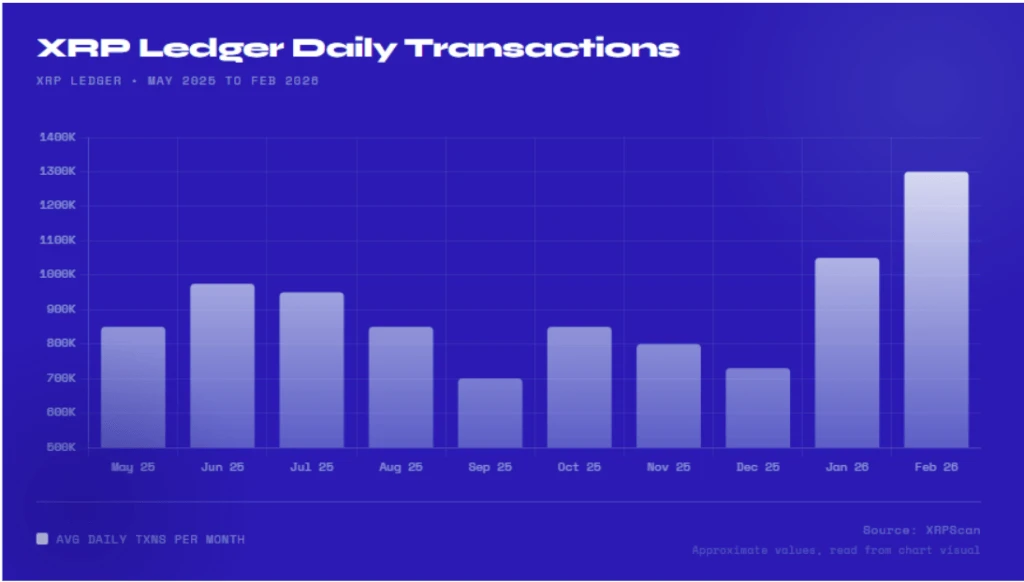
Daily transactions on the XRP Ledger reached 3 million as of mid-March, three times the pace recorded in mid-2025, and tokenized real-world assets settled on the network have grown from $111 million in January to $1.5 billion in roughly ten weeks. The network is being used, not just held.
On the institutional framing, Alvin Kan, COO at Bitget Wallet, places XRP squarely in the tier of assets where institutional appetite is concentrated: “Institutional appetite remains clearly concentrated in established assets like BTC, ETH, SOL, and XRP. ” The validator composition of the XRPL remains a policy risk worth monitoring, as federated consensus means the network’s integrity is tied to the makeup of its validator list rather than mining or staking economics.
BNB: $675.66 at $92.13B Market Cap, Up 4.40% on the Week
BNB is the quietest performer in this analysis, with a 0.04% 24-hour change and $2.28 billion in daily volume against a $92.13 billion market cap, signaling a market that is not moving with urgency in either direction. The seven-day gain of 4.40% is real but trails every other asset in this group.
What separates BNB structurally is its Auto-Burn program. BNB Chain runs quarterly burns plus ongoing transaction fee burns, targeting a final circulating supply of 100 million tokens. Two audit reports are on record in current metadata. The deflationary mechanism is explicit and on-chain, meaning any change to the burn formula or cadence is a material supply event worth tracking. For an asset sitting near $675 with muted short-term momentum, the burn schedule is the most relevant forward-looking variable in the near term.
Solana (SOL): $94.83 at $54.20B Market Cap, Up 9.12% on the Week
Solana is up 9.12% over the past seven days and 2.08% in 24 hours, with $5.98 billion in daily volume against a $54.20 billion market cap. Solana’s hybrid proof-of-history plus proof-of-stake design prioritizes throughput, but repeated network outages are a matter of public record and are referenced explicitly in CoinMarketCap’s own project FAQs. For an asset with $54 billion in market cap and nearly $6 billion in daily volume, operational reliability is not a minor footnote. It is the primary risk variable that institutional participants weigh against SOL’s performance upside.
Kan’s framework is important here as institutions “prioritize scalability, depth, and risk-adjusted returns.” SOL delivers on scalability and trading depth, but each documented outage reopens the question of whether the network’s operational profile meets the risk-adjusted threshold institutional allocators apply to infrastructure-layer assets.
The Market in One Frame
The macro environment, characterized by held rates across the Fed, BoE, and ECB, is keeping liquidity tight but has not reversed institutional accumulation. ETH leads on weekly performance, with BTC leading on volume and market cap. SOL leads on operational risk and BNB’s next material catalyst is its burn schedule. XRP carries the most developed institutional infrastructure story of the five right now.
The split Kan discusses is where main assets provide stability and speculative ones maintain their high-risk, community-driven nature. All five assets in this snapshot are on the institutional side of that divide. The difference between them is not whether institutions are present. It is how much risk each asset’s protocol design introduces alongside the returns.


