




The total crypto market cap crossed $4 trillion in Q3 2025, then shed more than $1 trillion by early 2026. That kind of drawdown, in earlier cycles, would have taken user activity down with it. This time, the data presents a different narrative.
Ownership held steady and the on-chain payment volumes climbed. Stablecoin card transactions scaled from roughly $100 million per month to over $1.5 billion over three years, according to blockchain analytics firm Artemis. The separation between price performance and actual usage is no longer a theory. It is showing up in the numbers.
Ownership Is Stable, But the Growth Story Has Changed
Security.org’s 2026 Cryptocurrency Adoption and Sentiment Report puts U.S. crypto ownership at approximately 30% of adults, a level that matches the 2022 peak despite prices failing to reclaim their prior highs. That figure alone would suggest a healthy market. But the detail that complicates it sits right next to it: only 6% of non-owners say they plan to buy crypto in the next year.
The gap between stable ownership and low new-entrant intent points to a structural shift. The people already inside the ecosystem are staying, but not because they are chasing returns. They are retaining since the tools have become more useful.
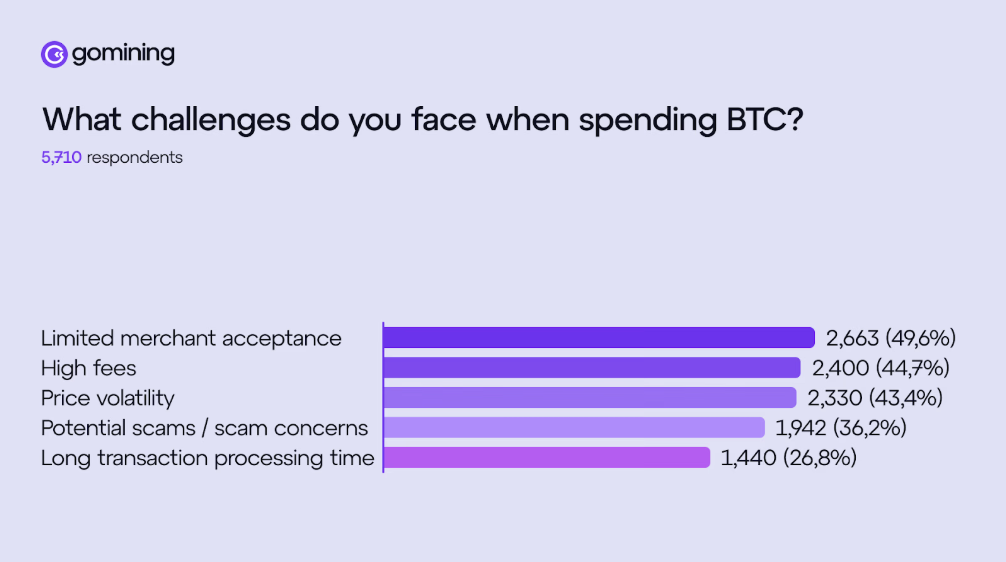
GoMining’s internal survey data adds texture to that picture. More than half of crypto holders say they rarely or never spend Bitcoin, citing limited merchant acceptance, price volatility at point of sale, and unclear fee structures as the main friction points. Yet nearly 80% of those same respondents say they support broader adoption. Belief in the technology is not the problem. The gap is between conviction and daily usability.
Mark Zalan, CEO of GoMining, frames it this way: usage has shifted from passive holding toward smaller, repeated actions. “People are moving tokenized dollars, linking wallets to cards, and settling cross-border transfers outside banking hours,” he says. His firm tracks retention cohorts and repeat transaction behavior rather than headline wallet counts, which can be inflated by bots or isolated activity. “The signals that matter are returning transactors, retention cohorts, share of activity tied to payments or transfers rather than trading churn, and merchant reuse rates once acceptance is enabled.” His read: when people keep transacting through a price drawdown, functionality is the reason, not market sentiment.
Stablecoins Made Crypto Boring
Across multiple conversations with executives in the space, one theme kept surfacing: stablecoins changed what crypto feels like to use.
Maksym Sakharov, co-founder and group CEO of blockchain technology infrastructure WeFi, puts it plainly. “Two years ago, most people’s ‘use case’ was the chart. Today, most of the real growth in crypto comes from the boring yet important utilities: moving money, being a store of value, and giving access to products that act much more like the internet.” He points to improved on- and off-ramps as what turned crypto from a speculative instrument into something closer to a financial utility. Cross-border settlements, family remittances, and freelance payouts now move faster and cheaper through crypto rails than through legacy systems. Once someone experiences that difference, Sakharov argues, price becomes less relevant to whether they keep using it.
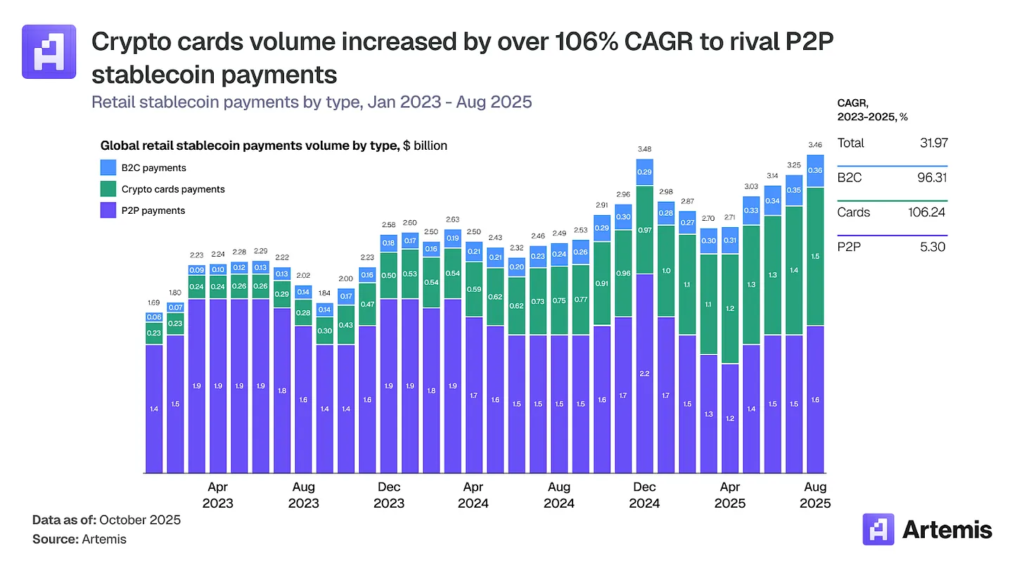
The Artemis data on crypto card volumes supports that claim. Monthly transaction volume growing from $100 million to over $1.5 billion in three years is not a marginal change. These cards allow users to spend stablecoins at checkout without managing network selection or gas fees, which removes two of the most common friction points for new users.
Daily payment frequency is still modest, though. Only 12% of GoMining respondents use crypto for daily payments. About 15% said they spend it weekly, and just over 18% monthly. These numbers are not explosive, but they are consistent, and consistency during a price downturn is the metric that matters here.
Where Price Has Never Driven Adoption
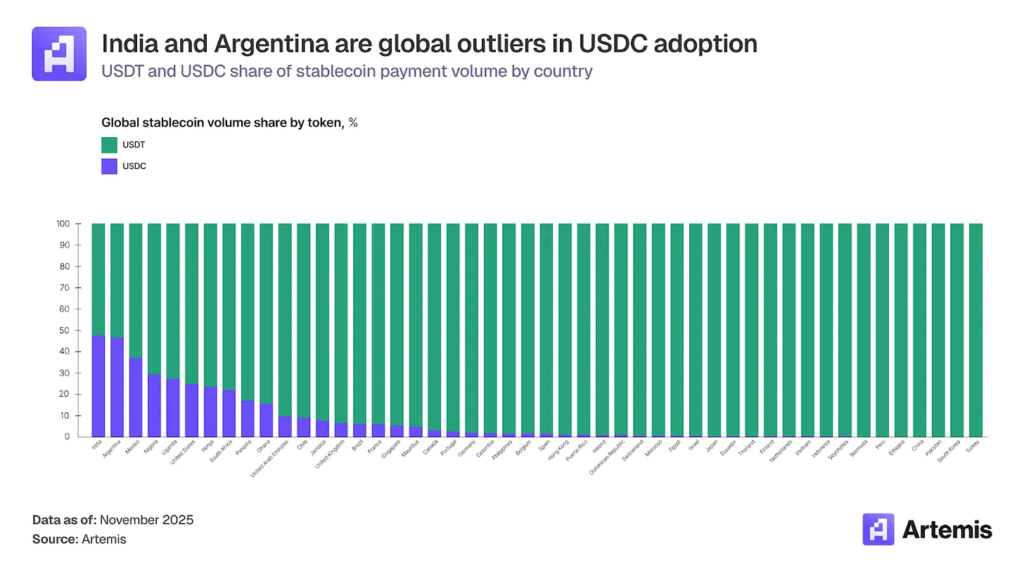
In markets like India, the Philippines, and Pakistan, the price cycle was never the main variable to begin with.
Vugar Usi Zade, chief operating officer of MEXC, describes adoption in these regions as problem-led rather than cycle-led. “Many users are unbanked or underbanked, not because they lack income, but because traditional systems are slow, costly, or closed to them.” Stablecoins fill the gap that banking infrastructure left open: remittances, foreign currency access, and inflation hedging in local currency environments where purchasing power erodes quickly. Legacy remittance corridors can charge over 6% and take days to clear. Blockchain-based transfers move faster at a lower cost, and for households depending on that transfer, the difference is material.
Ricardo Santos, CTO of DeFi platform MANSA, observes the same dynamic from the corporate side. Payment firms and importers use stablecoins specifically to avoid multi-day settlement delays and the capital inefficiency of pre-funded accounts. Liquidity moves only when it needs to. For these operators, price fluctuation is a secondary concern compared to settlement reliability. “From where we sit, crypto has quietly graduated from an asset class to global payment middleware,” Santos says.
Why New Users Still Hesitate
If existing users are finding more reasons to stay, the barrier is not retention. It is first-time adoption.
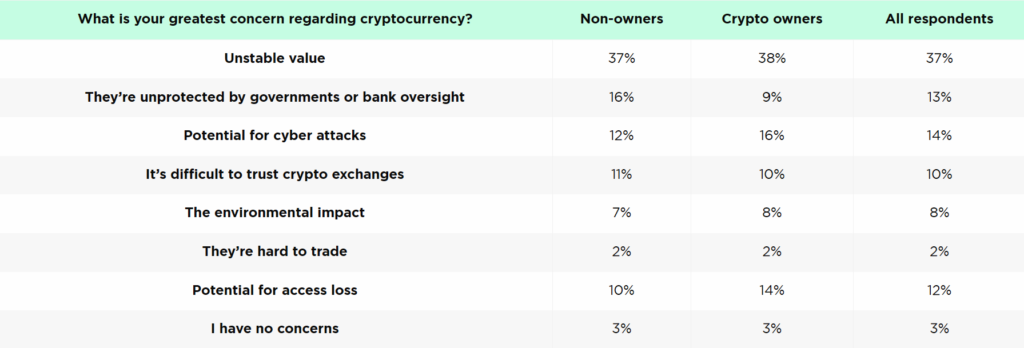
Security.org’s data shows that 59% of Americans lack confidence in crypto’s security. Among current owners, 16% have already dealt with access problems, including lost keys or frozen accounts. For someone who has not yet entered the space, those are the stories they hear first.
Sakharov is direct about what keeps people out: “Most non-users think, ‘What if I mess this up?’ or ‘Who do I call if something goes wrong?'” Irreversible transactions, self-custody key management, and the absence of customer support infrastructure are not abstract concerns. They are real friction points that no amount of bullish price action resolves. GoMining’s survey respondents who want to pay with crypto but do not say they would change that behavior if fees were clearer, merchant acceptance wider, and loyalty incentives available.
What Flat Prices Actually Measure
Zalan offers the clearest framing for what the current environment reveals. “When prices go sideways, you quickly find out which products people actually keep using.”
A rising market lifts engagement across products regardless of quality. A flat or declining market strips that effect away and leaves only the use that was happening for genuine reasons. Santos frames it structurally: if crypto only grows during bull markets, it functions more like entertainment than infrastructure. Routine, predictable transaction flows are the signal that it is performing a real financial job.
Sakharov agrees. “If prices stayed flat, the companies built on utility would keep growing, and the ones built on reflexive speculation would struggle.” That is not a prediction. Based on the current data, it is a description of what is already happening.
Ownership is steady, with the stablecoin volumes expanding. Developing market adoption is driven by need, not narrative. Crypto prices may be down significantly from their peak, but for a growing segment of users, the infrastructure has become useful enough to justify staying regardless. As Usi Zade puts it, “Crypto works where traditional finance does not, and users recognize that quickly.”


